Transformer Procurement Course: Specification, Bid Evaluation and Factory Tests
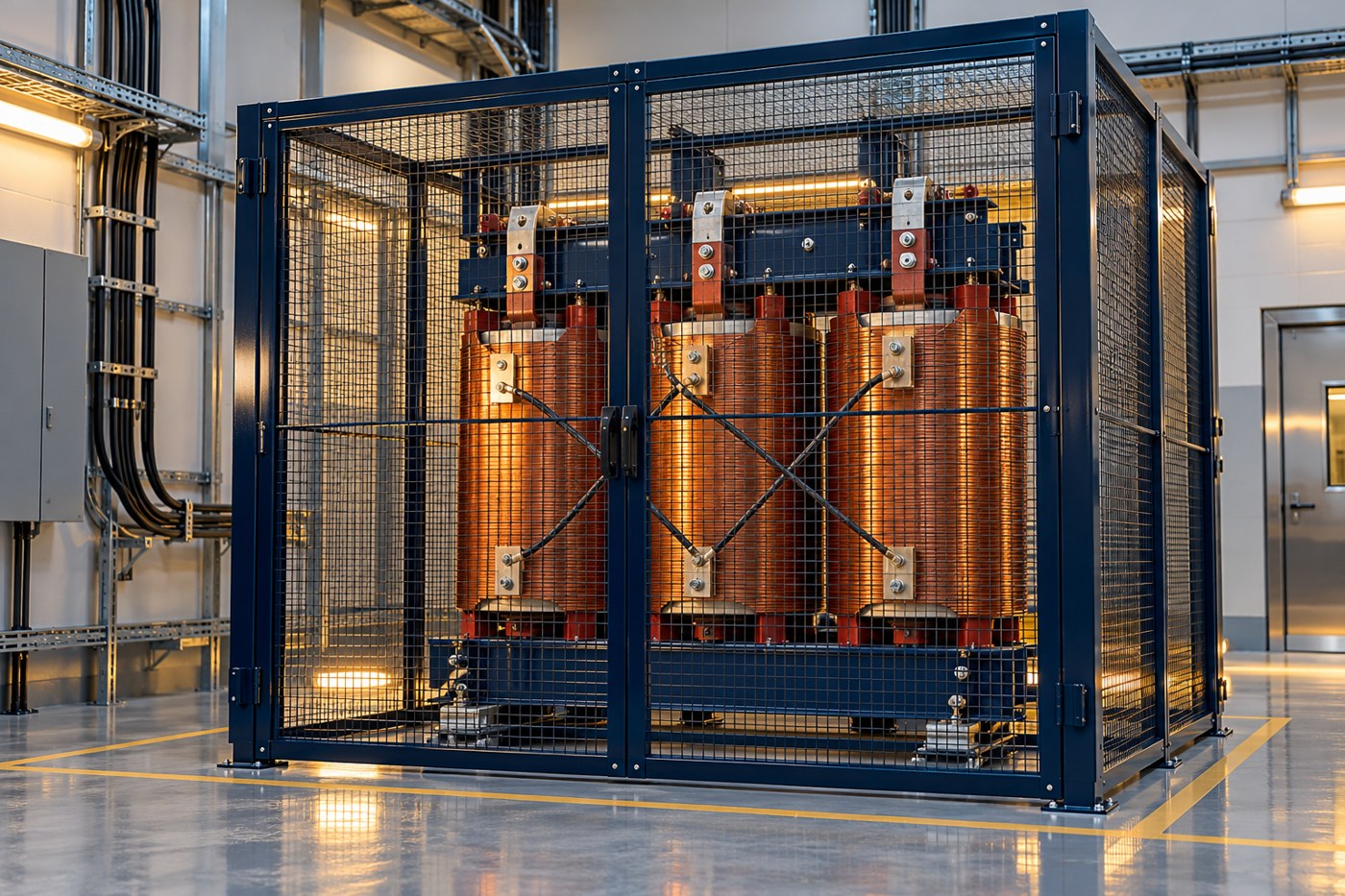
Quick answer: good transformer procurement converts the electrical design into measurable commercial and technical requirements. The buyer should compare compliant bids on lifetime cost—not purchase price alone—and connect every promised parameter to a document review, inspection point or acceptance test.
What this course helps you produce
By the end, you should be able to prepare a data sheet, normalize vendor offers, identify deviations, build a quality and inspection plan, witness a factory acceptance test (FAT), and control delivery and site records. This is a practical workflow for utility, industrial and commercial projects; protection settings and installation details still require a qualified engineer and the applicable local code.
Module 1: define the service before the rating
Start with the network study and operating duty. Record the system voltage and frequency, maximum demand, future growth, harmonic environment, ambient temperature, altitude, indoor or outdoor location, fire constraints, earthing method, short-circuit level and expected loading profile. A transformer selected only by kVA may be unsuitable because temperature, harmonics, enclosure, impedance or tap range can govern.
| Specification item | Why it matters | Evidence required |
|---|---|---|
| Rated power and voltage ratio | Defines continuous duty and interfaces | Guaranteed data sheet and nameplate drawing |
| Vector group and neutral | Affects phase shift, earthing and parallel operation | Connection diagram |
| Percentage impedance | Controls fault current and voltage drop | Guaranteed value and routine-test result |
| No-load and load losses | Drive operating cost and heat | Guaranteed values with stated tolerances |
| Tap changer | Defines voltage regulation capability | Range, steps, current rating and control scheme |
| Cooling, temperature rise and sound | Determines life and site impact | Design declaration and test evidence |
Module 2: write a specification vendors can price consistently
Issue a single technical schedule with mandatory units and a separate deviations register. State the applicable edition of every standard, supply boundaries, accessories, spare parts, drawings, language, document dates and required test certificates. Avoid vague phrases such as “standard accessories”; enumerate winding and oil temperature devices, pressure relief, oil level indication, marshalling box, terminals, surge protection, wheels, lifting points and monitoring interfaces as applicable.
Module 3: normalize bids before scoring
Create a compliance matrix with four outcomes: compliant, clarification required, deviation, or excluded. Do not award points for a feature that is already mandatory. Separate technical acceptability from commercial ranking, and ask vendors to close clarifications in writing.
A simple lifetime-loss comparison can reveal a false bargain. If Bid A costs €4,000 less but has 500 W more continuous no-load loss, annual extra energy is 0.5 kW × 8,760 h = 4,380 kWh. At €0.15/kWh, that is about €657 per year before discounting. The purchase-price advantage disappears in a little over six years. For a real tender, use the owner’s load profile, energy price, discount rate and evaluation horizon.
Module 4: documents, quality plan and hold points
Build a submittal register covering drawings, data sheets, calculations, material certificates, manufacturing schedule, quality plan, inspection and test plan (ITP), procedures, test formats, packing plan and operation manuals. Mark review points clearly: review, witness, hold and record. A hold point should be reserved for an event that cannot proceed without authorization; too many hold points can delay production without improving quality.
Module 5: factory tests
Agree the test list before purchase order award. Routine, type and special-test terminology depends on the product and referenced standard. Typical FAT review includes winding resistance, ratio and phase displacement, impedance and load loss, no-load loss and current, dielectric tests, functional checks and verification of accessories. Additional tests may address temperature rise, sound level, zero-sequence impedance or frequency-response analysis when specified.
Before witnessing, approve the procedure and calibrated instrument list. During the FAT, record serial numbers, tap position, oil or winding temperature where relevant, correction methods, raw readings and pass criteria. A certificate without traceable readings is weaker evidence than a signed test sheet tied to the purchase order and nameplate.
Module 6: delivery and site acceptance
Define transport configuration, impact recorders, nitrogen or oil conditions, storage heaters, desiccant inspection and maximum storage interval. On arrival, inspect packaging, bushings, oil leaks, accessories and impact records before signing an unconditional receipt. Site acceptance should confirm assembly, earthing, oil treatment where required, insulation checks, ratio/vector checks, control wiring, alarm and trip functions, protection interfaces and final documentation.
Eight deliverables for a controlled purchase
- Design basis and transformer data sheet.
- Approved vendor list or qualification criteria.
- Bid-comparison and deviations register.
- Purchase specification with document schedule.
- Quality plan and ITP.
- Approved FAT procedure and signed report.
- Delivery/site inspection records.
- As-built dossier with settings, manuals and certificates.
Common procurement mistakes
- Comparing prices before aligning losses, accessories and test scope.
- Leaving impedance or tap range “to vendor standard.”
- Accepting unpriced deviations after award.
- Witnessing tests without approved acceptance criteria.
- Releasing shipment before closing document comments.
- Failing to preserve transport and storage evidence.
Frequently asked questions
Is the lowest-loss transformer always best?
No. Evaluate purchase cost, expected loading, energy cost, reliability, footprint, maintainability and contractual risk together.
Can two transformers with the same kVA operate in parallel?
Not automatically. Ratio, tap position, vector group, impedance and other conditions must be compatible, and the system study must confirm load sharing and fault duty.
Which standard should the contract cite?
The applicable national requirements and the relevant parts and editions of the IEC 60076 series or another project standard. State the edition explicitly rather than writing only “latest.”
Next lessons and references
Continue with our guides to transformer inrush current and relay coordination. Primary references include the IEC 60076-1 power transformer standard page and the specifications adopted by the local authority and asset owner.
Image: original site media selected for this lesson. Educational content; project decisions require the responsible engineer’s review.