Power Engineering
-
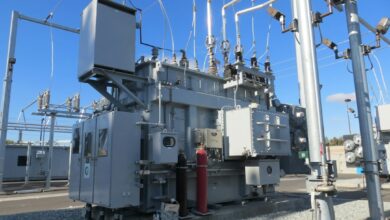
Transformer Inrush Troubleshooting: Relay Records, Harmonics and Safe Settings
Diagnose transformer energization trips using oscillography, harmonic evidence, source conditions and coordinated protection checks before changing relay settings.
Read More » -
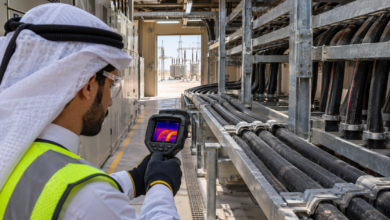
Cable Derating at 50°C: Gulf Project Worked Example
Calculate cable derating at 50°C using ambient, grouping and installation factors, then verify voltage drop, short-circuit withstand and breaker coordination.
Read More » -
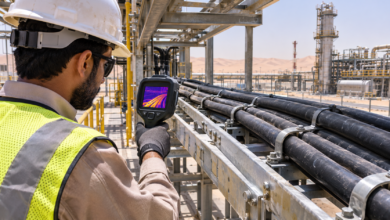
Cable Derating at 50°C Ambient Temperature in Gulf Projects
Quick answer: Do not size a Gulf cable from the standard current table alone. The tabulated rating must be corrected…
Read More » -
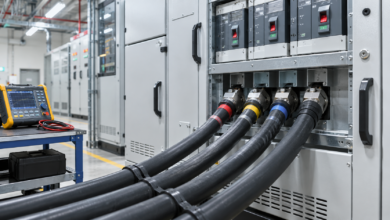
Cable Short-Circuit Withstand Calculation: I²t and k²S² Explained
Check cable short-circuit thermal withstand using I²t and k²S², with a worked example, device let-through guidance and design checklist.
Read More » -
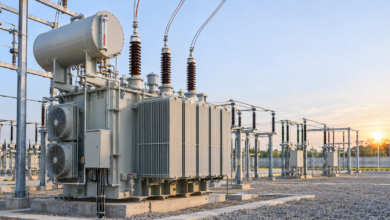
Transformer Inrush Current: Causes, Estimation and Protection Settings
Learn why transformer inrush current occurs, how to estimate its scale, distinguish it from faults and coordinate differential and overcurrent…
Read More » -
ربط أغلفة كابلات الجهد العالي: الفرق بين Solid وSingle-Point وCross-Bonding
نظام ربط الغلاف جزء من منظومة الكابل والحماية، وليس تفصيلًا ثانويًا في صندوق الوصلات. الصورة: Sam LaRussa / Unsplash. الغلاف…
Read More » -
Single-Point Cable Sheath Bonding: Purpose, Limits and Design Inputs
A design-level explanation of single-point sheath bonding, standing voltage, earthing and required project inputs.
Read More » -
Both-End Bonding of Cable Sheaths: Circulating Current and Rating Impact
Why solid bonding controls sheath voltage but can create circulating current, losses and cable-rating penalties.
Read More » -
Cross-Bonding of HV Cable Sheaths: Major Sections and Transposition Logic
How three minor sections form a major section and why cross-bonding aims to cancel induced sheath voltages.
Read More » -
Sheath Voltage Limiters in HV Cable Systems: What the Design Must Prove
A design overview of SVL purpose, voltage and energy duties, earthing, placement and maintenance evidence.
Read More »