Pump NPSH Available vs Required: A Cavitation Check for Hot Water
A centrifugal pump can deliver the specified flow and discharge pressure on paper and still cavitate at the site. The missing comparison is often between the suction head the installation can provide (NPSH available) and the suction head the pump needs at its actual operating point. Warm water, a low tank level and a fouled strainer can erode that margin at the same time.
What available and required NPSH tell you
NPSH available, or NPSHa, is the absolute total suction head at the pump reference plane minus the liquid’s vapour-pressure head. NPSH required comes from the pump supplier for a specified flow and speed. Check the test criterion: NPSH3 is the point at which pump head, or first-stage head for a multistage pump, drops by 3% due to cavitation. Cavitation can start above that point. Apply the margin specified for the service by the project and supplier.
Calculate the installation side
For a vented tank with negligible velocity at its surface, calculate NPSHa as atmospheric pressure head plus liquid level above the pump datum, minus the suction line losses and the vapour-pressure head. Subtract the elevation difference if the liquid level is below the pump. For a closed tank, use absolute gas pressure above the liquid in place of atmospheric pressure. Convert every pressure to metres of the pumped liquid using p/(ρg). Use local absolute pressure, especially at elevated sites.
Worked example: warm water and a fouled strainer
At a selected flow, assume 10.3 m of atmospheric head, a liquid level 1.2 m above the pump datum, a total suction loss of 2.0 m, and a vapour-pressure head of 0.3 m for the initial condition. Available head is 10.3 + 1.2 − 2.0 − 0.3 = 9.2 m. With a supplier NPSH3 value of 4.0 m at the same flow and speed, the difference is 5.2 m.
Now suppose a hot-water case gives 4.9 m of vapour-pressure head, and a fouled strainer adds 0.8 m of loss. For this screening example the other terms remain fixed. NPSHa falls to 10.3 + 1.2 − 2.8 − 4.9 = 3.8 m. The available head is already below the 4.0 m test value before applying any service margin. For a real purchase, recalculate pressure heads with the fluid density and vapour pressure at the relevant temperatures.
Check the operating point before choosing a fix
A higher flow can increase suction losses while moving the pump to a point with a different NPSH requirement. Check duty, runout, parallel operation and the speed range where applicable. Use the worked pump and system curve example to see how the operating point moves when speed changes. If the problem appears during rapid starts, stops or valve movements, review the transient separately using the water hammer guide. A steady-state suction calculation does not capture a short pressure dip.
What to collect before ordering a pump
- Minimum operating tank level, tank pressure range and pump reference elevation.
- Maximum liquid temperature and fluid properties at that temperature.
- Suction piping losses at each credible flow, including clean and fouled strainer losses.
- Supplier suction curves at the proposed speed, impeller and flow range, with the test criterion and required margin documented.
- Baseline site readings for suction pressure, temperature, flow and vibration to compare during commissioning.
Can noise alone confirm cavitation?
Unusual noise and vibration justify checking suction conditions. Air entrainment, recirculation and mechanical faults may produce similar symptoms. Compare the onset of noise with tank level, suction pressure, temperature and flow, and have the supplier review the operating point before changing the pump or piping.
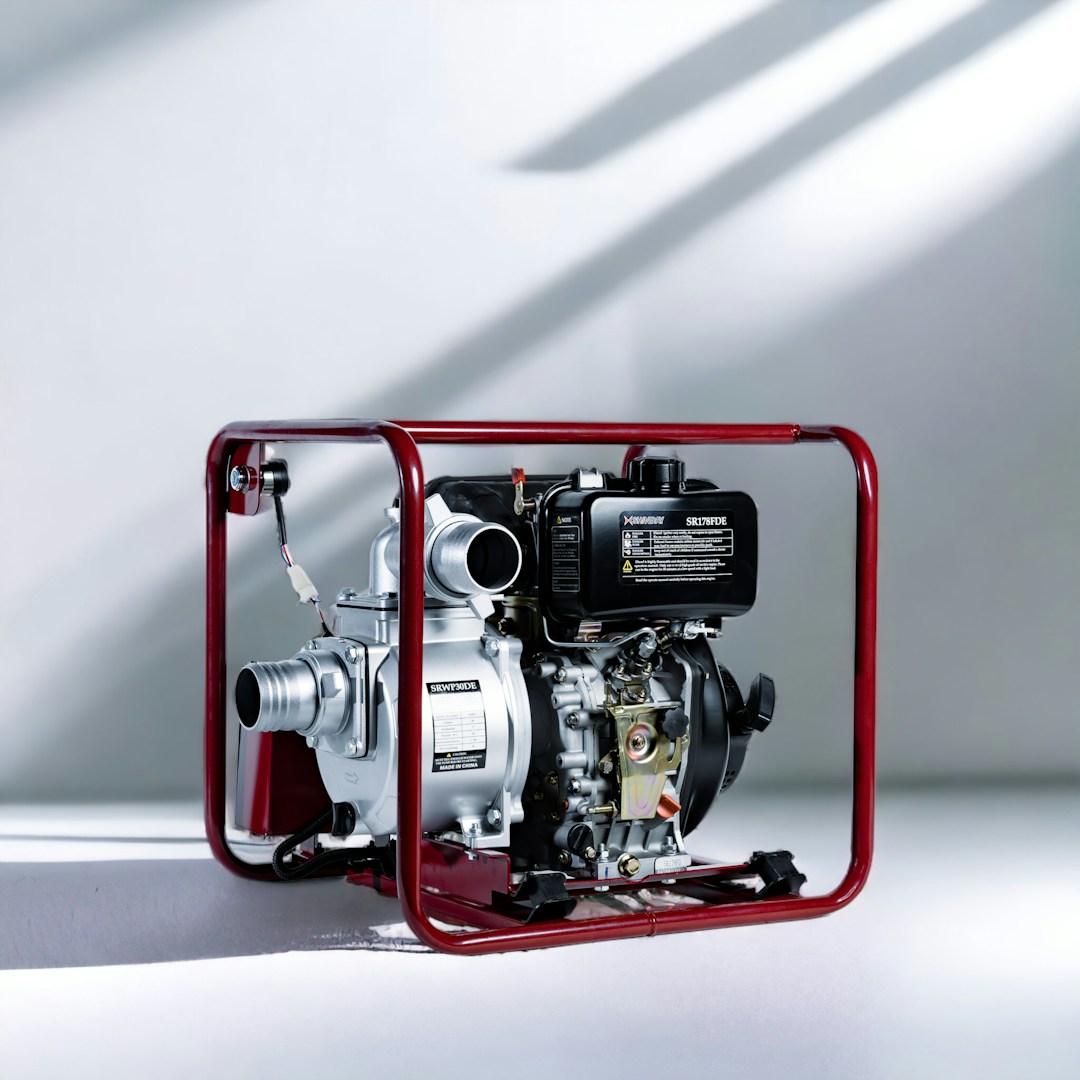
Technical reference: Hydraulic Institute pump principles and NPSH definitions. Illustrative pump photograph by Mohannad Alahmad via Unsplash.