EV Winter Range Loss: How to Compare Your Data Before Blaming the Battery
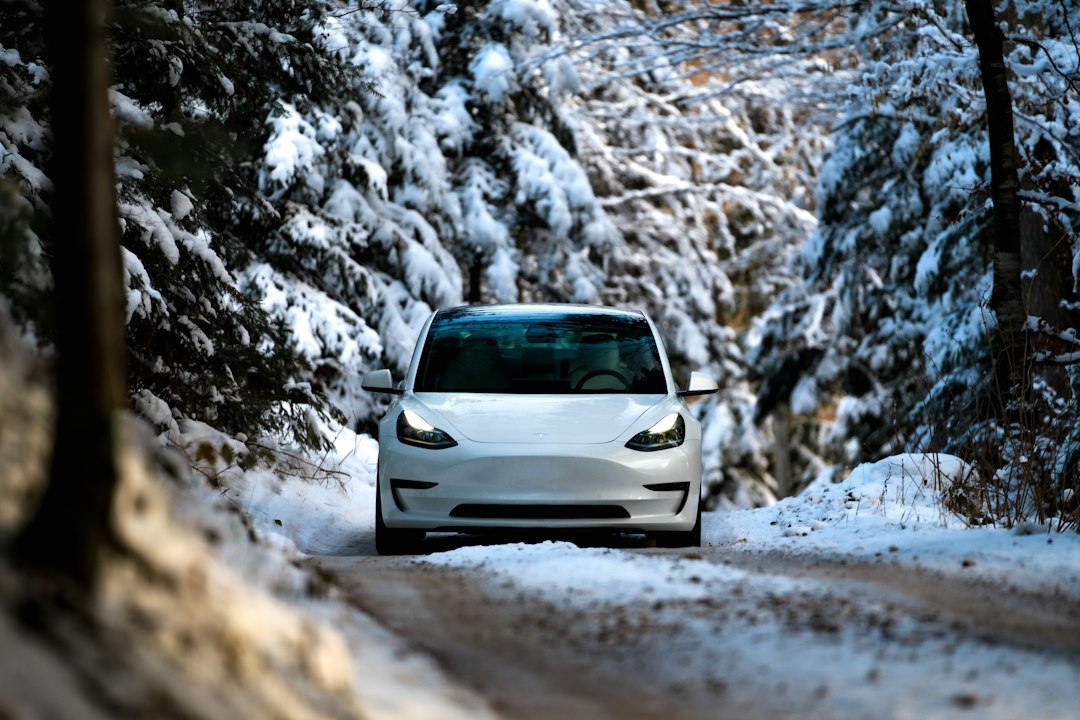
A lower range estimate on a cold morning does not prove that an EV battery has degraded. Winter can raise cabin-heating demand, increase rolling resistance, alter battery power and charging behavior, and concentrate a large warm-up load into a short trip. To diagnose the change, separate energy consumption from usable battery energy and compare similar journeys.
Range has two moving parts
A useful simplified relationship is:
Estimated range = usable battery energy ÷ energy consumption per distance
Range can fall because consumption rises, usable energy temporarily changes, or both. The dashboard estimate also depends on recent driving history and may change before the car travels anywhere. Treat it as a planning estimate, not a direct battery-capacity measurement.
Worked example: the battery capacity stays constant
Assume 48 kWh remains available for driving. At 16 kWh/100 km, the mathematical range is 300 km. If cold-weather consumption rises to 20 kWh/100 km, range becomes 240 km. That is a 20% range reduction even though this example deliberately keeps usable energy unchanged.
| Condition | Usable energy | Consumption | Calculated range |
|---|---|---|---|
| Mild comparable trip | 48 kWh | 16 kWh/100 km | 300 km |
| Cold comparable trip | 48 kWh | 20 kWh/100 km | 240 km |
| Difference | 0 kWh | +25% | −20% |
This is not a universal winter-loss percentage. It demonstrates why a range change cannot by itself quantify battery state of health.
Where the additional winter energy goes
- Cabin heating: heat is a direct electrical load, especially during initial warm-up.
- Battery conditioning: the vehicle may warm the traction battery for power, efficiency or charging.
- Demisting and defrosting: visibility systems consume energy and must not be disabled for range.
- Cold tyres: pressure can fall and rolling resistance can rise.
- Dense air and weather: aerodynamic drag, rain, snow and wind can increase demand.
- Road speed: high-speed driving magnifies aerodynamic energy use.
Why short trips look especially inefficient
Cabin and battery warm-up use energy near the start of a journey. On a 5 km trip, that fixed energy is divided by very little distance, so the displayed kWh/100 km can be high. On a longer trip, the same initial load is spread over more kilometres.
Do not compare one short winter errand with a long summer motorway trip. Build separate baselines for commute, urban errands and long-distance travel.
Preconditioning while plugged in
The U.S. Department of Energy notes that many EVs can warm the cabin and battery before departure. When preconditioning occurs while connected, some warm-up energy can come from the grid instead of the traction battery. Follow the vehicle manual because scheduling, charge limits and battery preparation vary by model.
Preconditioning improves readiness; it does not make heating free. Energy still comes from somewhere, and charging losses should be included when comparing total electricity cost.
How to collect comparable trip data
| Field | Record | Why |
|---|---|---|
| Temperature and weather | Start temperature, rain, snow and wind | Separates seasonal conditions |
| Trip | Distance, time, elevation and route | Prevents unlike comparisons |
| Speed | Average and major motorway segment | Captures aerodynamic demand |
| Climate settings | Cabin target, defrost and preconditioning | Explains accessory energy |
| Battery | Start and end SOC | Defines energy window |
| Consumption | Trip kWh/100 km or mi/kWh | Tracks the main range driver |
| Tyres | Pressure when cold | Flags rolling-resistance change |
Use several trips, not one observation
Compare multiple journeys over a meaningful distance. Use the same route and similar speeds where possible, then compare the median or total energy divided by total distance. One traffic jam, headwind or defrost cycle can dominate a single data point.
If the vehicle provides energy categories, record traction, climate and battery-conditioning energy separately. Otherwise, use a consistent log and avoid claiming precision the data cannot support.
Dashboard range versus measured consumption
The displayed range estimate is usually based on a model of recent use, temperature and vehicle state. Two cars at the same SOC can show different range because their recent histories differ. A sudden estimate change after a motorway trip is not automatically lost battery capacity.
For trip planning, use the estimate conservatively and maintain a reserve. For diagnosis, prioritize measured energy, distance and comparable conditions.
Cold weather and fast charging
A cold battery may accept less DC charging power until it warms. The station’s advertised rating is only the equipment maximum; actual power is limited by the car, battery temperature, SOC, voltage architecture and charger sharing. Route guidance may precondition the battery before a planned fast-charge stop.
Arriving at very high SOC can also slow charging because most vehicles taper power as the battery fills. A slow session in winter is not enough evidence of battery failure.
When might battery health deserve investigation?
Seek qualified service when the car shows a battery or charging warning, usable energy appears persistently lower under comparable moderate conditions, charging behavior changes without explanation, or the vehicle cannot meet its normal performance after software and environmental factors are considered.
Do not open the traction battery or perform high-voltage measurements yourself. Use the manufacturer’s diagnostic procedure and warranty criteria; third-party dashboard estimates may not equal the manufacturer’s state-of-health value.
Safety comes before efficiency
Maintain visibility, comfort needed for safe driving, correct winter tyres and manufacturer-recommended pressures. Never disable demisting to improve an efficiency number. Carry suitable charge reserve for delays, diversions and charger outages, particularly in remote or severe-weather travel.
Winter range checklist
- Compare the same route, speed and trip length.
- Record temperature, wind, precipitation and elevation.
- Separate consumption from usable battery energy.
- Check cold tyre pressure.
- Precondition while plugged in when supported.
- Plan a larger reserve for adverse conditions.
- Use several trips before drawing a conclusion.
- Follow vehicle warnings and qualified service guidance.
Related EV guides
Continue with EV energy use and cost per 100 km, the road-trip energy reserve example and SOC versus SOH.
Technical sources and image credit
See the U.S. Department of Energy winter EV guidance and its cold-temperature technical record. Photo by Yannik Zimmermann under the Unsplash License. Original educational content by ST College.