Substation Transformer Guide: Design, Power Classes, and Grid Applications
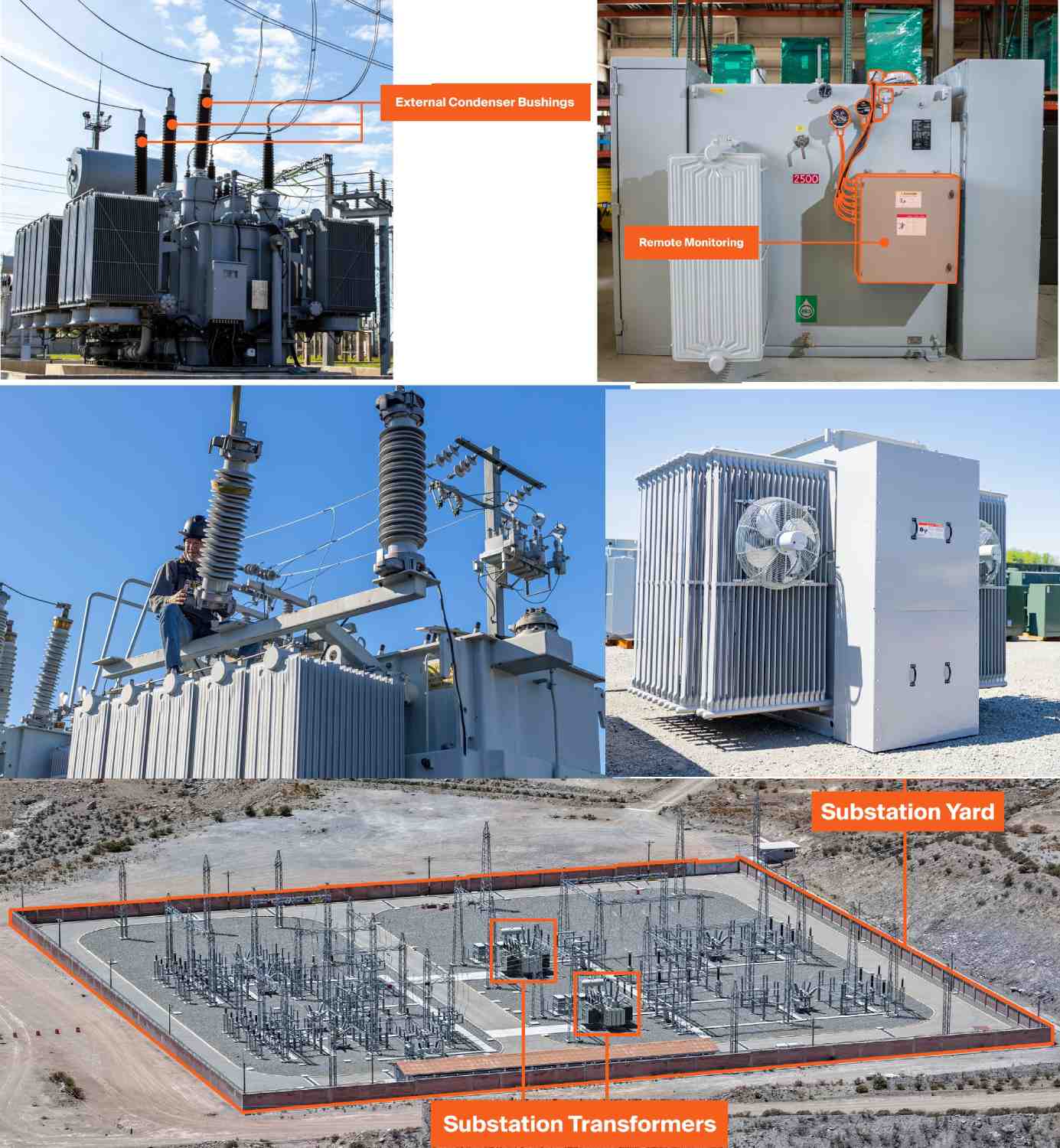
Substation transformers are among the most important components in the electrical grid. They enable the movement of electricity from generation sources through transmission networks and ultimately into the distribution systems that power homes, businesses, and industry. To understand substation transformers, you first need to understand how the power grid works.
At a high level, the grid has three major stages:
- Generation — producing electricity
- Transmission — moving electricity long distances
- Distribution — delivering usable power to customers
Electricity is generated, transmitted, and then distributed for use. Substations — and the transformers inside them — are central to every step of that process.
Understanding the Role of Substation Transformers
Substation transformers appear throughout the power grid because voltage levels must constantly change as electricity moves from one stage of the system to another. Electricity generated at a power plant cannot efficiently travel long distances at low voltage. To reduce losses, voltage is increased immediately after generation and transmitted across high-voltage networks. Closer to where electricity is consumed, voltage is reduced again for distribution and end-use applications. This voltage conversion is performed by transformers located in substations.
Power Generation: Where Electricity Begins
Electricity is generated from many different sources, including:
- Hydroelectric facilities
- Coal and natural gas plants
- Nuclear power stations
- Wind farms
- Solar installations
Most generation facilities are located far from the cities and industrial centers that consume the power. Because of this distance, electricity must travel across extensive transmission systems before reaching users. That’s where substations become essential.
Transmission: Moving Power Long Distances
Transmission systems move large amounts of electrical power across regions and states using high-voltage lines. To make long-distance transmission practical, voltage is stepped up after generation. Higher voltage reduces current, thereby lowering resistive losses during transmission. This voltage increase occurs at transmission substations, where large power transformers are used.
What Is a Transmission Substation?
Transmission substations are the large fenced-in electrical yards commonly seen near power plants, highways, or utility corridors. These substations typically contain:
- Substation transformers
- Circuit breakers
- Disconnect switches
- Protective relays
- Control and monitoring systems
The purpose of a transmission substation is straightforward: move power efficiently from one part of the grid to another. Transformers are the centerpiece of the operation. One transformer may step the voltage up near the generation source, while another steps the voltage back down closer to population centers. Some substations contain a single transformer, while others house multiple units operating in parallel or serving different voltage systems.
Distribution: Delivering Power to Customers
Transmission substations do not directly power homes or businesses. Instead, they deliver electricity into local distribution networks. From there, power flows through smaller distribution substations and eventually to neighborhood transformers such as:
- Pole-mounted transformers
- Pad-mounted transformers
These are the transformers commonly seen in residential and commercial areas.
Distribution systems reduce transmission voltages to utilization voltages suitable for customers. This final stage of the grid is what ultimately delivers electricity to homes, offices, factories, and retail facilities.
Without substations and substation transformers, modern electrical distribution would not be possible.
Substations vs. Substation Transformers
The term substation is often used in two different ways:
- To describe the entire substation facility and all associated equipment
- To refer specifically to the transformer installed within the substation
Over time, transformers used in substations evolved into their own category due to their unique design requirements and operating conditions. These units are now commonly referred to as substation transformers.
What Is a Substation Transformer?
A substation transformer is a heavy-duty electrical transformer designed for utility-scale power conversion applications. These transformers are built to handle:
- Large electrical loads
- Higher fault currents
- Long operating lifespans
- Outdoor installation environments
Substation transformers are usually installed in fenced electrical yards because of their energized external components and elevated operating voltages.
Common Design Features
Most substation transformers include:
- External bushings
- Radiator cooling systems
- Monitoring and protection devices
- Reinforced tanks and winding structures
These features distinguish them from smaller distribution transformers.
Bushings
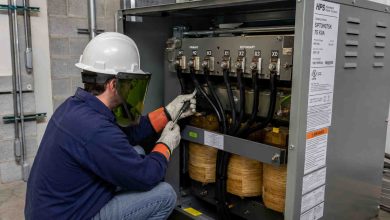
Bushings provide insulated electrical connections between the transformer windings and external power systems. Substation transformers often use exposed bushings mounted on the top or side of the tank. Lower-voltage units commonly use side-mounted bushings with:
- Air terminal chambers (ATCs)
- Throats
- Flanged connections
Higher-voltage systems require greater electrical clearances, making top-mounted bushings more common.
Condenser Bushings
At voltages typically above 69 kV, bushings become significantly larger and more complex. These applications commonly use condenser-style bushings, which are designed to control electric field stress across the insulation system. Because of their size and sensitivity, condenser bushings are often shipped separately and installed on-site with field testing before energization.
Solid Bushings
Smaller substations operating below approximately 35 kV often use solid-style bushings. These bushings are simpler in construction and suitable for lower voltage and clearance requirements.
Auxiliary Cooling Systems
Large power conversion creates substantial heat inside a transformer.
To manage thermal loading, substation transformers use external cooling systems, most commonly radiator banks with forced-air cooling fans.
Transformer cooling ratings are typically shown on the nameplate using designations such as:
- ONAN
- ONAF
- KNAF
These ratings identify the transformer’s cooling method and available capacity with and without auxiliary cooling. For example, a transformer rated:
- 2500/3125 kVA
can operate at:
- 2500 kVA without fans
- 3125 kVA with fans operating
Larger transformers may include multiple cooling stages that automatically engage as temperatures rise. Very large transmission transformers may also use oil pumps to improve oil circulation and thermal performance.
Monitoring and Protection Systems
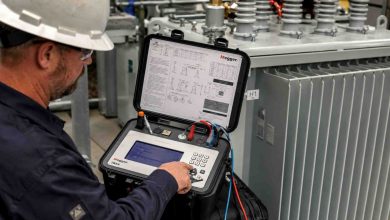
Substation transformers are critical infrastructure assets, so protection and condition monitoring are essential.
Typical monitoring equipment includes:
- Winding temperature indicators
- Oil temperature gauges
- Sudden pressure relays
- Pressure relief devices
- Liquid level gauges
- Remote alarm contacts
These systems help utilities identify developing issues before failures occur and provide protection for both the transformer and the surrounding grid.
Tank and Winding Construction
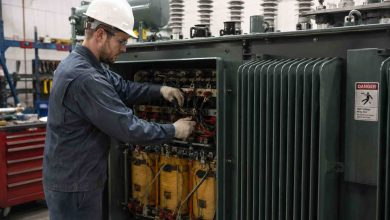
Substation transformers require more robust mechanical construction than smaller distribution transformers.
Their tanks are used:
- Thicker steel
- Reinforced bracing
- Stronger structural supports
This construction helps withstand:
- Short-circuit forces
- Transportation stresses
- Long-term operational loading
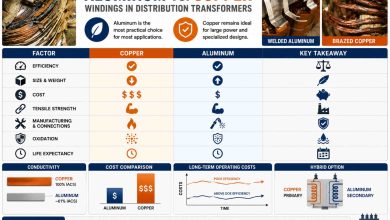
Winding Types
Substation transformers typically use either:
- Rectangular windings
- Circular disc windings
Smaller units below approximately 35 kV commonly use rectangular coil construction.
Larger power-class transformers typically use disc windings because they provide:
- Greater mechanical strength
- Improved fault withstand capability
- Better thermal performance
- Larger cooling ducts for oil circulation
Disc winding construction is especially important in high-current transmission applications where fault forces can be severe.
Transmission vs. Distribution Substations
Substation transformers exist across a very wide range of sizes and applications.
Some serve entire transmission regions, while others feed individual industrial facilities or local distribution systems.
This range is often described using the terms:
- Power class
- Distribution class
What Is a Power-Class Transformer?
Power class is an industry term used to distinguish larger, more complex substation transformers from simpler distribution equipment.
In general, transformer design changes significantly once systems exceed approximately:
- 35 kV
- 5 MVA
At this point:
- Insulation systems become more sophisticated
- Electrical clearances increase
- Bushings become more complex
- Cooling systems become larger
- Mechanical stresses increase
Above these thresholds, transformer engineering moves into true power-class design territory.
How the Industry Defines Power Class
There is no single universal definition of power class across the industry.
IEEE standards generally distinguish between:
- Class I power transformers
- Class II power transformers
with Class II referring to larger and more complex designs.
Historically, IEEE C57.12.10 served as the primary standard covering substation transformers of many sizes, particularly larger transmission units.
As smaller substation-style transformers became more common, IEEE C57.12.36 was introduced to address transformers below:
- 10 MVA
- 69 kV
Together, these standards help differentiate distribution-style substations from larger transmission-class transformer designs.
Key Takeaways for Utilities and Buyers
For utilities, EPC firms, and procurement teams, understanding power-class transformer design is critical.
Once projects move above approximately 5 MVA or 35 kV:
- Transformer design becomes significantly more specialized
- Manufacturing complexity increases
- Lead times grow longer
- Factory and field testing become more extensive
- Specification accuracy becomes far more important
Selecting an experienced manufacturer with proven power-class design and testing capability is essential for long-term reliability and grid performance.
Substation transformers are not just large transformers — they are engineered infrastructure assets at the heart of modern electrical transmission and distribution systems.