Earthing
- Transformers
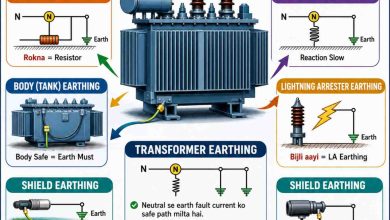
What is Transformer Earthing Types?
Transformer earthing is a critical aspect of power system design. Proper earthing ensures human safety, equipment protection, and system stability…
Read More » - Grounding
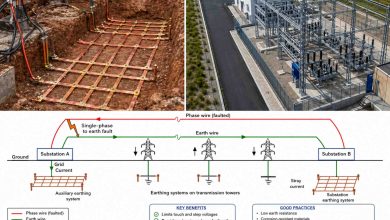
Fundamentals of Earthing System Design: Concepts and Analytical Methodology
AbstractThis document presents a structured exposition of the core principles governing the design of electrical earthing (grounding) systems for substations.…
Read More » - Grounding
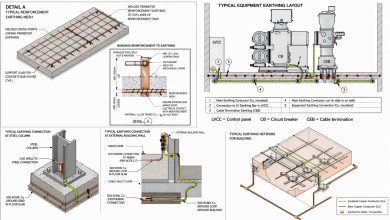
Earthing Integration of Reinforced Concrete Structures in Electrical Substations
This document outlines a standardized methodology for the modeling and electrical integration of steel reinforcement within concrete slabs and foundations…
Read More » - Grounding
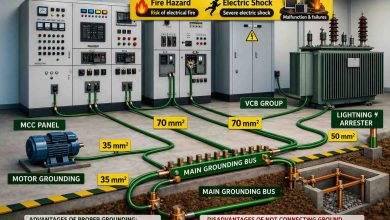
Industrial Electrical Grounding: Design, Bonding and Testing Checklist
A practical industrial grounding guide covering earthing arrangements, protective bonding, conductor sizing, fault-loop checks, touch voltage, lightning, VFDs and commissioning…
Read More » - Grounding
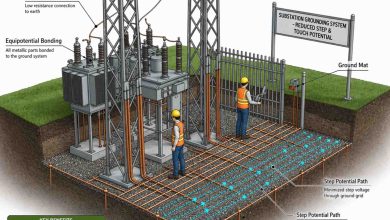
Methods to Reduce Step Potential and Touch Potential in Substations
Step potential and touch potential are critical safety considerations in electrical substations. During a ground fault, fault current flows into…
Read More » - Grounding
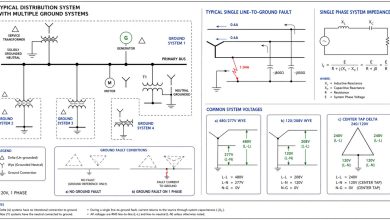
Power System Neutral Grounding: Solid, HRG, LRG and Ungrounded Systems
Compare solid, low-resistance and high-resistance neutral grounding, calculate an NGR example, and verify charging current, protection, generators and commissioning.
Read More » - Grounding
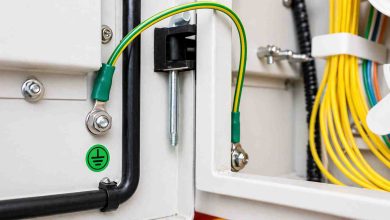
Earth Wire: A Redundant Cable or a Lifeline? The Critical Role of Electrical Panel Grounding
The practice of electrical installation is governed by strict codes and an unyielding principle: safety first. Yet, across construction sites…
Read More » - Electric Motors
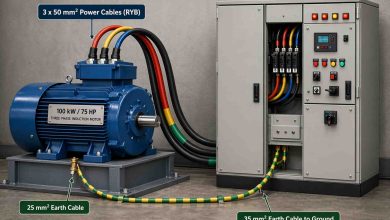
Motor & MCC Earthing Specification for Reliability and Safety
When specifying earthing for a 100 kW motor and its associated Motor Control Center (MCC), ambiguity is the enemy of…
Read More »