How to Choose the Right CT & PT (Current & Voltage Transformers)
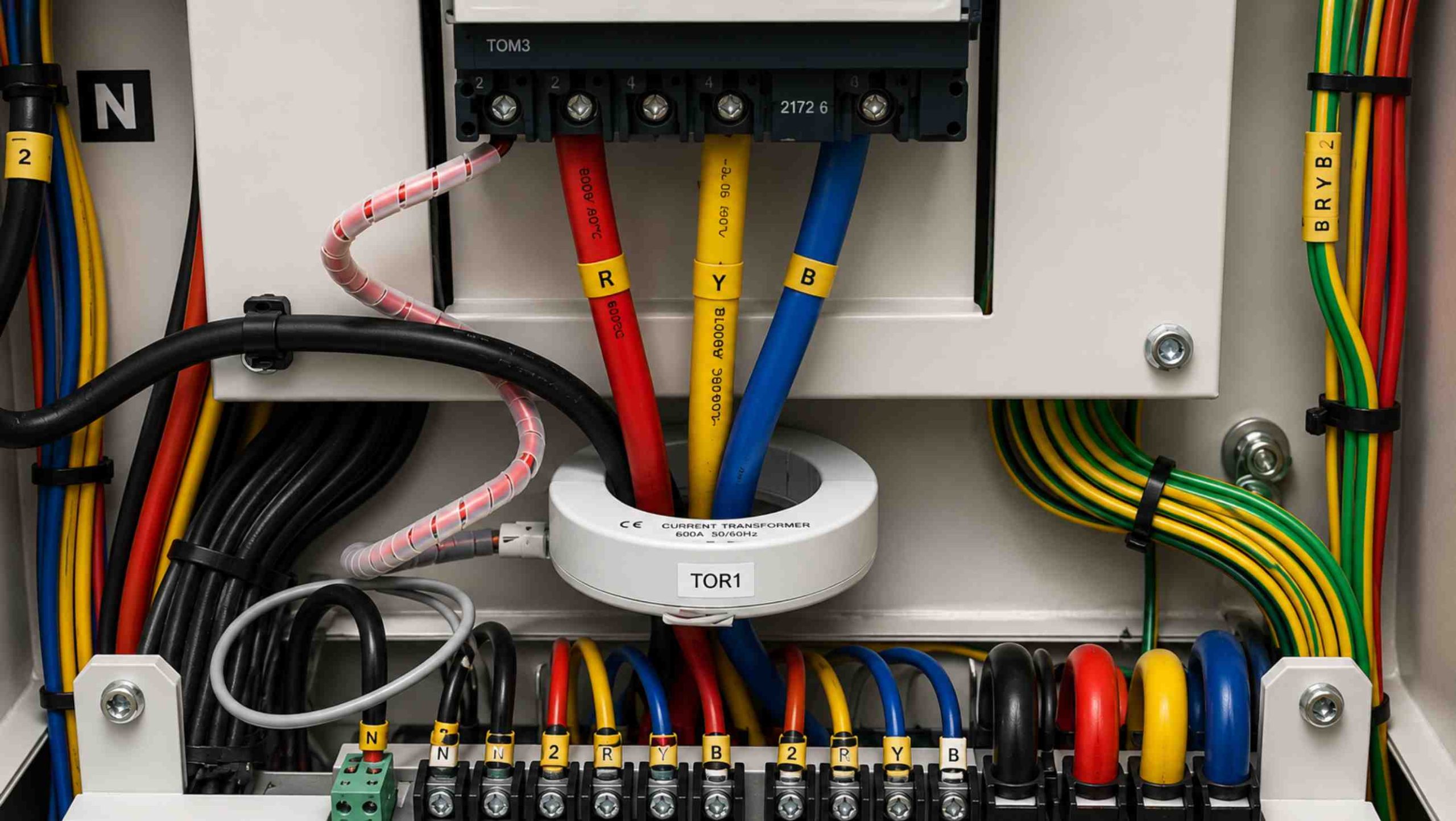
Selecting the right Current Transformer (CT) and Potential/Voltage Transformer (PT/VT) is critical for ensuring accurate metering, dependable protection, and the safe operation of electrical systems. An incorrect selection can result in inaccurate measurements, nuisance tripping, or even complete protection failure during faults.
Here’s a practical, engineer-focused guide to help simplify the selection process.
How to Select the Correct CT and PT/VT
⚡ Step 1: Identify the System Voltage
The first step is to confirm the operating voltage level of the system. Common medium-voltage levels include:
- 11 kV
- 24 kV
- 36 kV
The system voltage directly influences:
- Insulation requirements
- Equipment ratings
- PT/VT ratio selection
Accurate voltage identification ensures compatibility and operational safety.
🔌 Step 2: Selecting the Right Current Transformer (CT)
CT selection mainly depends on three important parameters:
1️⃣ Choose the Primary Current Rating
The CT primary rating should be selected according to the actual load current of the system.
Typical Examples
- Load current ≈ 400 A → Select 600/5A or 600/1A CT
- Load current ≈ 800 A → Select 1000/5A or 1000/1A CT
General Rule
The CT primary current should typically be:
[
\text{CT Primary Current} = \text{Actual Load Current} \times 1.2 \text{ to } 1.5
]
This safety margin helps:
- Prevent CT saturation during normal operation
- Allow future load expansion
- Improve overall reliability
2️⃣ Select the Secondary Current (1A or 5A)
The secondary current rating mainly depends on the installation distance between the CT and connected devices.
5A CT
Recommended for:
- Short cable runs
- Switchgear and compact panels
- Standard industrial installations
Advantages:
- Widely available
- Commonly used in low-distance applications
1A CT
Recommended for:
- Long-distance wiring
- Substations and remote metering
- Applications requiring reduced cable losses
Advantages:
- Lower power losses
- Better accuracy over long cable distances
3️⃣ Select the Accuracy Class
The required accuracy class depends on the application.
Metering Applications
- 0.5 / 0.5S Class
- High-precision metering
- Billing and revenue applications
General Measurement
- 1.0 Class
- Standard monitoring
- Ammeters and indication systems
Protection Applications
- 5P10 / 10P10
- Protection relays
- Fault detection systems
- Short-circuit performance
Protection-class CTs are specifically designed to maintain accuracy during fault conditions.
⚡ Step 3: Selecting the Right PT (VT)
Compared to CTs, PT/VT selection is generally simpler but equally important.
1️⃣ Select the Voltage Ratio
The PT ratio must match the system voltage.
Examples
- 11 kV system → 11,000 / 100 V
- 36 kV system → 36,000 / 100 V
In most applications, the PT secondary voltage is standardized at 100 V, making it compatible with meters, relays, and monitoring equipment.
2️⃣ Select the Accuracy Class
High-Accuracy Metering
- 0.5 Class
- Revenue metering
- Precision energy measurements
General Monitoring
- 1.0 Class
- Voltmeters
- Basic voltage indication
📐 Step 4: Consider Practical Installation Factors
Electrical ratings alone are not enough. Practical installation conditions must also be evaluated.
Always verify:
- Installation type (panel-mounted, outdoor, busbar-mounted)
- Available physical space
- Mounting compatibility
- Environmental conditions
- Indoor or outdoor use
- Ambient temperature
- Humidity and dust exposure
Proper mechanical selection ensures easier installation and longer service life.
✅ Quick Selection Summary
| Component | Key Selection Factors |
|---|---|
| CT | Primary current, secondary current (1A/5A), accuracy class |
| PT/VT | Voltage ratio, accuracy class |
| Both | Installation method, dimensions, environmental suitability |
💡 Final Recommendation
An effective CT/PT selection should achieve the right balance between:
- Measurement accuracy
- Protection reliability
- Future system scalability
For protection schemes such as Overcurrent (OC) and Earth Fault (EF) relays, always verify:
- CT accuracy class
- CT burden
- Relay requirements
- Fault current levels
Proper coordination between the CT and protection relay is essential for dependable system performance during abnormal conditions.