Demystifying the Power Grid: What is a Switchyard, and How Does It Differ from Switchgear?
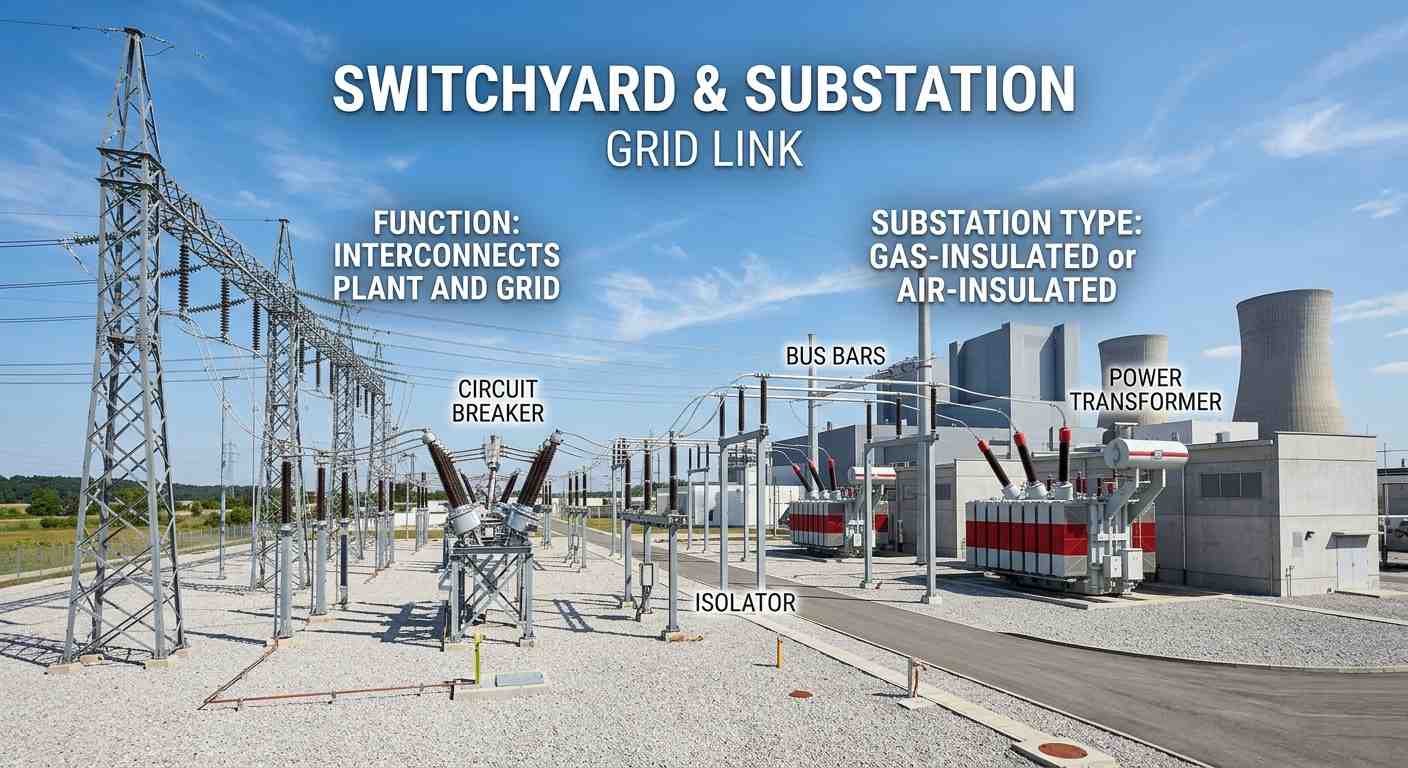
Have you ever driven past a massive, fenced-in field filled with towering steel structures, thick wires, and large ceramic insulators? You are likely looking at a switchyard or a substation. Often called the “heart” or “backbone” of a power plant, these installations are the critical links that bridge the gap between electricity generation and the transmission lines that deliver it to our homes and businesses.
In this article, we’ll break down exactly what a switchyard does, explore its main components, and clear up the common confusion between a switchyard, a substation, and switchgear.
What is a Switchyard and a Substation?
At its core, a switchyard is an open-area switching station that acts as the main junction box between a power-generating plant and the wider electrical grid. Without it, the electricity produced by a power plant would have nowhere to go.
While the terms are often used interchangeably, there is a technical distinction between the two:
- The Switchyard: This is the designated open-air area for switching high-voltage electricity, clearing faults, and routing power to transmission lines.
- The Substation: a broader term. A substation is the entire assembly of apparatuses that transforms the characteristics of electrical energy (such as stepping voltage up or down) and controls the flow of power. A switchyard is a vital component of a larger substation.
Together, they monitor crucial electrical parameters across transmission lines, including voltage, current, power, and frequency.
The Core Functions: Why Do We Need Switchyards?
A switchyard is indispensable to the modern power system. Its primary responsibilities include:
- Grid Interconnection: It collects power from generators and safely distributes it to the grid.
- System Protection: If a fault occurs outside the plant (like a lightning strike or a downed line), the switchyard instantly isolates the damaged network to protect the power plant from catastrophic failure.
- Voltage and Frequency Control: It helps maintain system frequency within target limits by managing the load schedule. It also houses transformers to step up voltage for efficient long-distance transmission, or step it down for distribution.
- Power Quality Management: It controls reactive power devices, which are essential for maintaining stable, clean electricity.
Types of Switchyards
Switchyards are generally classified by the medium they use to insulate their high-voltage components:
1. Conventional Air-Insulated Switchyards (AIS)
This is the most common type found at power plants. Because air naturally resists electrical flow, these yards use open space and atmospheric air to insulate components from each other and the ground. They require a large physical footprint and feature heavy copper grounding grids buried beneath the surface to safely disperse stray charges.
2. Gas-Insulated Switchyards (GIS)
When space is limited or environmental conditions are harsh, a Gas-Insulated Substation/Switchyard is used. In a GIS, active components (like switches and circuit breakers) are sealed inside a grounded metal enclosure filled with Sulfur Hexafluoride ($SF_6$) gas. Because $SF_6$ has superior dielectric (insulating) properties compared to air, the equipment can be placed much closer together, drastically reducing the physical footprint and protecting parts from atmospheric weathering.
Key Equipment Inside a Switchyard
A switchyard is an assemblage of highly specialized equipment. Here are the main components you will find:
| Equipment | Primary Function |
| Power Transformer | Steps the generated voltage up for long-distance transmission or step down for localized distribution. |
| Bus Bar | A heavy conductor that acts as a central hub, receiving power from incoming circuits and delivering it to outgoing lines. |
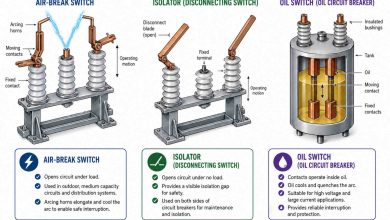
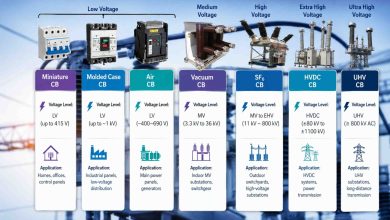
| Circuit Breaker | Automatically interrupts the electrical flow to isolate faults and protect the system from damage under heavy loads. |
| Isolator (Disconnect Switch) | Visually isolates parts of the circuit for safe maintenance. Note: Isolators must only be operated under “no-load” conditions (when no current is actively flowing). |
| Current Transformer (CT) | Steps down high currents to safe, measurable levels; connected in series with the transmission line. |
| Voltage Transformer (VT) | Steps down high voltages for monitoring and measurement; connected in parallel with the transmission line. |
| Surge / Lightning Arrester | Connected between phase conductors and the ground to divert transient high-voltage surges (like lightning strikes) safely into the earth. |
| Earth Switch | Mounted on the isolator base to discharge any trapped electrical charges left in a disconnected line, ensuring technician safety. |
| Wave Trap (Line Trap) | Prevents high-frequency communication signals (used by grid operators) from escaping into neighboring grid sections, keeping them confined to the protected line. |
| Relays | The “brains” that detect electrical faults and instantly trip circuit breakers. |
| Insulators & Support Structures | Typically made of ceramic or composite materials (such as suspension, post, or strain type), these physically support live wires while stopping current from leaking into the steel support towers. |
Switchyard vs. Switchgear: What’s the Difference?
It is incredibly common to confuse switchyard with switchgear, but they refer to completely different scales of the electrical network.
The Simple Analogy: Think of a Switchyard as a massive airport terminal directing traffic, while Switchgear refers to the individual security gates controlling access.
Switchgear
Switchgear is a collective term for electrical disconnect switches, fuses, and circuit breakers used to control, protect, and isolate electrical equipment. Switchgear is a localized piece of hardware.
Switchyard
A switchyard is an entire geographic area or facility. While a switchyard houses switchgear as part of its infrastructure, it also contains massive transformers, towers, bus bars, and transmission line hubs.
In short: Switchgear is an individual tool; a switchyard is the entire system that utilizes those tools to power the world.