Electrical Protection
-
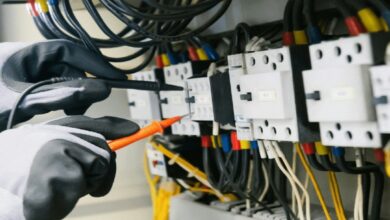
Breaker Failure Protection: Initiation, Timing and Bus Trip Logic
Design breaker-failure protection with current supervision, timers, retrip and transfer-trip logic. Protection principles Start only after a legitimate trip and…
Read More » -

Overcurrent Relay Coordination: TCC Curves and Grading Margins
Coordinate overcurrent protection using pickups, inverse curves, grading margins and damage limits. Protection principles Plot protective curves with inrush, motor…
Read More » -
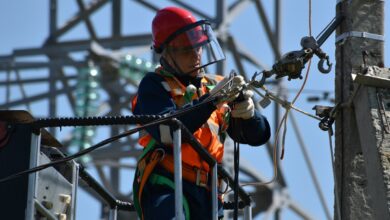
CT Saturation in Protection Systems: Causes, Detection and Mitigation
Learn why protection CTs saturate and how burden, remanence and X/R ratio affect relays. Protection principles Large current, DC offset,…
Read More » -
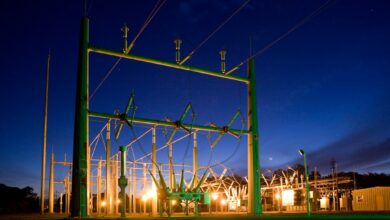
Transformer Differential Protection: Inrush Restraint and CT Matching
Understand transformer differential protection, vector compensation, CT errors and inrush restraint. Protection principles Represent transformer ratio, vector group and tap…
Read More » -
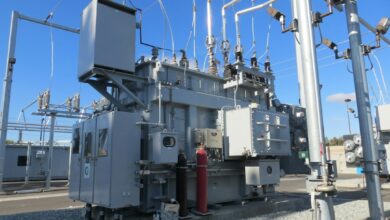
Distance Protection Zones: Reach, Time Delay and Load Encroachment
A practical guide to distance-relay zones, impedance reach, time grading, load encroachment and power swings. Protection principles Apparent impedance changes…
Read More » -
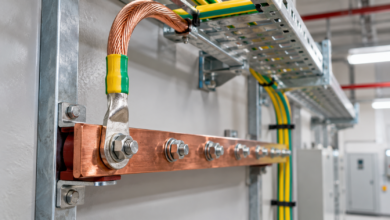
Earthing Conductor Sizing: IEC Adiabatic Equation with Worked Example
Size protective and earthing conductors with S = I√t/k. Includes a worked example, design workflow and the mistakes that cause…
Read More » -
ربط أغلفة كابلات الجهد العالي: الفرق بين Solid وSingle-Point وCross-Bonding
نظام ربط الغلاف جزء من منظومة الكابل والحماية، وليس تفصيلًا ثانويًا في صندوق الوصلات. الصورة: Sam LaRussa / Unsplash. الغلاف…
Read More » -
Single-Point Cable Sheath Bonding: Purpose, Limits and Design Inputs
A design-level explanation of single-point sheath bonding, standing voltage, earthing and required project inputs.
Read More » -
Both-End Bonding of Cable Sheaths: Circulating Current and Rating Impact
Why solid bonding controls sheath voltage but can create circulating current, losses and cable-rating penalties.
Read More » -
Cross-Bonding of HV Cable Sheaths: Major Sections and Transposition Logic
How three minor sections form a major section and why cross-bonding aims to cancel induced sheath voltages.
Read More »