Control & Automation
-
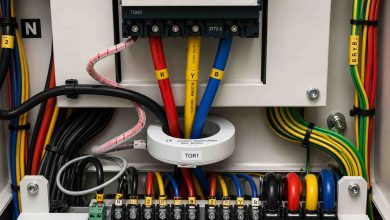
How to Choose the Right CT & PT (Current & Voltage Transformers)
Selecting the right Current Transformer (CT) and Potential/Voltage Transformer (PT/VT) is critical for ensuring accurate metering, dependable protection, and the…
Read More » -
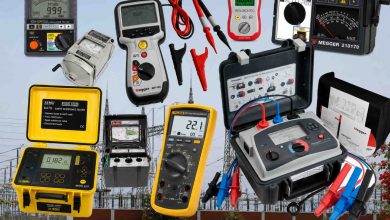
A Comprehensive Guide to Low Resistance Testing
1. Introduction The fundamental understanding of electrical circuits is rooted in Ohm’s Law, published by Georg Simon Ohm in 1827,…
Read More » -
The Megohmmeter
The megohmmeter, commonly referred to by the trade name Megger, is a specialized and indispensable piece of electrical test equipment.…
Read More » -
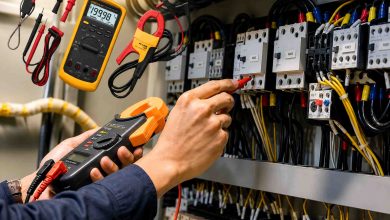
The Multimeter
A multimeter, historically known as a VOM (Volt-Ohm-Milliammeter), is the single most essential diagnostic tool in the electrical and electronics…
Read More » -
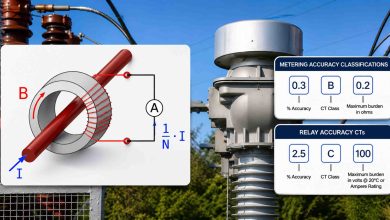
Current Transformer (CT) Fundamentals
1. Theory of Operation A Current Transformer (CT) is a type of instrument transformer designed to produce a manageable level…
Read More » -
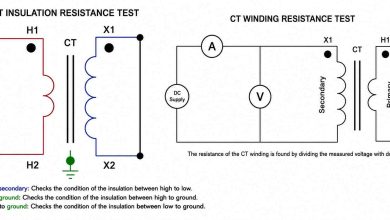
Electrical Testing of Current Transformers (CTs)
Current Transformers (CTs) are critical components in electrical power systems, serving as the interface between high-voltage primary circuits and low-voltage…
Read More » -
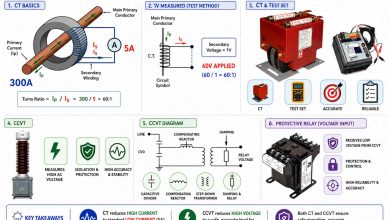
Instrument Transformers
Instrument transformers (ITs) are fundamental components in modern electrical power systems, serving as the critical interface between high-voltage (HV) and…
Read More » -
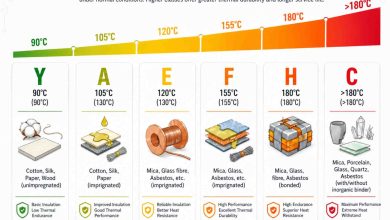
Insulation Materials Used in Transformers and Induction Motors
Insulation plays a critical role in the performance, safety, and lifespan of electrical equipment such as transformers and induction motors.…
Read More » -
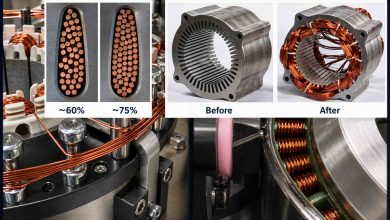
When Great Motor Designs Struggle to Become Real Products
Modern simulation tools are incredibly powerful. Engineers can fine-tune electromagnetic performance, torque density, and efficiency with remarkable precision. But there’s…
Read More » -
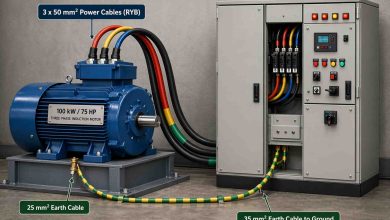
Motor & MCC Earthing Specification for Reliability and Safety
When specifying earthing for a 100 kW motor and its associated Motor Control Center (MCC), ambiguity is the enemy of…
Read More »