Switchgear Condensation: Dew Point, Cabinet Heaters and Commissioning Checks
A switchgear cabinet can stay dry during daytime testing and collect moisture overnight. Condensation starts when a surface reaches the dew point of the air beside it. A room humidity reading alone can miss the problem: a door, gland plate or wall-facing panel can be colder than the surrounding air. Design for the coldest credible surface in each operating state.
Worked example: a humid coastal plant
Suppose cabinet air is 30 °C at 75% relative humidity. A common Magnus approximation gives a dew point of about 25.1 °C. If a steel gland plate cools to 24 °C, it sits roughly 1.1 °C below that dew point. A second surface at 28 °C has about 2.9 °C of margin under the same air conditions. These are screening values. Use local readings and account for instrument error and temperature swings.
For a spreadsheet, calculate γ = ln(RH/100) + 17.62T/(243.12 + T), then calculate dew point as 243.12γ/(17.62 − γ), with T in °C and RH as a percentage. Compare surface temperature minus dew point for several compartments and times. A positive difference during a warm afternoon says little about conditions after a shutdown.
When to check the enclosure
- After shutdown, when heat from normal load disappears and auxiliary power may be isolated.
- During cooling startup, when adjacent walls and metal surfaces can cool faster than humid air is removed.
- After humid outside air enters through open doors, damaged seals or cable entries.
- At the bottom of a cable compartment and near external walls or floors, where cold surfaces can be missed by a sensor in the upper cabinet.
For coastal Gulf sites, include humid nights, salt exposure and outages of room conditioning. For European plants, include unheated rooms, seasonal startup and cold equipment brought into humid air. Ask the supplier to confirm suitability for the site conditions. Schneider Electric’s indoor MV service-conditions summary discusses humidity, condensation and the need to consider equipment and building design together.
What anti-condensation heaters can do
A heater raises local temperature and can increase the margin above dew point. It does not remove moisture or repair water ingress. Obtain the manufacturer’s heater layout, control method and clearances. Confirm whether auxiliary power remains available when the main circuit is off and whether heater failure is detectable. A thermostat controls temperature, while a hygrostat responds to local humidity. Sensor placement and compartment airflow determine how well either protects the coldest surface.
Commissioning checks
- Document expected indoor air temperature, humidity and shutdown duration, and compare them with the equipment specification.
- Inspect cable entries, seals and nearby routes for liquid water. Deal with ingress before adjusting heaters.
- Have qualified staff confirm heater supply, controls and alarm operation using the manufacturer’s procedure.
- Log air temperature, humidity and representative surface temperatures across a shutdown and restart. Evaluate the lowest observed margin, not just the daily average.
- Agree with the supplier on corrective action when the margin is inadequate or marks of moisture recur. Recheck after changing HVAC schedules or enclosure ventilation.
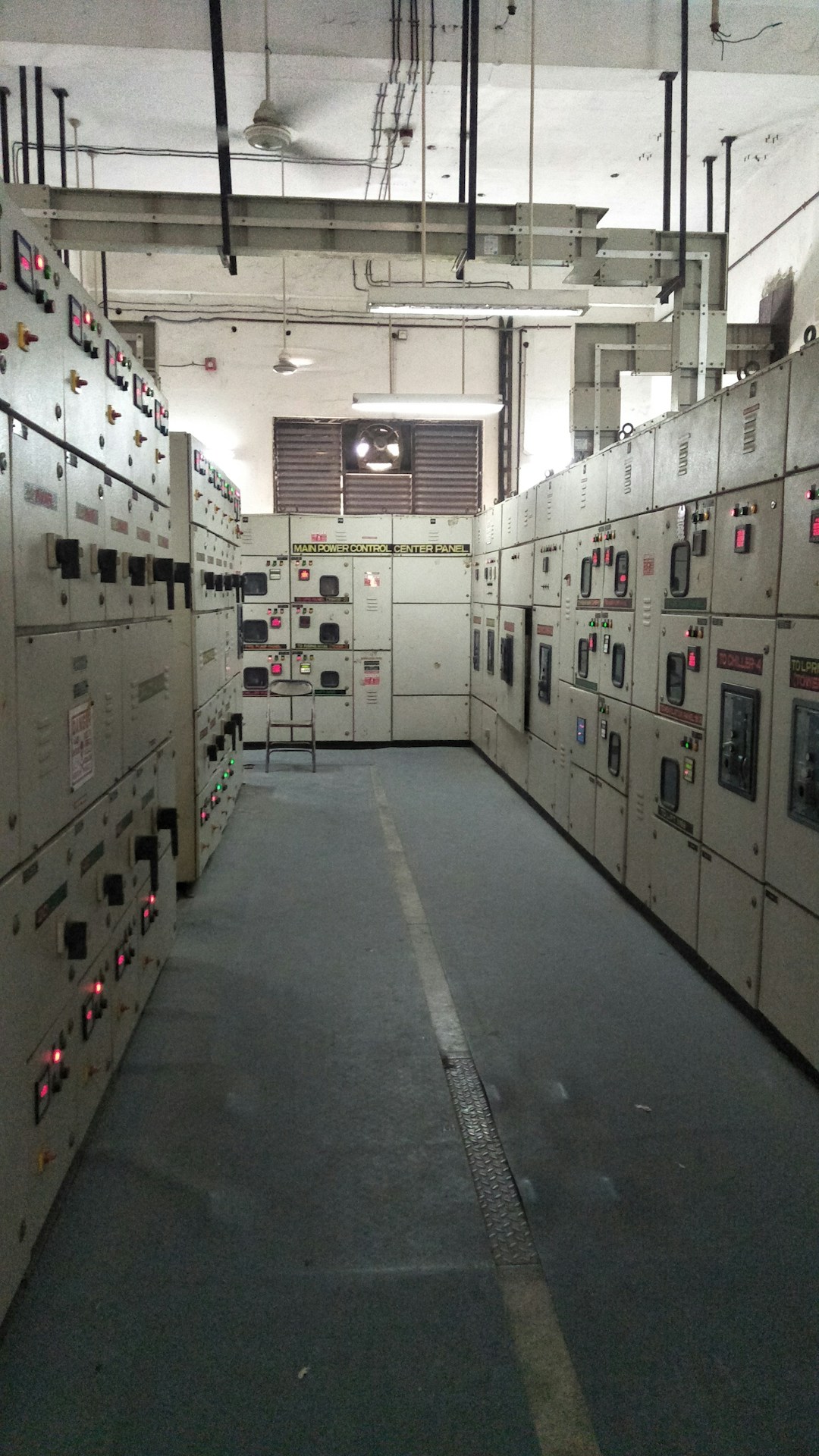
Related reading: LV switchboard design and verification and the medium-voltage switchgear selection checklist. Illustrative photograph by NIKHIL SHAHU via Unsplash.