Digital Twin Validation for Energy Systems: From Model to Decision

Quick answer: A digital twin is useful only when its outputs are demonstrably fit for a defined decision. Validate the data pipeline, physical and statistical model, synchronization, uncertainty and operational response separately. A dashboard that resembles the asset is not proof of predictive accuracy.
Start with the decision
Define who will use the twin and what action follows its output: schedule maintenance, detect inverter underperformance, forecast transformer temperature or test an operating plan. Write the required horizon, update rate, acceptable error and failure consequence. Validation criteria for a daily energy forecast differ from criteria for a protection or safety decision.
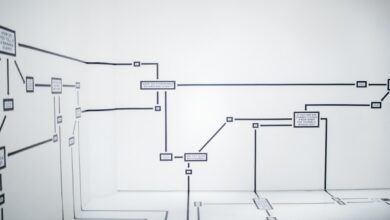
Map the twin architecture
- Physical asset and boundaries.
- Sensors, meters, timestamps and quality flags.
- Communications, storage and transformations.
- Physics-based, statistical or hybrid model.
- State estimation and parameter update.
- Application, alert and human approval path.
Each layer can fail independently. A good model fed by delayed or mis-scaled data produces a convincing wrong answer.
Validate data before the model
Check sensor calibration, sampling interval, clock alignment, missing data, duplicate records, unit conversions and maintenance states. Compare energy integrals with trusted revenue or reference meters. Create explicit rules for stale and substituted values.
Calibrate and validate on separate periods
Use one data set to estimate parameters and a different period to test performance. Include seasonal and operating diversity. A solar twin calibrated only on clear days may fail during clipping, soiling or curtailment. Report the data window and avoid random splits that leak adjacent time-series information.
Test physical consistency
- Energy and mass balances close within known uncertainty.
- Outputs respect equipment limits and sign conventions.
- Temperature and state variables change at plausible rates.
- Zero-input and rated-input cases behave sensibly.
- Faulted sensors do not create impossible asset states.
Choose metrics tied to the decision
MAE and RMSE summarize error but can hide bias and rare failures. Add normalized error, directional accuracy, calibration intervals and threshold-event precision/recall where relevant. For maintenance ranking, evaluate whether the correct assets are prioritized—not only average temperature error.
Worked validation example
A transformer thermal twin predicts top-oil temperature for loading decisions. The acceptance plan might require: timestamp error below one sample, no persistent bias above 2 °C over a weekly window, 95% of steady-state predictions within the agreed sensor-plus-model uncertainty band, and correct detection of rapid-load events. These are illustrative criteria; the owner must derive actual limits from the decision risk and equipment data.
Uncertainty and sensitivity
Separate measurement uncertainty, parameter uncertainty and model-form error. Vary the inputs that are poorly known—ambient temperature, thermal constants, soiling or efficiency curves—and show how the decision changes. A single deterministic trace can create false confidence.
Monitor drift after deployment
Asset condition, firmware, controls and sensors change. Track residuals, missing-data rate, parameter shifts and out-of-range operation. Define when the model may continue, when it needs recalibration and when its recommendations must be suspended.
Cybersecurity and governance
Identify data ownership, access control, model versions, approval authority and rollback. A twin connected to operational technology needs controlled interfaces and audit logs. Do not let an unvalidated model write directly to safety-critical control.
FAQ
Does a 3D model make a digital twin?
No. Visualization can be one interface, but synchronization and decision-relevant behavior are central.
How often should a twin be recalibrated?
Use drift indicators and asset changes rather than an arbitrary calendar alone.
Can synthetic data validate the twin?
It can test edge cases, but field validation is still needed for operational claims.
Related guides
- Edge versus cloud for industrial IoT
- Zero-trust industrial segmentation
- PV degradation and fault diagnosis