Dry Cleaning of Solar Panels
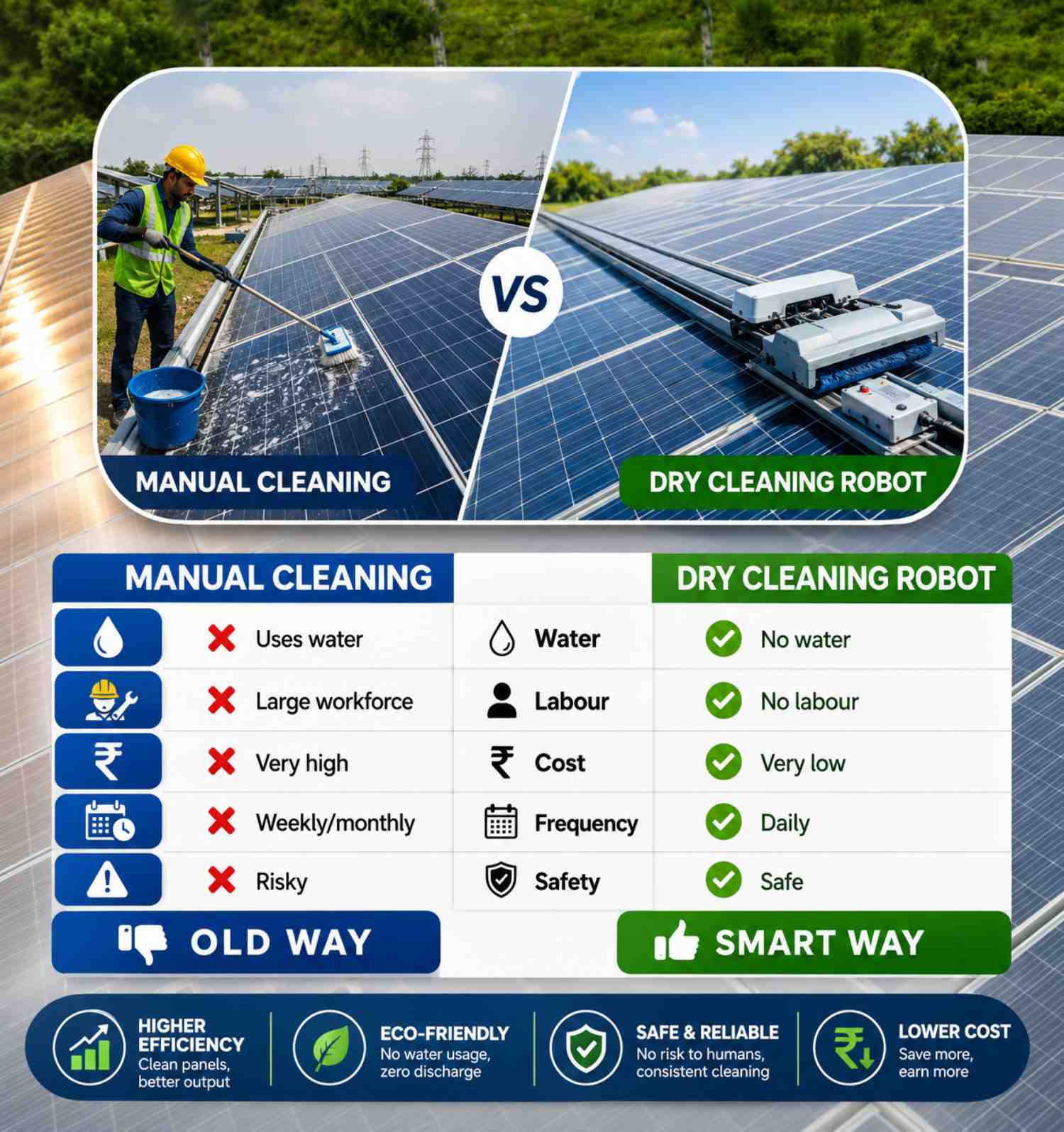
In recent years, solar energy has become one of the most important renewable energy sources worldwide. However, maintaining the efficiency of solar panels remains a major challenge, especially in desert and arid regions where dust and الرمال accumulate rapidly. One of the most innovative and sustainable solutions is dry cleaning using brushes without water.
What Is Dry Solar Panel Cleaning?
Dry cleaning is a process that removes dust, sand, and debris from solar panel surfaces without using water. Instead, it relies on gentle mechanical friction through specialized brushes or advanced robotic systems. This method is particularly effective in regions suffering from water scarcity, where traditional water-based cleaning methods are expensive or impractical.
Studies show that dust accumulation can reduce solar panel efficiency by up to 30% per month if panels are not cleaned regularly. Therefore, dry cleaning has become an essential maintenance technique for large solar farms and rooftop installations.
Advanced Robotic Brush Systems
Modern robotic cleaning systems use rotating nylon spiral brushes designed specifically for solar panels. These robots move automatically across the panel surface, removing dirt efficiently while protecting the glass coating from damage.
Some advanced systems can achieve up to 98% cleaning efficiency without consuming a single drop of water. These robots are often powered by rechargeable batteries or even by the solar panels themselves, making them highly energy-efficient and environmentally friendly.
Advantages of Dry Solar Panel Cleaning
1. Water Conservation
Dry cleaning is ideal for desert and remote regions because it eliminates the need for water resources. This is especially important in countries facing severe water shortages.
2. Lower Operational Costs
Transporting water to distant solar plants can be expensive. By avoiding water usage, companies can significantly reduce transportation, storage, and labor costs.
3. Environmental Sustainability
Dry cleaning produces no wastewater or chemical pollution. It supports eco-friendly solar energy operations and contributes to sustainable environmental practices.
4. Automation and Efficiency
Robotic systems can operate automatically at night or during low sunlight hours, reducing manual labor and ensuring consistent cleaning performance.
Disadvantages and Challenges
Despite its many benefits, dry cleaning also has some limitations.
1. Risk of Surface Scratches
If unsuitable or low-quality brushes are used, they may scratch the glass surface of solar panels, potentially reducing their lifespan and efficiency.
2. Difficulty Removing Sticky Dirt
Dry cleaning is less effective against bird droppings, mud, or stubborn stains compared to traditional water washing methods.
3. Initial Investment Costs
Advanced robotic cleaning systems may require high upfront costs, although they often save money in the long term.
The Future of Solar Panel Maintenance
As solar energy projects continue expanding in desert climates, dry cleaning technologies are expected to become even more advanced. Artificial intelligence, automated navigation, and smart sensors will likely improve cleaning accuracy and reduce maintenance costs further.
Dry solar panel cleaning represents a practical and sustainable innovation that supports the global transition toward renewable energy while conserving one of the planet’s most precious resources: water.
Conclusion
Dry cleaning of solar panels using brushes and robotic systems offers an efficient, eco-friendly, and cost-effective solution for maintaining solar energy systems in water-scarce regions. Although it has some limitations, its advantages in sustainability and resource conservation make it an increasingly popular choice for modern solar farms worldwide.