Home Battery Sizing for Solar Self-Consumption in Europe
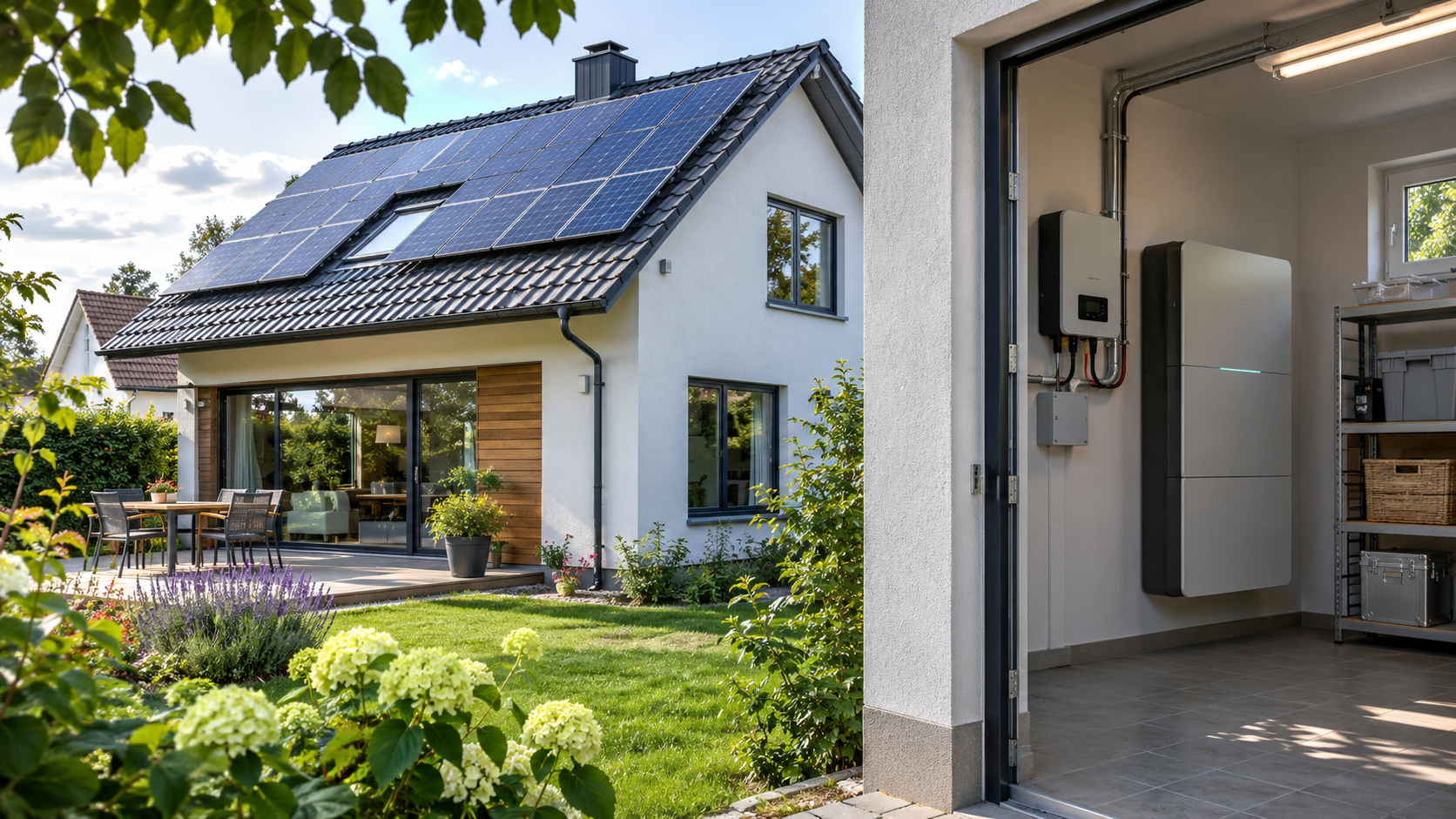
Quick answer: Size a battery to the energy you can regularly charge and use—not to the largest product on the market. For many homes, the best starting point is the smaller of average daily solar surplus and evening-to-morning demand.
Collect the right data
Use at least twelve months of smart-meter or inverter data. Record daytime export, evening import and seasonal solar production. Monthly bills alone hide the hourly pattern that determines battery value.
Usable capacity
A battery advertised as 10 kWh may offer less usable energy after reserve settings and conversion losses. Estimate delivered energy as nominal capacity × usable depth of discharge × round-trip efficiency. For example, 10 kWh × 90% × 90% gives about 8.1 kWh delivered.
Simple sizing method
- Calculate average evening-to-morning consumption.
- Calculate average daily solar export in spring and autumn.
- Choose usable capacity near the smaller value.
- Check inverter power against peak household loads.
- Model winter separately; solar surplus may be limited.
Power matters too
Capacity tells you how long the battery lasts; inverter power tells you which loads it can support. A 10 kWh battery with a 3 kW inverter cannot supply a 7 kW cooker without grid assistance. Backup operation also needs compatible switching, earthing and protected circuits.
Financial checks
- Import tariff and export payment
- Time-of-use price spread
- Expected cycles per year
- Warranty throughput and degradation
- Installation and replacement costs
Oversizing reduces utilisation and can lengthen payback. A smaller battery that cycles regularly may deliver better economics.
Before buying
Confirm fire-safety clearances, ventilation, local grid-notification rules and compatibility with the PV inverter. Ask the installer for a written simulation using your actual interval data rather than a generic consumption profile.