IEC 61850 GOOSE Troubleshooting: VLAN, Multicast and Timing Checklist
Quick answer: when an IEC 61850 GOOSE signal does not reach its subscriber, troubleshoot the complete path in a fixed order: application configuration, publisher frame, switch forwarding, subscriber reception, dataset interpretation and final logic. Do not begin by changing VLAN or relay settings at random. Capture evidence at each boundary and compare it with the approved SCD file.
This guide is written for protection engineers, commissioning teams and OT network specialists working on substation station buses. It provides a practical workflow, but trip circuits and live substations require the site’s safety procedure, approved test plan and responsible engineer.
What GOOSE does
Generic Object Oriented Substation Event (GOOSE) communication distributes events such as protection starts, trips, interlocks and breaker status between intelligent electronic devices (IEDs). It uses Ethernet multicast and repeated transmissions rather than a conventional request-response exchange. After a state change, the publisher transmits rapidly; if no further change occurs, retransmissions become less frequent.
This behavior matters during diagnosis. Seeing one frame proves only that a publisher transmitted at one observation point. It does not prove that every switch forwarded it, that the subscriber accepted it, or that the signal entered the intended logic.
Build a known-good evidence set first
Before connecting a packet analyzer, collect:
- approved SCD or relevant CID/ICD files and revision;
- publisher and subscriber IED names, firmware and active setting group;
- GOOSE control block, dataset and expected signal mapping;
- source MAC, destination multicast MAC, APPID, VLAN ID and priority;
- network diagram, switch port assignments and redundancy protocol;
- expected event and safe method to stimulate it;
- time source and event-reporting method.
A commissioning record should identify the exact configuration downloaded to each IED. Comparing live traffic with an obsolete spreadsheet creates false conclusions.
Step 1: prove the publisher changes state
Use the IED event report, disturbance record or test interface to confirm the source logical node changes as expected. Then capture traffic as close to the publisher as practical. In Wireshark, the display-filter protocol name is goose; the official display-filter reference exposes fields including APPID, dataset, configuration revision and state number.
At the publisher capture, verify:
- the expected destination multicast address and APPID;
- the intended VLAN tag and priority, if configured;
gocbRefand dataset identity;confRevmatching the engineered configuration;stNumincreasing when the dataset value changes;sqNumchanging across retransmissions;- the expected number, type and order of dataset members;
- test and simulation flags appropriate for the test mode.
If the physical input or protection element changes but stNum does not, the fault is likely in the publisher dataset, control block, enabling state or internal logic—not the Ethernet switches.
Step 2: follow the frame through the network
Move the observation point downstream one boundary at a time. A managed switch may provide port mirroring, but the mirror configuration must include the correct ingress/egress direction and VLAN. Record the capture location and switch configuration; an unlabeled packet trace is weak evidence.
| Observation | Likely area | Next check |
|---|---|---|
| Frame absent at publisher port | IED configuration or test stimulus | GOOSE control block, dataset, port link |
| Present before switch, absent after | VLAN or multicast forwarding | port membership, tagging, filtering, topology |
| Present at subscriber port, not accepted | subscription mismatch | APPID, MAC, confRev, dataset, flags |
| Accepted but no output action | IED logic or interlock | virtual input, logic equation, blocking conditions |
Step 3: verify VLAN behavior
A tagged GOOSE frame carries a VLAN identifier and priority value. Problems commonly arise when one switch port expects tagged traffic while another removes the tag, or when the VLAN is not allowed on a trunk. Confirm the engineering rule for access, trunk and IED ports; then compare it with the actual switch configuration.
Do not assume “same VLAN number” guarantees delivery. Also check port membership, native VLAN behavior, permitted VLAN lists, quality-of-service classification and whether replacement switches copied the approved configuration.
Step 4: inspect multicast controls
GOOSE is multicast, so switch behavior differs from ordinary unicast traffic. Depending on the design, multicast may be flooded within the VLAN, constrained by static forwarding entries, or managed through other controls. An aggressive or incomplete multicast filter can silently remove required frames.
Check whether the destination MAC is present in the intended forwarding configuration and whether every subscriber path is included. After topology changes, verify that redundant paths still forward the correct multicast groups without creating loops or duplicate paths outside the intended redundancy design.
Step 5: compare the subscriber contract
A frame can reach the subscriber’s Ethernet port and still be rejected. Compare live values against the active subscriber configuration:
- publisher identity and control-block reference;
- destination MAC and APPID;
- dataset reference and element count;
- configuration revision;
- data types and order;
- test, simulation and needs-commissioning conditions;
- timeout or time-allowed-to-live behavior.
A changed dataset with an old subscriber configuration is a common cause. The subscriber may detect confRev or dataset inconsistency and raise a diagnostic rather than using unsafe data. The 2026 IEC PAS 61850-90-28 specifically addresses expected subscriber validation behavior and associated engineering documentation for received GOOSE and sampled-value messages.
Step 6: verify virtual input and final logic
After proving the subscription is healthy, trace the mapped GOOSE input inside the IED. Check the virtual input value, quality, test state, logic equation, interlocks, protection blocking, active setting group and output matrix. For a trip test, separate “message received” from “trip contact operated” and “breaker opened.” Each is a distinct verification point.
Timing and loss analysis
GOOSE performance cannot be judged from one ping result. Measure event-to-event latency with synchronized capture points or a validated test set. Keep switch residence time, IED processing, network load, redundancy switchover and time synchronization in scope. A capture timestamp from an unsynchronized laptop should not be treated as an end-to-end protection time measurement.
When investigating loss, review gaps and retransmission patterns. A single missing frame may be tolerated because of repetition, while a sustained forwarding failure or timeout is not. Record the event stimulus time, stNum, successive sqNum values and subscriber timeout/alarm.
Useful Wireshark filters
goose— all decoded GOOSE frames.goose.appid == 0x1001— example APPID filter; replace with the project value.eth.dst == 01:0c:cd:01:00:01— example destination MAC filter.vlan.id == 100— example VLAN filter.
Filter values above are examples, not recommended assignments. Use the SCD file and project addressing schedule. The Wireshark GOOSE display-filter reference is the authoritative list of supported field names for the installed release.
Commissioning checklist
- Confirm the approved configuration revision and network drawing.
- Identify publisher, subscribers and the exact dataset members.
- Prove the publisher source signal changes safely.
- Capture at the publisher and record APPID, MAC, VLAN, confRev and state numbers.
- Trace the frame across each switch boundary.
- Review VLAN membership, tagging, priority and permitted trunks.
- Review multicast forwarding and redundancy topology.
- Verify subscriber configuration and diagnostics.
- Trace the virtual input through logic and output contacts.
- Document timing with synchronized equipment.
- Repeat normal, test, failure and restoration cases.
- Save captures, configuration checksums and signed results.
Common mistakes
- Changing the switch before proving the publisher emits the correct frame.
- Using an old SCD export as the reference.
- Capturing on a mirror port that excludes the relevant VLAN direction.
- Checking only APPID while ignoring dataset and confRev.
- Assuming a green subscription indicator proves the trip logic.
- Measuring protection time with unsynchronized laptop clocks.
- Leaving test or simulation flags enabled after commissioning.
Practical conclusion
Troubleshoot GOOSE as a chain of evidence: source logic → publisher frame → switch forwarding → subscriber validation → application logic → physical result. This method isolates the failing boundary quickly and preserves a defensible commissioning record.
Continue with our guides to zero-trust segmentation for industrial control systems and relay coordination studies. Primary references include the IEC 61850 introduction and overview, IEC TR 61850-90-4 network engineering guidance and IEC PAS 61850-90-28 subscriber validation specification.
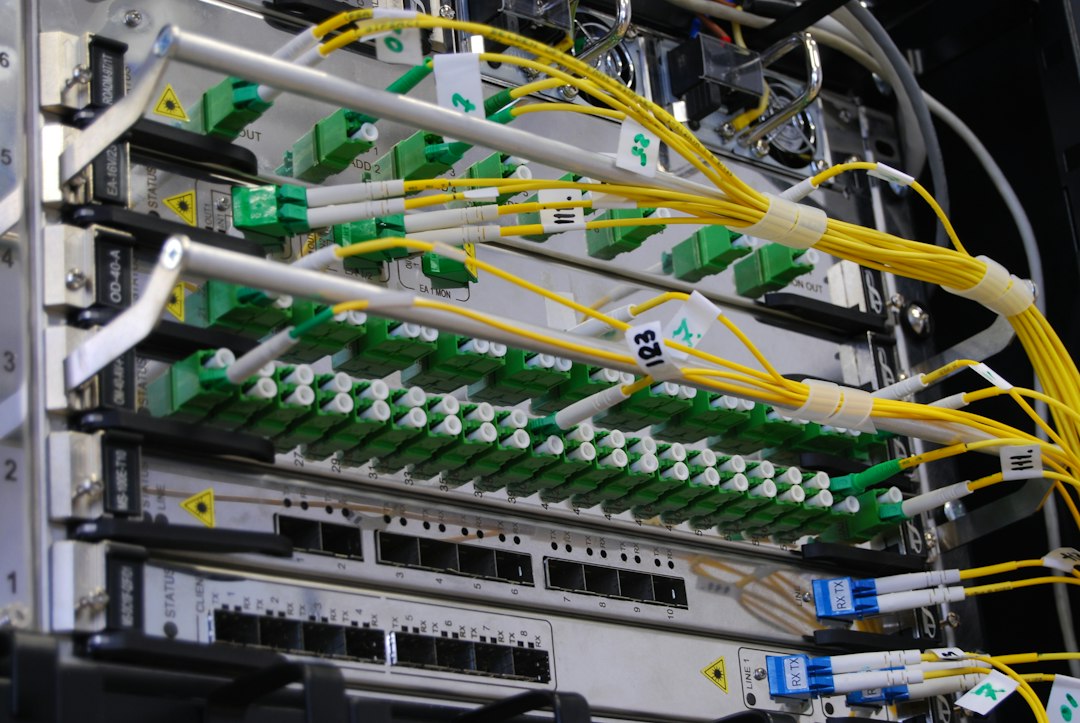
Featured photo: Kirill Sh via Unsplash, used under the Unsplash licence.