Cable Derating at 50°C Ambient Temperature in Gulf Projects
Quick answer: Do not size a Gulf cable from the standard current table alone. The tabulated rating must be corrected for high ambient temperature, grouping, thermal insulation, soil conditions and installation method. Apply factors to the table rating, then check voltage drop and short-circuit withstand.
The core calculation
If the design current is Ib and the combined correction factor is C, the required tabulated capacity is approximately It ≥ Ib / C. When several factors apply, multiply them: C = Ca × Cg × Ci × other relevant factors.
Worked example
A feeder carries 160 A. Assume the applicable standard gives an ambient factor of 0.82 at the project temperature and a grouping factor of 0.80. Combined factor = 0.656. The required tabulated capacity is 160 / 0.656 = 244 A. Select a cable whose table rating is at least 244 A, then verify all remaining checks.
Why 50°C matters
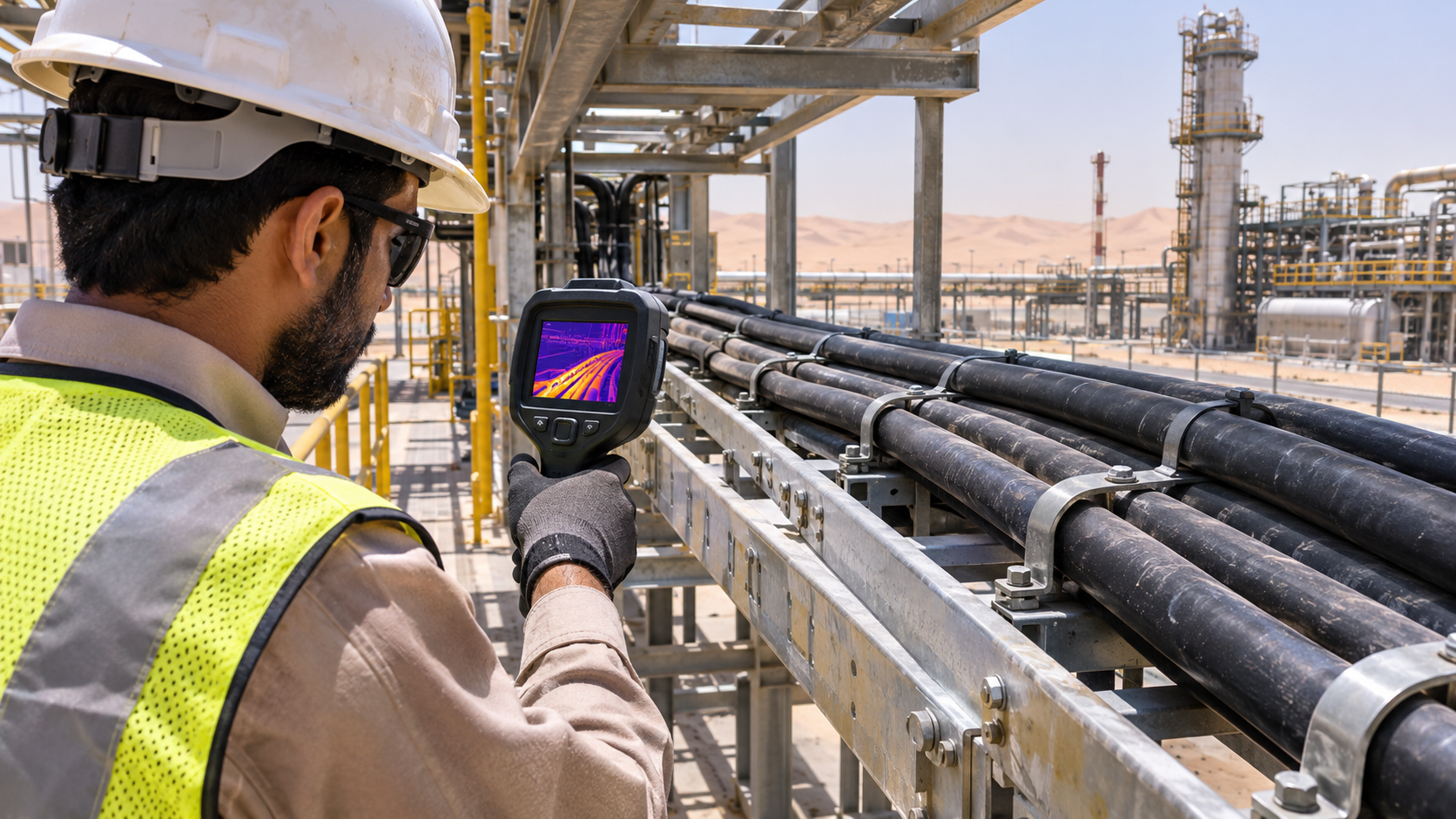
A hotter environment reduces the temperature margin between the conductor and its insulation limit. Cables on sun-exposed trays may experience conditions worse than the reported shade temperature. Use the project’s design ambient and the standard table for the actual insulation type.
Full design checklist
- Conductor material and insulation temperature rating
- Tray, conduit, buried or free-air installation
- Number of loaded circuits and spacing
- Solar radiation and enclosure temperature
- Soil thermal resistivity and burial depth
- Voltage drop at normal and starting current
- Short-circuit thermal withstand
- Protective-device coordination
Avoid double derating
Some manufacturer tables already assume a stated ambient or installation condition. Read the table notes before applying factors. Record every assumption so the calculation can be reviewed.
For critical feeders, compare the calculation with measured operating temperatures after commissioning and review loading when additional circuits are installed.