Heat Pump Electrical Supply Sizing: Breaker, Cable and Starting Current
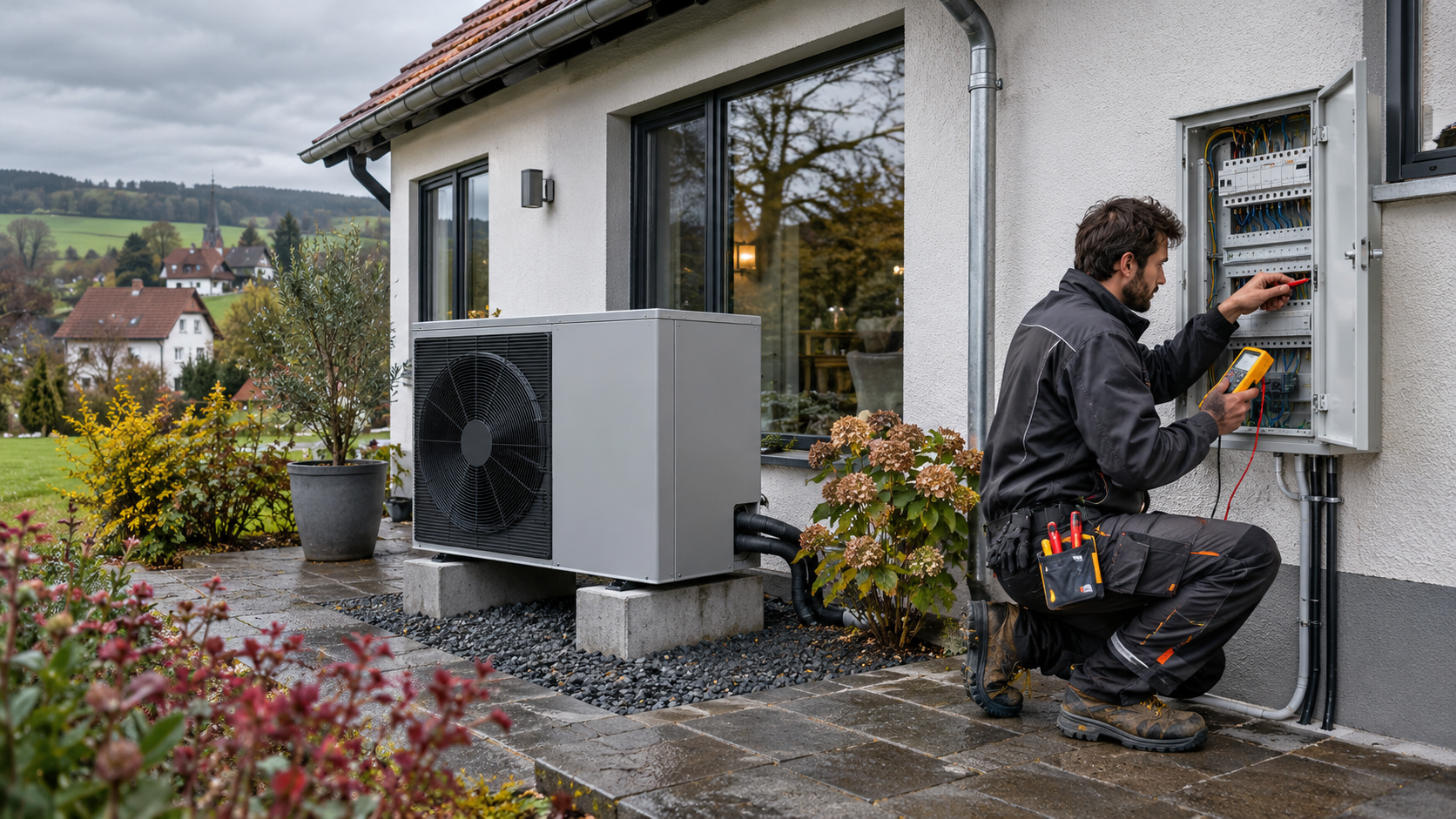
Quick answer: Size the circuit from the manufacturer’s maximum input current or minimum circuit ampacity—not from thermal output in kW. Then check voltage drop, installation method, ambient temperature and starting behaviour.
Thermal output is not electrical input
A 10 kW heat pump does not normally draw 10 kW continuously. Its electrical demand changes with outdoor temperature, water temperature, defrost and auxiliary heaters. Use the technical schedule values for compressor input, backup heater and maximum simultaneous load.
Step-by-step sizing
- List compressor, pumps, crankcase heater and electric backup heater.
- Identify maximum current and manufacturer-required protective device.
- Select a breaker curve that tolerates legitimate starting current while protecting the cable.
- Choose conductor size using the local wiring standard and installation method.
- Apply correction factors for insulation, grouping and temperature.
- Verify voltage drop during normal operation and starting.
Example
Assume a single-phase unit has 18 A maximum operating current and the manual permits a 25 A protective device. The cable must carry at least the design current after all derating factors, while the breaker rating must not exceed the cable’s corrected capacity. A long route may require the next cable size even when ampacity is adequate.
Starting current
Modern inverter heat pumps often start softly, but auxiliary heaters can create the highest steady demand. Older fixed-speed compressors may need a different breaker characteristic. Never change the breaker curve without checking disconnection times, fault-loop impedance and manufacturer limits.
Commissioning checks
- Measure voltage at the unit under load.
- Confirm phase balance on three-phase systems.
- Test RCD protection where required.
- Record running current in heating and defrost modes.
- Label the isolator and dedicated circuit.
Allow capacity for controls and frost protection, and coordinate any load-management system with the heat-pump controller.