Understanding “Utility First (USB)” Mode in Voltronic Inverters
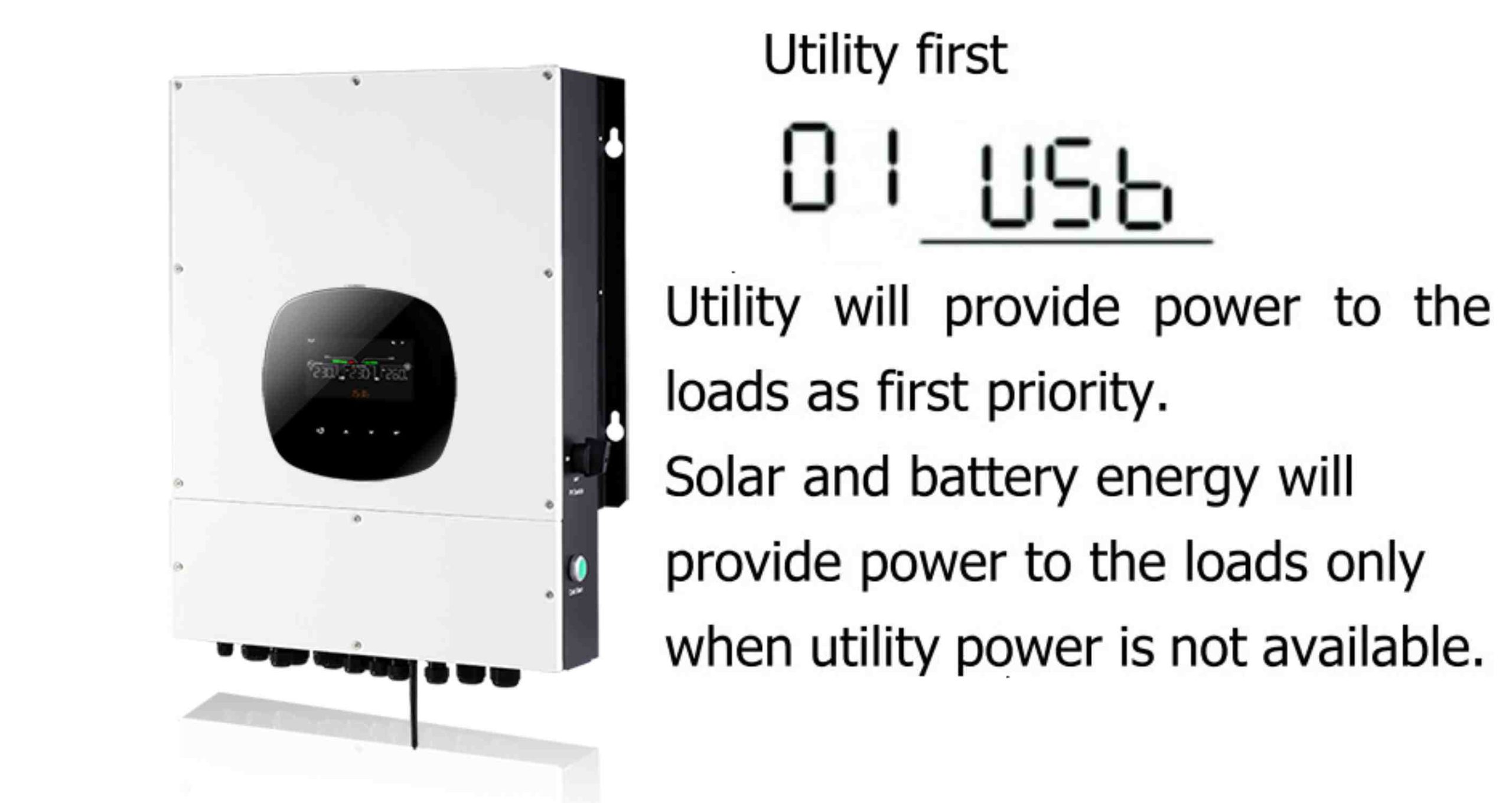
In the world of solar and backup power systems, inverter settings can often be misunderstood—even by experienced technicians. One common example is Option (01): USB (Utility First) in Voltronic inverters. While it may seem straightforward, incorrect assumptions about how it works can lead to inefficient system performance.
Let’s break it down clearly.
What Does “Utility First (USB)” Mean?
The Utility First (USB) setting prioritizes the main grid (utility power) as the primary source of electricity for your loads.
In simple terms:
If grid power is available, the inverter will use it first—no matter what.
How It Works in Practice
When Option (01) is set to USB (Utility First):
- The loads are powered by the utility grid as the top priority
- This happens even if solar panels (PV), batteries, or a generator are available
- The inverter will not use battery or solar energy for the load as long as grid power is present
Important Note ⚠️
- Solar panels and batteries will only supply power to the load when the grid (utility) is unavailable (UTI mode)
- As long as the grid is active, alternative sources are essentially on standby for load supply
What Happens to Solar Energy?
Even though solar energy is not used to power the load in this mode, it still plays an important role:
- Solar panels (PV) can charge the batteries
- The system effectively stores energy instead of using it immediately
When Is This Mode Useful?
The Utility First mode can be beneficial in scenarios such as:
- When you want to preserve battery life by avoiding frequent discharge
- When the grid is stable and reliable, and solar is mainly for backup
- When you prefer to use solar energy primarily for battery charging, not for load supply
- When minimizing system switching or complexity is important
Common Misunderstanding
A common mistake is assuming that solar power will automatically reduce grid consumption in this mode.
That’s not the case.
With USB (Utility First):
The system prioritizes stability over efficiency—grid power always comes first.
Final Thoughts
Understanding inverter settings is essential for optimizing system performance. A simple configuration like Utility First (USB) can significantly change how energy flows through your system.
The key takeaway:
This mode is designed for reliability and battery preservation—not for maximizing solar usage. Choosing the right mode depends entirely on your priorities—whether that’s cost savings, energy independence, or system longevity.
#SolarEnergy #Inverters #Voltronic #ElectricalEngineering #PowerSystems #RenewableEnergy #EnergyManagement