The Megohmmeter: A Comprehensive Guide to Insulation Resistance Testing
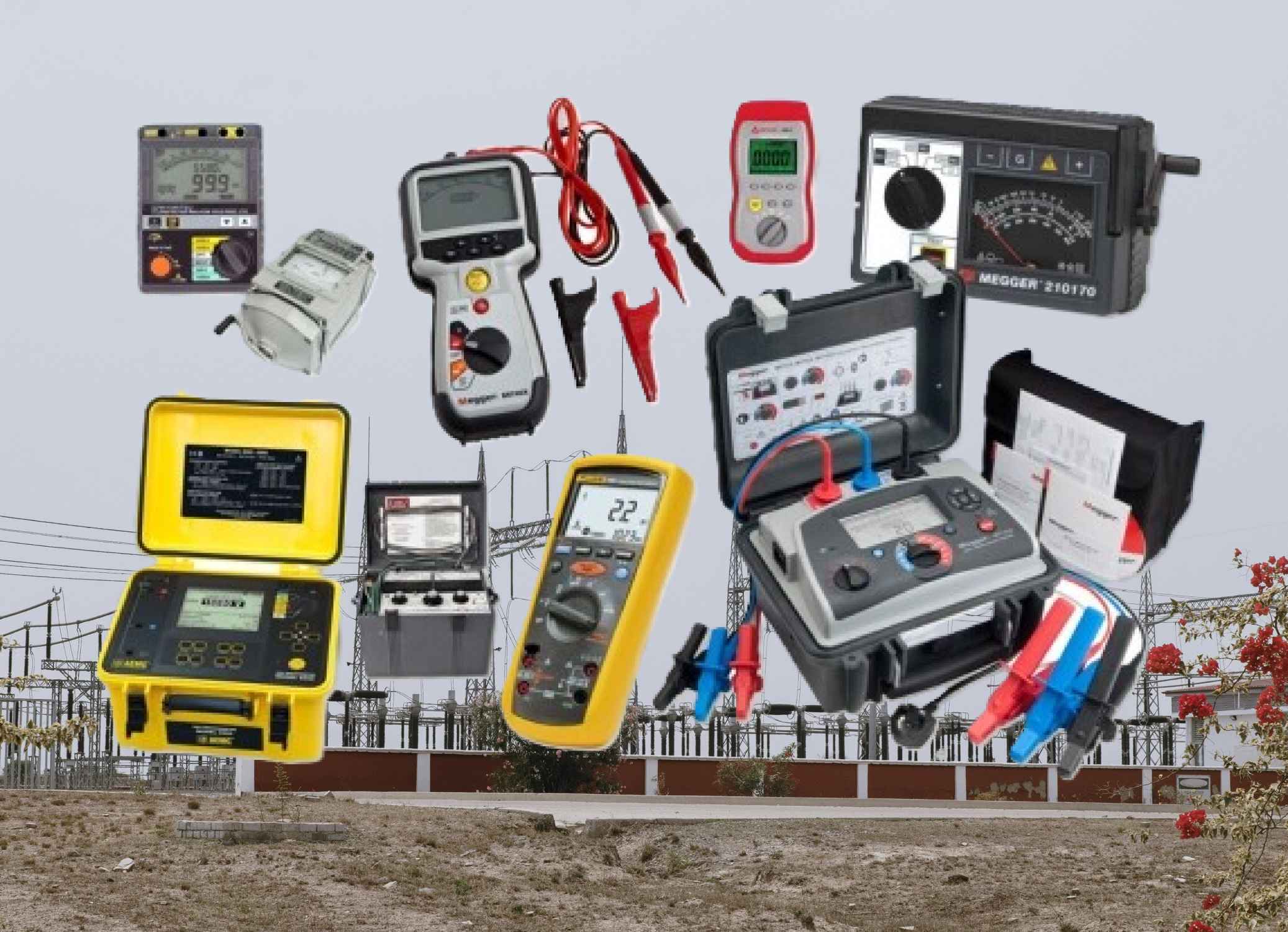
The megohmmeter, commonly referred to by the trade name Megger, is a specialized and indispensable piece of electrical test equipment. It is essentially a high-range ohmmeter designed to measure the electrical resistance of insulation materials in electrical apparatus and wiring. Unlike standard ohmmeters, which measure low resistance values, a megohmmeter can measure extremely high resistance, typically ranging from several megohms (MΩ) to several teraohms (TΩ). This capability is crucial because the primary function of electrical insulation is to resist the flow of current, and a high resistance reading indicates good insulation health.
Technical Principle and Operation
The fundamental principle of the megohmmeter is based on Ohm’s Law (R = V/I). The instrument operates by applying a high, controlled DC voltage across the insulation being tested and then measuring the resulting minute leakage current that flows through the material. The applied test voltages are significantly higher than those used by a standard multimeter, typically ranging from 250 V to 15,000 V, depending on the equipment’s operating voltage and the test standard being followed.
Historically, megohmmeters used a hand-cranked generator to produce the high DC voltage, but modern instruments are electronic and battery-powered. The measured current is used to calculate the insulation resistance, which is then displayed directly on the meter. A key feature in many professional megohmmeters is the Guard Terminal. This third terminal is used to shunt any surface leakage current—often caused by dirt or moisture on the insulation’s surface—away from the measuring circuit. By isolating the surface current, the guard terminal ensures that the instrument measures only the true internal volume resistance of the insulation, providing a more accurate assessment of its condition.
Applications and Significance
Insulation resistance testing is a cornerstone of preventive and predictive maintenance programs across various industries. By periodically measuring and trending the insulation resistance, technicians can detect deterioration before it leads to catastrophic equipment failure, which can result in costly downtime and safety hazards.
Megohmmeters are employed to test the insulation of a wide array of electrical equipment, including:
- Rotating Machinery: Motors and generators, where the test assesses the condition of the winding insulation.
- Transformers: Both power and distribution transformers, to check the integrity of the winding insulation.
- Cables: Low, medium, and high-voltage power cables, to detect damage or moisture ingress.
- Switchgear and Circuit Breakers: To ensure proper isolation between phases and to ground.
The general rule of thumb, as suggested by some standards, is that the minimum acceptable insulation resistance should be approximately 1 megohm per 1,000 volts of the equipment’s operating voltage, with a minimum of 1 megohm.
Key Insulation Testing Methods
While a simple Spot-Reading Test (a single measurement taken after a fixed time, typically 60 seconds) provides a baseline, more advanced methods are used to gain deeper insight into the insulation’s condition. These time-based tests help distinguish between insulation that is merely dirty or wet (which can be cleaned or dried) and insulation that is chemically degraded and nearing failure.
| Test Method | Description | Purpose and Interpretation |
| Spot-Reading Test | A single reading taken after the test voltage has been applied for a short, fixed duration (e.g., 60 seconds). | Provides a quick, basic check. The reading is highly sensitive to temperature and moisture. |
| Dielectric Absorption Ratio (DAR) | The ratio of the insulation resistance reading at 60 seconds to the reading at 30 seconds (R{60s} / R{30s}). | Indicates the presence of moisture or contamination. A low ratio suggests poor insulation quality. |
| Polarization Index (PI) | The ratio of the insulation resistance reading at 10 minutes to the reading at 1 minute (R{10min} / R{1min}). | Assesses the insulation’s dryness and cleanliness. A low PI value (e.g., below 2.0 for rotating machines) often indicates significant insulation degradation or excessive moisture. |
| Step-Voltage Test | Applying a series of increasing test voltages (e.g., 500V, 1000V, 2500V) to the insulation. | Reveals localized defects or pinholes that may not be apparent at lower voltages. If the resistance drops significantly at higher voltages, it suggests a weak spot in the insulation. |
It is also critical to note that insulation resistance is highly temperature-dependent. Readings should be corrected to a standard reference temperature (often 40°C) to ensure that trends over time are accurately compared.
Safety and Standards
Due to the high voltages generated by megohmmeters, strict safety protocols are mandatory. The primary safety rule is to ensure the equipment under test is completely de-energized and isolated from all power sources using a Lockout/Tagout (LOTO) procedure.
Crucially, after the test is complete, any equipment with significant capacitance, such as long cables or large motor windings, must be discharged to ground. The megohmmeter itself will often perform an automatic discharge, but manual verification is a critical safety step to eliminate stored electrical energy and prevent severe electric shock. Furthermore, before the measurement, the device under test must be short-circuited to the ground to remove any residual charge.
Testing procedures are often governed by industry standards, such as those published by the Institute of Electrical and Electronics Engineers (IEEE). For instance, IEEE Standard 43 provides the recommended practice for measuring the insulation resistance of rotating machinery, including acceptable minimum values for the Polarization Index