Earth Wire: A Redundant Cable or a Lifeline? The Critical Role of Electrical Panel Grounding
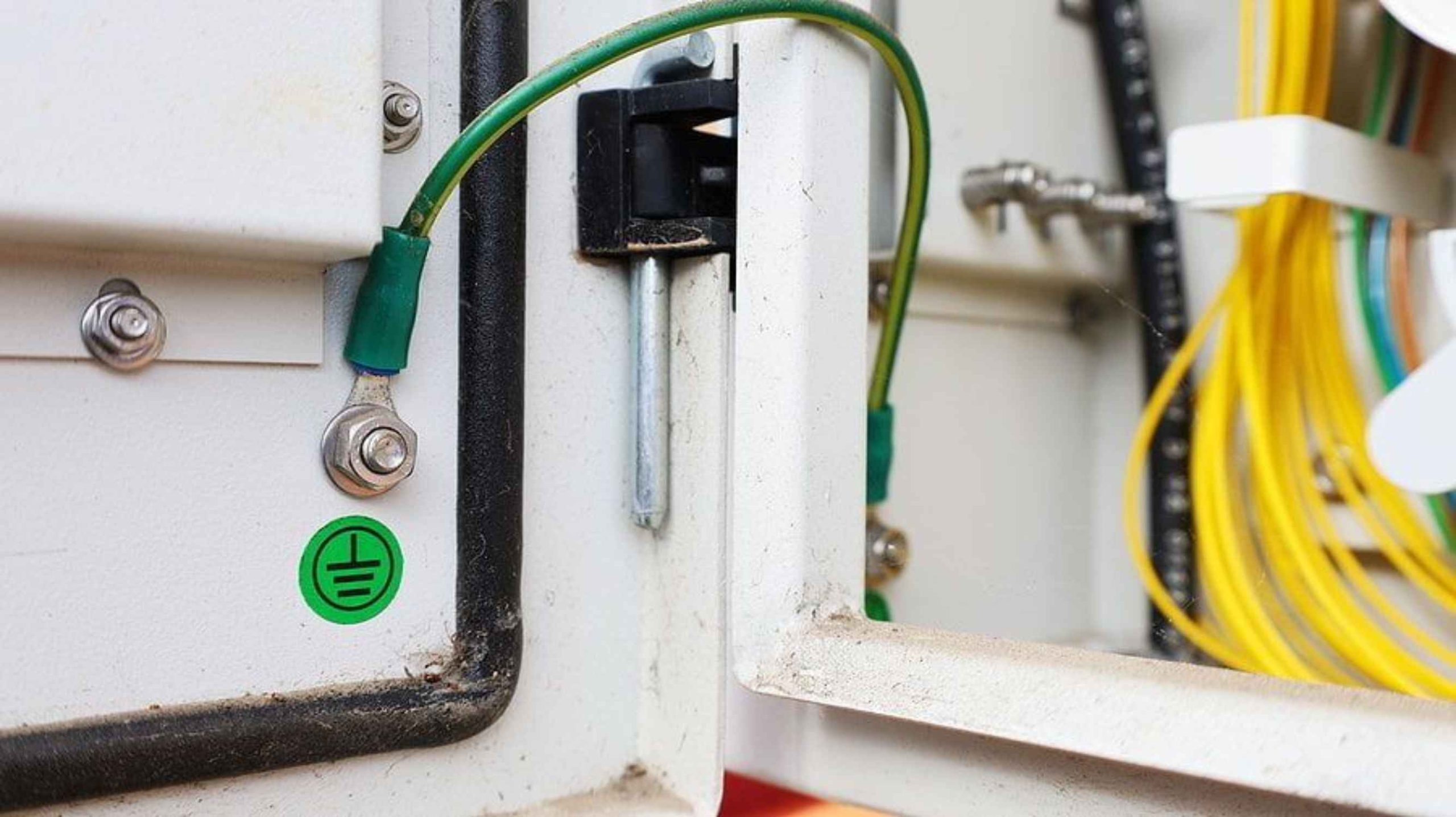
The practice of electrical installation is governed by strict codes and an unyielding principle: safety first. Yet, across construction sites and existing installations, a critical safety component is frequently overlooked or deliberately compromised: the protective earth (ground) wire. This neglect often stems from a fundamental misunderstanding of its function, leading to what can only be described as a complete “engineering crime.”
The Engineering Crime: Misusing the PEN Conductor
One of the most egregious errors observed in the field is the complete omission of the earth wire or, equally dangerous, the practice of “tying it to the neutral” (creating a combined Protective Earth and Neutral, or PEN conductor, in the wrong part of the system). While the system may appear operational, this practice is a ticking time bomb.
The danger of combining the Protective Earth (PE) and Neutral (N) conductors downstream of the main service entrance is profound. In a properly designed system (such as TN-S), the PE and N are separate. However, when they are combined (TN-C-S or TN-C) and the shared PEN conductor suffers a break—due to corrosion, damage, or a loose connection—all connected metal enclosures, such as a washing machine body or an electrical panel, will instantly become energized to full phase voltage. This transforms a seemingly safe appliance into a lethal hazard.
Why the Error Persists: Complacency and Ignorance
The reasons for this professional lapse are twofold:
- Complacency and Underestimation: The common refrain is, “The device works without it!” This attitude ignores the fact that the earth wire is not for normal operation; it is for fault protection. The system is functional until the first insulation failure occurs. At that moment, the appliance’s metal chassis or the electrical panel enclosure instantly becomes a deadly source of electric shock to occupants.
- Ignorance of the Path of Least Resistance: Electrical current is governed by Ohm’s Law and the principle that it will always seek the path of least resistance to the earth. The dedicated earth wire is designed to provide a low-impedance path, typically requiring a resistance of less than 5 ohms in many industrial specifications or less than 25 ohms per codes such as the National Electrical Code (NEC). This low-resistance path is crucial because it rapidly diverts the fault current away from the human body and, critically, ensures it is high enough to trip the circuit breaker or fuse, isolating the fault. Without this dedicated path, the human body, with its relatively high resistance, becomes the easiest route to the ground.
The following table summarizes the critical difference between a low-impedance earth path and a compromised one:
| Feature | Low-Impedance Earth Path (Proper Grounding) | High-Impedance Path (Neglected/Compromised) |
| Fault Current Route | Dedicated earth wire (PE) | Human body, water pipes, building structure |
| Resistance Target | Typically < 5 Ohms (Industrial) or < 25 Ohms (Code Minimum) | High and unpredictable |
| Safety Outcome | Fault current rapidly diverted; Circuit breaker trips instantly. | Fault current passes through the human body; Circuit breaker may not trip. |
| Result | Life saved; Equipment protected. | Electrocution risk; Fire hazard. |
Grounding in Photovoltaic (PV) Systems: A Specialized Necessity
The importance of proper grounding extends to specialized installations, particularly Photovoltaic (PV) solar energy systems. In these setups, neglecting the grounding of the metal structure (racking) supporting the solar panels exposes the entire array to two major risks:
- Static Charge and Lightning: The ungrounded structure becomes highly susceptible to static charge buildup and is vulnerable to lightning strikes.
- Inverter Damage: These electrical events can lead to catastrophic failure, often resulting in the destruction of the sensitive and costly inverter unit. Proper grounding ensures that these transient voltages are safely dissipated into the earth, protecting both personnel and high-value equipment.
Conclusion: The Ethical Imperative
The earth wire is not a decorative element in the electrical panel; it is the sole insurance policy for human life. The engineer or technician who compromises on grounding is compromising their professional integrity and, more importantly, the safety of the end-users.
“Grounding is not a decoration in the panel; it is the only insurance for human life. The engineer or technician who compromises on grounding compromises their professional integrity.”
References
- Test Instrument Solutions. Dangers Associated With PEN Faults.
- National Fire Protection Association (NFPA). NEC 250.53(A)(2) Exception.
- Atern Store. 7 grounding mistakes that kill PV reliability under NEC/IEC.