Understanding LSIG Protection in Air Circuit Breakers (ACB)
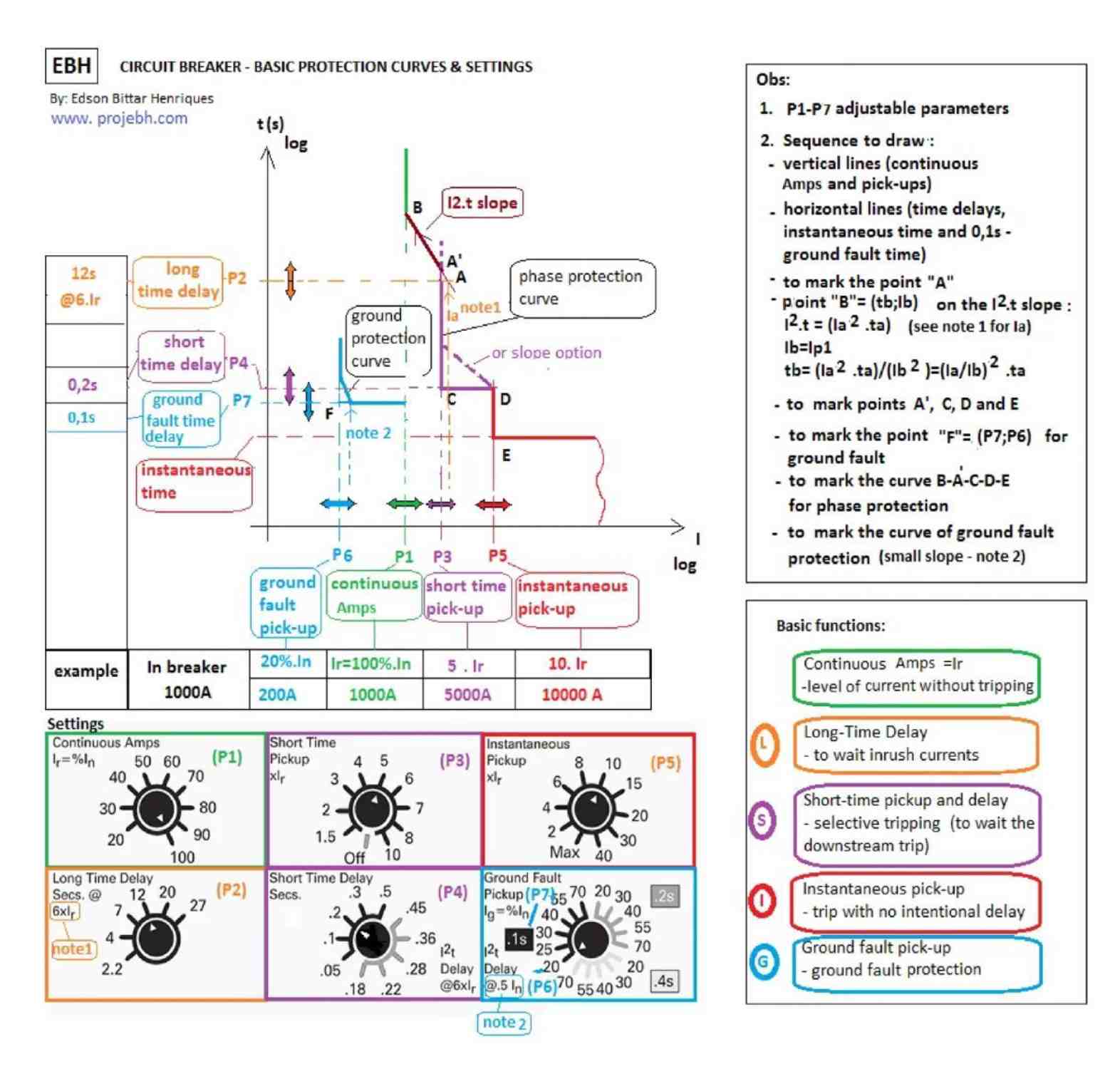
In modern low-voltage (LV) power distribution systems, protection goes far beyond simply tripping during a fault. It’s about ensuring selectivity, maintaining system stability, and maximizing reliability. This is where LSIG protection functions in an Air Circuit Breaker (ACB) become essential.
Let’s break down what LSIG stands for and how each function contributes to a robust protection scheme.
L – Long Time Protection (Overload)
This function protects against sustained overcurrent conditions, such as overloads.
- Adjustable current setting (Ir) and time delay
- Helps prevent nuisance tripping during inrush currents from equipment like motors and transformers
S – Short Time Protection
Designed for short-circuit conditions with an intentional delay.
- Ensures selectivity by allowing downstream breakers to clear faults first
- Uses I²t characteristics for precise coordination
I – Instantaneous Protection
Acts as the final line of defense under severe fault conditions.
- Trips with no intentional delay
- Protects the system from high-magnitude fault currents
G – Ground Fault Protection
Detects leakage currents or insulation failures.
- Safeguards equipment and reduces fire risk
- Features adjustable pickup and delay settings for proper coordination
The Time-Current Curve
The accompanying time-current characteristic curve illustrates how these four functions interact:
- Vertical axis: Time (log scale)
- Horizontal axis: Current (log scale)
Each region of the curve defines how the breaker responds under different fault scenarios—from minor overloads to severe short circuits.
Why Proper LSIG Settings Matter
Correctly configuring LSIG parameters ensures:
- Selective tripping – Only the faulted section is isolated
- Equipment protection – Minimizes damage during faults
- System continuity – Maintains power to healthy parts of the network
- Personnel safety – Reduces risk of arc flash and other hazards
A well-coordinated LSIG curve isn’t just a technical detail—it’s the backbone of a dependable LV protection system.