Modeling Distributed Energy Resources: A Critical Analysis for Power System Planning and Operation
1. Introduction: The Imperative for Modeling Distributed Energy Resources
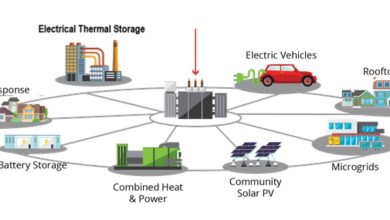
The global proliferation of Distributed Energy Resources (DERs), including rooftop photovoltaics (PV), electric vehicles (EVs) with vehicle-to-grid capabilities, and demand response programs, is fundamentally transforming power system architecture. This shift challenges the traditional paradigm of centralized, large-scale generation connected to load centers via extensive transmission and distribution networks. Crucially, contemporary distribution systems were not originally designed to accommodate bidirectional power flows or generation at the grid edge. Consequently, accurate modeling of DERs has become indispensable for effective power system planning, operational reliability, and stability analysis, necessitating a reevaluation of conventional analytical frameworks.
2.0 Systemic Impacts of Distributed Energy Resources
DER integration presents a dual-faceted impact, affecting both the distribution system and the bulk power system (comprising generation assets and the high-voltage transmission network).
- 2.1 Reliability Considerations: A primary research focus is the impact of DERs on system reliability—the ability to supply uninterrupted power. Key concerns identified in the literature include:
- Visibility: Operational and planning challenges arising from a lack of comprehensive, real-time DER data.
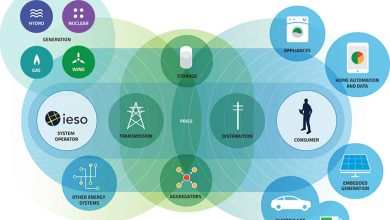
- Coordination: The need for enhanced coordination mechanisms between centralized bulk system resources and decentralized DERs.
- Operational Dynamics: The influence of DER generation profiles on unit commitment decisions, system ramping requirements, and the accuracy of day-ahead load forecasts, particularly with variable PV and wind resources.
- 2.2 Potential Benefits: Conversely, strategic DER deployment offers significant benefits to the bulk power system, including the reduction of electrical losses through localized generation and the mitigation of system peak demand, thereby deferring the need for conventional network upgrades.
3.0 Methodological Approaches to DER Modeling
Increasing DER penetration alters the interactions between bulk and distribution systems, making integrated modeling essential. Load flow (power flow) analysis is a foundational study for assessing impacts on bus voltages and line power flows following contingencies (e.g., the loss of a central PV plant). Modeling approaches differ based on system scope:
- Bulk System Studies typically assume a balanced, three-phase system.
- Distribution System Studies often employ detailed, phase-specific models to accurately represent unbalanced conditions caused by single-phase loads and DER installations.
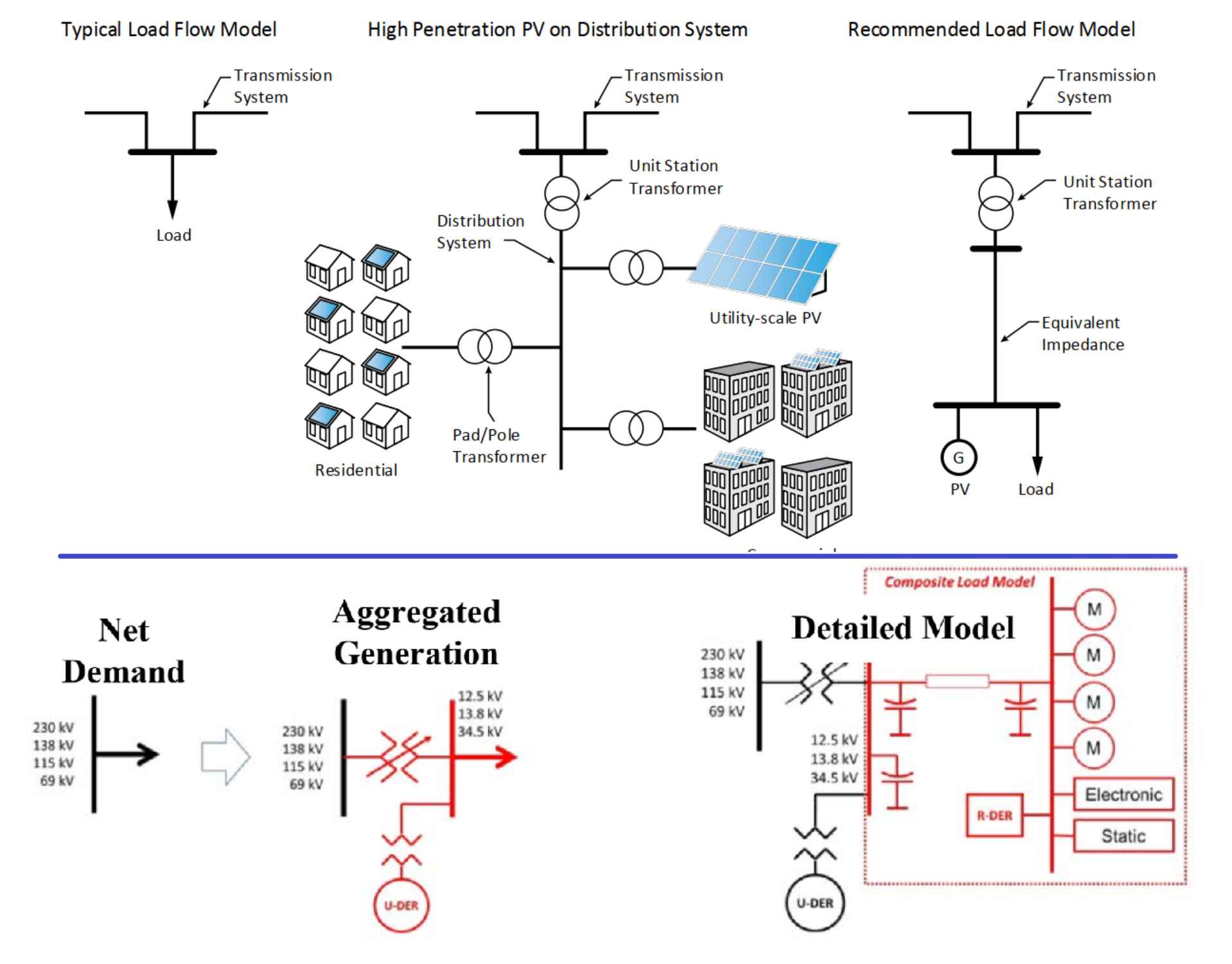
DER modeling on a distribution feeder can be conceptualized through three primary methodologies, which vary in complexity and fidelity:
- Detailed Composite Model: Represents the feeder with explicit, time-series models for individual loads and DER generation based on measured data.
- Aggregated Model: Treats the total feeder load and the aggregate DER generation as separate, lumped entities at the substation connection point.
- Net Load Model: Combines load and generation into a single net demand value at the substation, a common but simplified industry practice.
While the net load model is computationally the least demanding, it may obscure actual power flow patterns and is inadequate for analyzing systems with high DER penetration. The aggregated model offers a preferable balance, capturing more interactive effects than the net load model without the computational burden of a complete detailed model.
4.0 Modeling Requirements for Key Power System Studies
Appropriate DER model selection is contingent upon the specific study type:
- 4.1 Steady-State Load Flow Studies: For planning and voltage stability, standard generator models (e.g., voltage or current sources with voltage control loops) are often sufficient under normal operating conditions.
- 4.2 Steady-State Short-Circuit Studies: These require models that accurately represent the fault current contribution of DERs. Inverter-based resources (IBRs), being current-limited, require models such as a Norton equivalent with control loops that simulate behavior during voltage abnormalities, contingent on grid code trip and ride-through requirements.
- 4.3 Dynamic Studies: These include:
- Disturbance Ride-Through Analysis: Assesses frequency and voltage stability post-contingency, accounting for potential DER disconnection.
- Transient Stability Analysis: Evaluates system stability during and after faults, considering the potential for fast reactive power support from DERs.
Modeling for dynamic studies requires a detailed understanding of both DER technology specifications and interconnection standards (e.g., IEEE 1547, California Rule 21), which define critical performance requirements such as fault ride-through.
5. Advanced Modeling Frameworks: PVD1 and Composite Load Models
To address these complexities, advanced standardized models have been developed.
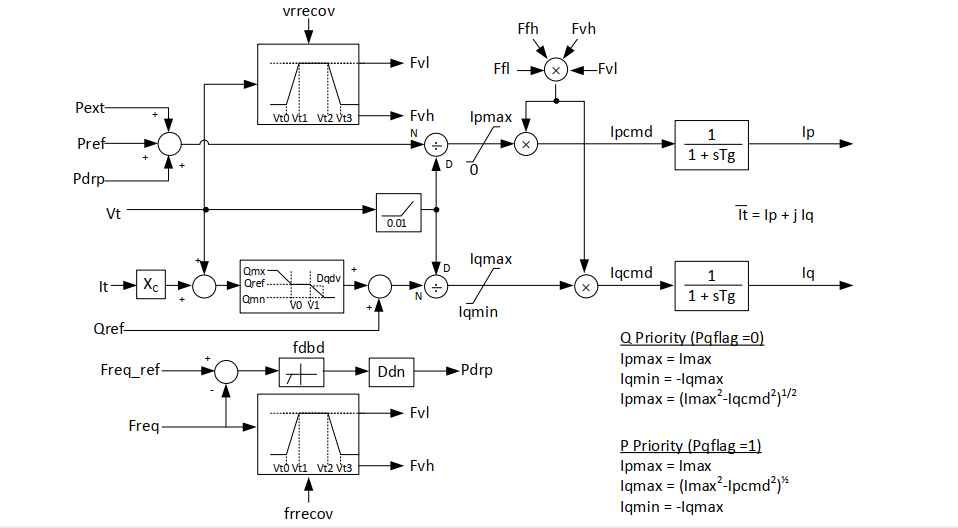
- The PVD1 Model: A simplified, aggregate dynamic model for representing distributed PV systems behind an equivalent feeder impedance. It incorporates active/reactive power controls, protective functions, and can simulate partial tripping of PV systems without explicit feeder representation, accommodating diverse DER ride-through capabilities.
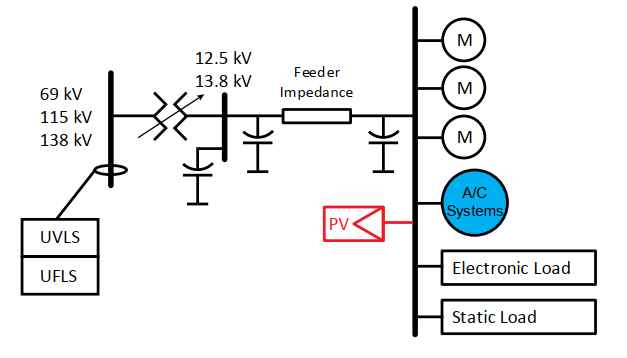
- The Composite Load Model with DER (CMPLDWG): Integrates distributed PV models with aggregate load models. This integration is critical for detailed distribution-level analysis, such as estimating the volume of DERs that may trip offline during disturbances.
6. Conclusion
Accurate power system modeling is a critical enabler for the reliable integration of high DER penetrations into an increasingly complex grid. Ensuring reliable operation requires that all system components—including DERs—are represented with appropriate fidelity in planning and operational studies, either directly or through validated aggregation methods. Overcoming barriers to higher DER penetration is fundamentally linked to the advancement and adoption of precise modeling techniques in system analysis. As the grid evolves, so too must the analytical tools used to understand and manage it.