Hydropower
Core Components of a Thermal or Hydroelectric Power Station
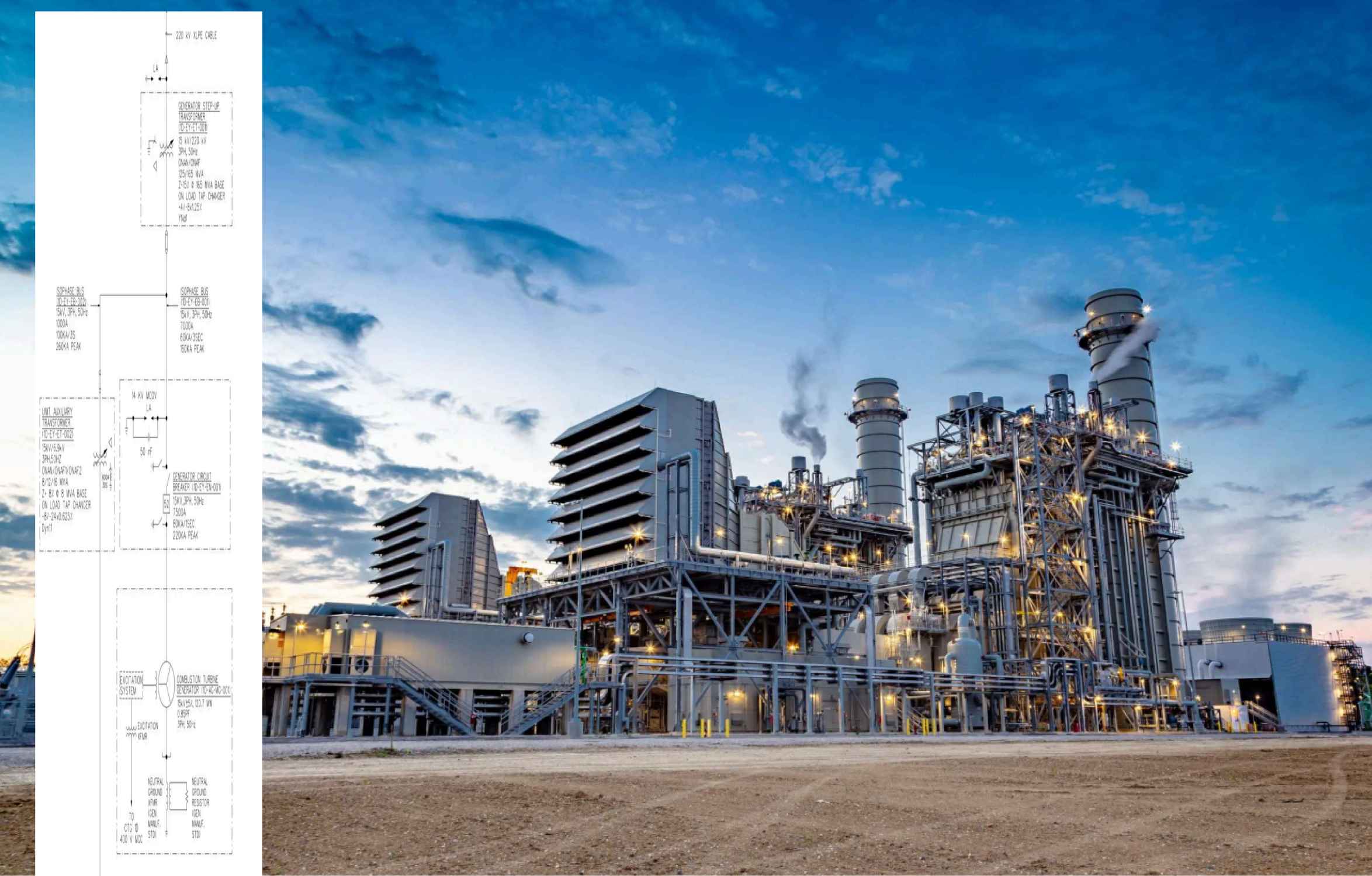
A power station is a fundamental component of modern energy infrastructure, engineered to convert primary energy sources into electrical power. Its primary function is to transform mechanical, thermal, or chemical energy into electricity, which is then distributed via transmission and distribution grids to serve residential, commercial, and industrial loads. By providing a stable and continuous supply of electrical energy, power stations form the essential backbone of contemporary societal and economic systems.
Core Components of a Thermal or Hydroelectric Power Station
The operational integrity of a conventional power station relies on several critical subsystems, each fulfilling a distinct role in the generation, conditioning, and delivery of electrical power.
- Prime Mover (Turbine)
The turbine acts as the prime mover, converting the kinetic energy of a working fluid—such as steam, combustion gases, or flowing water—into rotational mechanical energy. It must operate at a precise synchronous speed to ensure compatibility with the electrical grid’s frequency. - Synchronous Generator (Alternator)
The generator is mechanically coupled to the turbine shaft. The rotation of the rotor, which houses the field (excitation) windings, produces a rotating magnetic field. This field interacts with the stationary stator windings, thereby inducing an alternating electromotive force (EMF) at the generator terminals according to the principles of electromagnetic induction. - Generator Circuit Breaker (GCB)
This device serves as a critical control and protection element within the generation circuit. Its primary functions include safely isolating the generator from the network during planned shutdowns and rapidly disconnecting under fault conditions to protect equipment and ensure system stability. - Generator Step-Up Transformer (GSU)
The generator’s electrical output is at a medium voltage level. The step-up transformer elevates this voltage to the extra-high voltage (EHV) level required for efficient long-distance transmission, significantly reducing resistive power losses across the network. - Extra-High Voltage Switchyard
The switchyard comprises an array of circuit breakers, switches, and busbars. It provides the necessary interconnection points to integrate multiple generators (via their respective step-up transformers) with the overarching high-voltage transmission network. - Unit Auxiliary Transformer (UAT)
To supply power for the generator’s auxiliary systems—such as cooling pumps, lubrication systems, and control panels—a unit transformer steps down a portion of the generator’s output voltage to a suitable utilization level. This ensures the operational readiness of support equipment essential for the generation unit itself.