Hipotential Test Set (AC/DC/VLF)
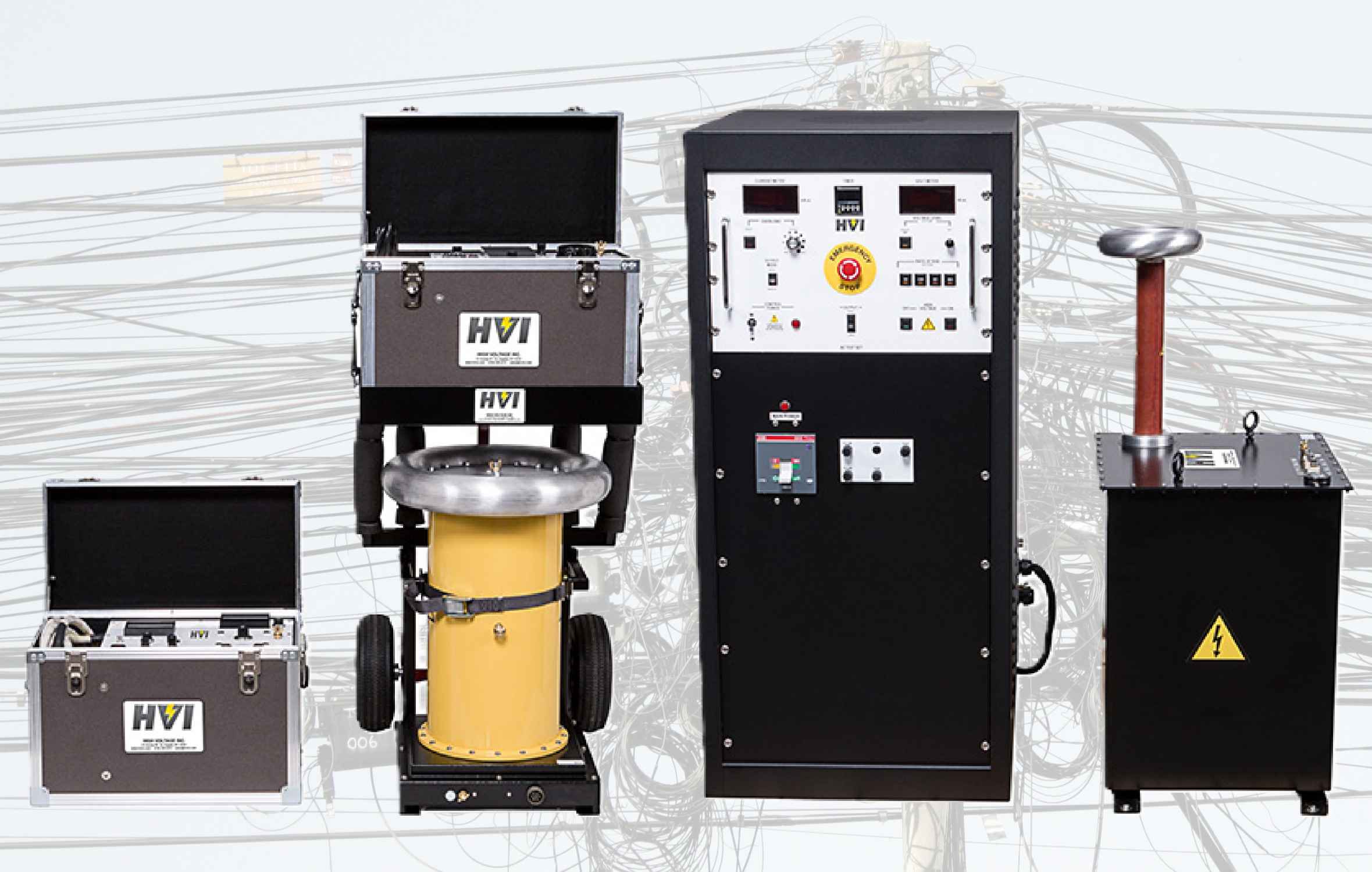
Hipotential (hipot) test sets are used to perform dielectric withstand testing on medium- and high-voltage equipment. This type of testing verifies the integrity of electrical insulation by applying a voltage higher than the equipment’s nominal operating level and monitoring leakage current to ground. Unlike a continuity test, which checks for proper electrical connection, hipot testing ensures that insulation effectively prevents unwanted current flow.
A typical hipot test set consists of three leads: a high-voltage lead, a return lead, and a ground lead. The high-voltage lead is connected to the device under test, while all other components are grounded. Leakage current flowing through the insulation is measured via the return lead.
If the leakage current exceeds acceptable limits, the test set’s internal protection circuitry will trip. Hipot testing is therefore considered a “go/no-go” test: the insulation either withstands the applied voltage without tripping the test set or it does not. There is no required minimum leakage current value, only a maximum allowable limit.
Hipot test sets can generate output voltages ranging from approximately 1 kV to over 100 kV, available in either AC (typically at line frequency) or DC, depending on the application. Very low frequency (VLF) hipot testing applies a sinusoidal AC waveform—usually between 0.01 and 0.1 Hz—and is particularly suited for evaluating insulation in highly capacitive loads, such as power cables.