The Evolution and Implementation of Renewable Energy Storage Systems
Introduction
Renewable energy represents the most rapidly expanding sector within the global energy landscape. Projections indicate that the global renewable energy market will reach $1.8 trillion by 2027, following a significant milestone of $259 billion in 2025. This growth is reflected in the shifting composition of the global electricity supply; between 2011 and 2021, the share of renewables increased from 20% to 28%. Concurrently, the reliance on fossil fuels declined from 68% to 62%, while nuclear energy’s contribution dropped from 12% to 10%.
Despite this progress, the transition to a renewable-centric grid faces a fundamental challenge: intermittency. Solar and wind energy production are contingent upon environmental conditions, necessitating robust storage solutions to ensure a consistent power supply when generation is low. This report examines the primary methodologies currently being developed and deployed to bridge the gap between energy production and consumption.
Comparative Overview of Energy Storage Technologies
The following table summarizes the primary methods of energy storage, highlighting their mechanisms and current applications.
| Storage Category | Primary Mechanism | Key Technologies | Notable Characteristics |
| Electrochemical | Chemical reactions | Lithium-ion, Flow batteries | High efficiency; scalable for grid use. |
| Hydroelectric | Gravitational potential | Pumped Storage Hydropower (PSH) | Dominant utility-scale method; site-specific. |
| Thermal | Heat retention | Molten salt, Sand, Phase change | Long-duration storage; useful for heating. |
| Mechanical | Kinetic/Potential energy | Compressed Air (CAES), Gravity | Durable; utilizes geological or physical mass. |
Electrochemical Energy Storage
Battery technologies have evolved significantly since Alessandro Volta’s invention of the first true battery in 1800. Modern electrochemical storage functions by converting electrical energy into chemical energy during charging and reversing the process during discharge. The current focus is on grid-scale applications, which demand high capacity and long-term stability.
Lithium-ion Batteries
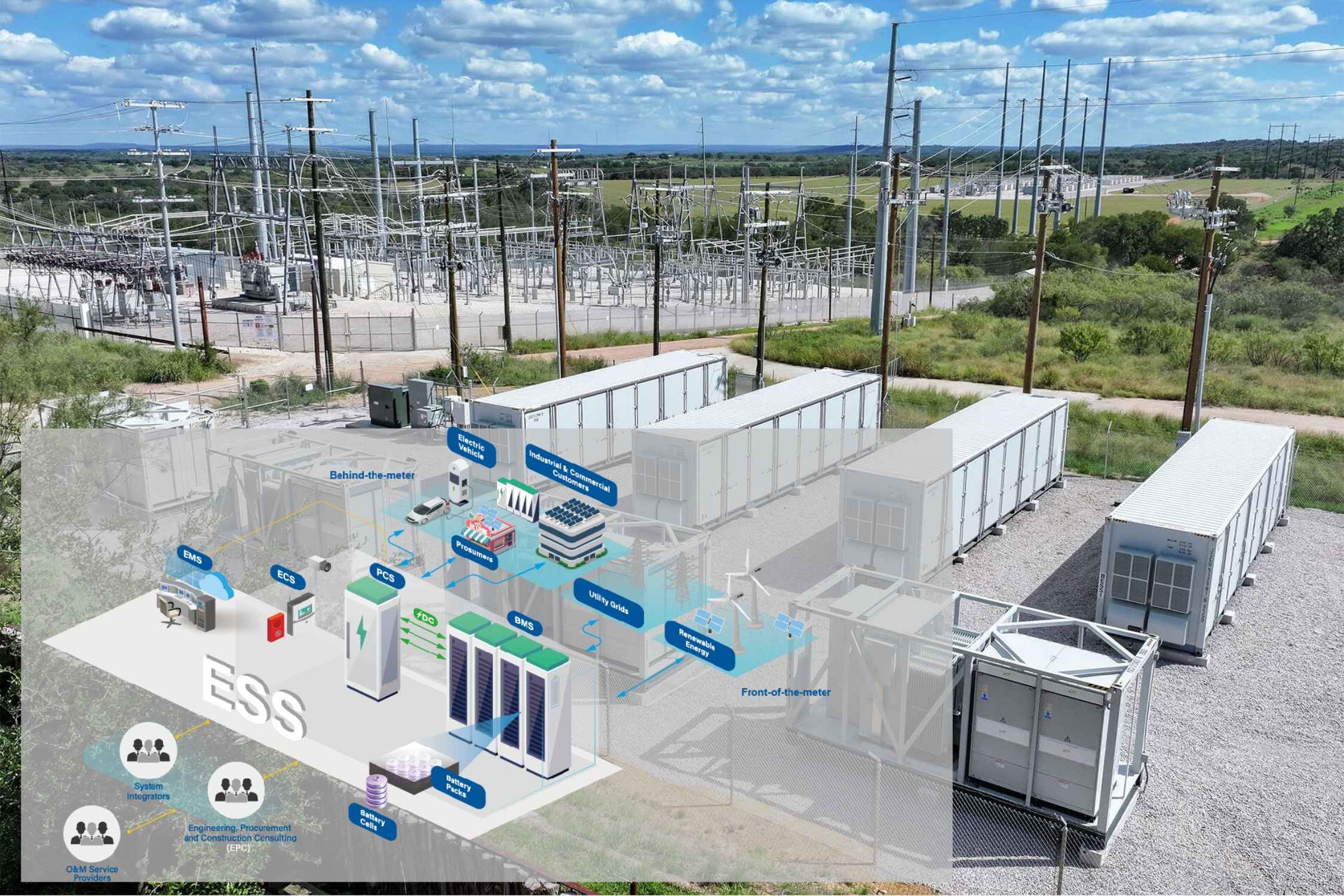
Lithium-ion (Li-ion) technology is the current market leader due to its high energy density. However, it faces challenges regarding thermal stability and capacity limitations. To achieve utility-scale requirements, facilities often employ massive arrays of individual cells. A prominent example is the Moss Landing Energy Storage Facility in California, which uses 4,500 stacked battery racks to deliver 300 megawatts, rivaling the output of traditional coal-fired power plants.
Flow Batteries
Flow batteries represent an emerging alternative for long-duration storage. These systems utilize two electrolyte liquids separated by an ion-permeable membrane. The capacity of a flow battery is determined by the volume of the electrolyte tanks, making them highly scalable. While still largely in the experimental and prototype phases, industry leaders are actively testing these systems for broader grid integration.
Pumped Storage Hydropower (PSH)
Pumped Storage Hydropower remains the most established form of utility-scale energy storage, accounting for over 96% of all utility-scale storage in the United States. The system operates using two water reservoirs at different elevations:
- Charging: During periods of surplus energy (e.g., peak solar production), water is pumped from the lower reservoir to the upper reservoir.
- Discharging: When demand exceeds production, water is released through turbines to generate electricity.
While highly efficient for large-scale storage, PSH is constrained by geographic requirements, as it requires specific topographic features and significant infrastructure investment.
Thermal and Phase Transition Storage
Thermal storage systems capture energy as heat, which can later be reclaimed to drive steam turbines. This is often achieved by heating materials such as rock, sand, or water mixtures.
“In a notable application in Finland, sand is heated to 500°C (930°F) using surplus renewable energy, providing a sustainable heat source for residential buildings during the winter months.”
These systems are particularly effective for long-duration storage and can utilize low-cost, abundant materials to maintain high temperatures for extended periods.
Mechanical Energy Storage
Mechanical systems store energy through physical displacement or compression.
- Compressed Air Energy Storage (CAES): Surplus electricity powers compressors that force air into high-pressure tanks or underground caverns. When energy is required, the compressed air is released through a turbine.
- Gravity Storage: This method involves lifting a heavy mass (such as concrete blocks) using surplus electricity. When power is needed, the mass is lowered, driving a generator via a gear mechanism to convert gravitational potential energy back into electricity.
Conclusion
The global transition toward renewable energy is a policy priority for governments worldwide. While solar and wind are currently the primary drivers of this shift, their success is inextricably linked to the development of efficient storage solutions. As technologies like tidal generators and localized hydroelectric systems mature, the integration of diverse storage methodologies—ranging from electrochemical to mechanical—will be essential to creating a resilient and carbon-neutral energy infrastructure.