Electrical Substation Structure
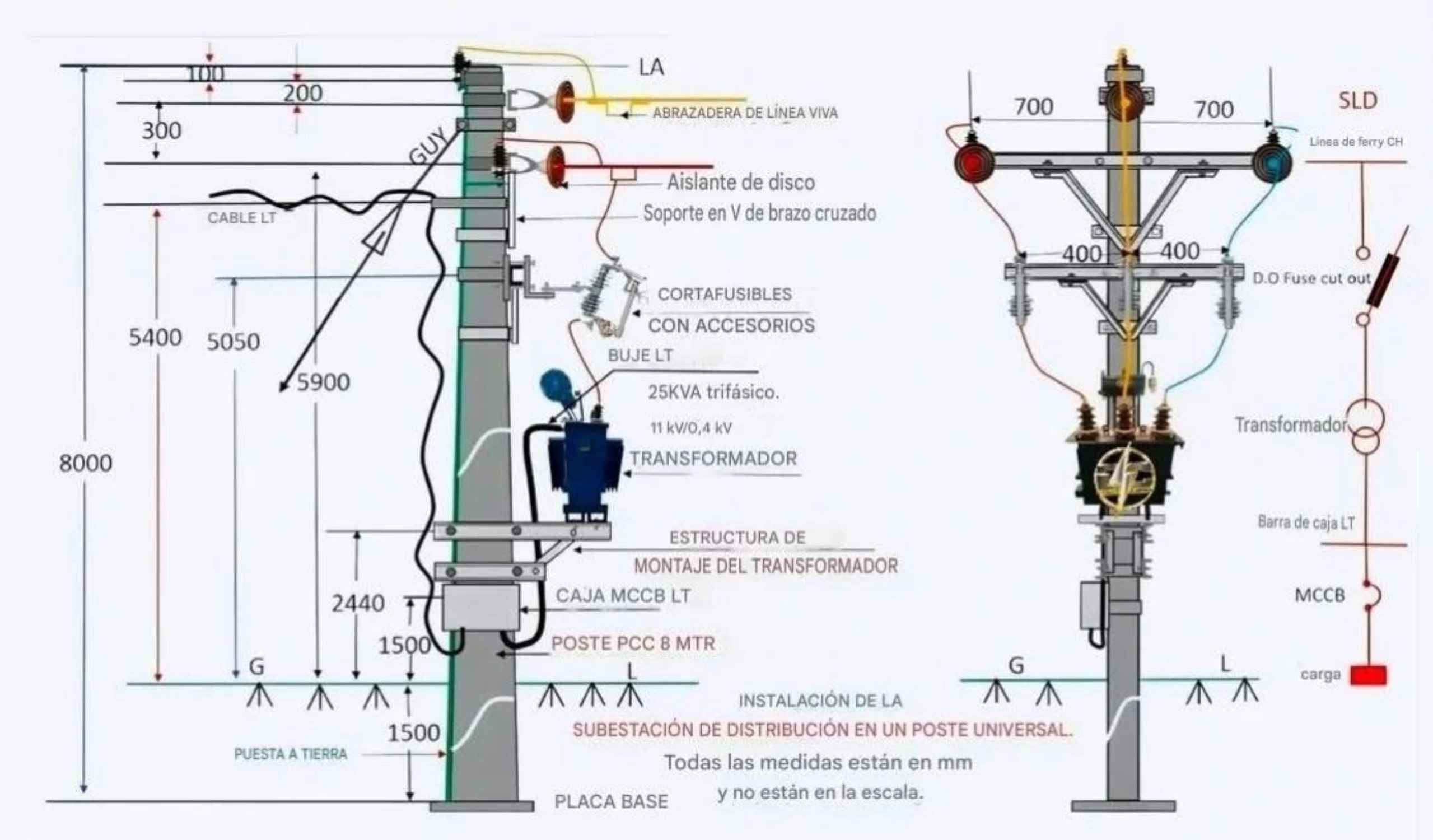
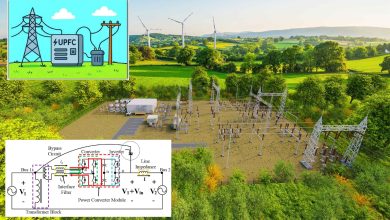
An electrical substation is the critical nodal point in the power system network, acting as a sophisticated intermediary between power generation (power plants, wind farms) and end consumers (homes, industries).
Here is a detailed explanation of its roles and components:
1. Transformation: Changing Voltage Levels
This is the most visible function, performed by power transformers.
- Step-Up Substation (at Generation Site): Raises voltage from the generator level (e.g., 15kV) to incredibly high transmission levels (e.g., 230kV, 500kV or higher). Why? To reduce current, which minimizes power loss (I²R losses) over long distances. This makes cross-country transmission efficient.
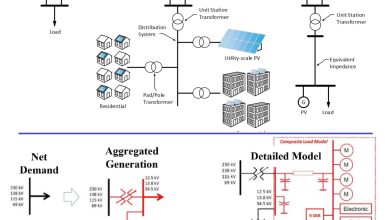
- Step-Down Substation (near Load Centers): The primary function of most substations. They progressively lower the voltage from transmission levels to sub-transmission (e.g., 69kV), then to primary distribution (e.g., 11kV), and finally to utilization voltage (e.g., 400V/230V). Each step-down is tailored for the next stage of delivery.
2. Protection: Safeguarding the Grid and Equipment
This is the “immune system” of the grid. Protection systems detect faults (like short circuits) and isolate the faulty section to prevent damage to equipment and ensure a continuous supply elsewhere. Key components include:
- Circuit Breakers: The heavy-duty switches that can interrupt fault currents (thousands of Amperes). They are the primary isolating devices, activated automatically by protection relays.
- Protective Relays: The “brains” of protection. They constantly monitor electrical parameters (current, voltage). Upon detecting an abnormal condition, they send a precise trip signal to the correct circuit breaker(s) within milliseconds.
- Current Transformers (CTs) & Voltage Transformers (VTs): These are sensors. They safely “step down” the high current and voltage to low, standardized values that can be fed to relays, meters, and control systems.
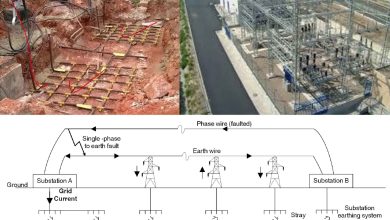
- Lightning Arresters/Surge Arresters: Protect equipment from dangerous voltage surges caused by lightning strikes or switching operations by diverting surges to ground.
- Isolators (Disconnect Switches): Used to physically isolate a circuit for maintenance after a breaker has opened. They provide a visible air gap for safety and cannot interrupt load current.
3. Control & Monitoring: The Nervous System
Modern substations are highly automated and monitored in real-time.
- Supervisory Control and Data Acquisition (SCADA): The central system that allows remote operators to monitor status (breaker open/close, voltage levels), collect data, and issue control commands (open/close switches).
- Remote Terminal Unit (RTU) / Intelligent Electronic Devices (IEDs): These are the local “agents” installed in the substation. They gather data from all instruments and execute control commands from the SCADA system.
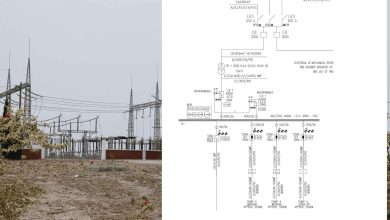
- Control Building: Houses the protection relays, control panels, communication equipment, and backup DC power batteries (critical for operation during a blackout).
4. Distribution & Switching: The Routing Function
This involves directing the flow of power along different paths.
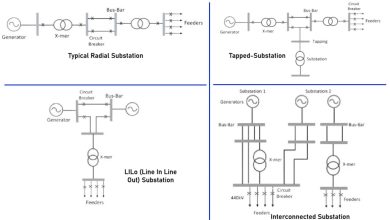
- Busbars: Thick metallic bars (usually aluminum or copper) that act as the common electrical “junction” or “spine” of the substation. Multiple incoming and outgoing circuits are connected to them.
- Switchgear: The assembly that includes circuit breakers, isolators, earthing switches, and protection devices arranged in a structured layout (air-insulated, gas-insulated, or metal-clad).
- Feeders: The outgoing power lines that carry electricity from the substation busbars to specific areas, towns, or large industrial customers.
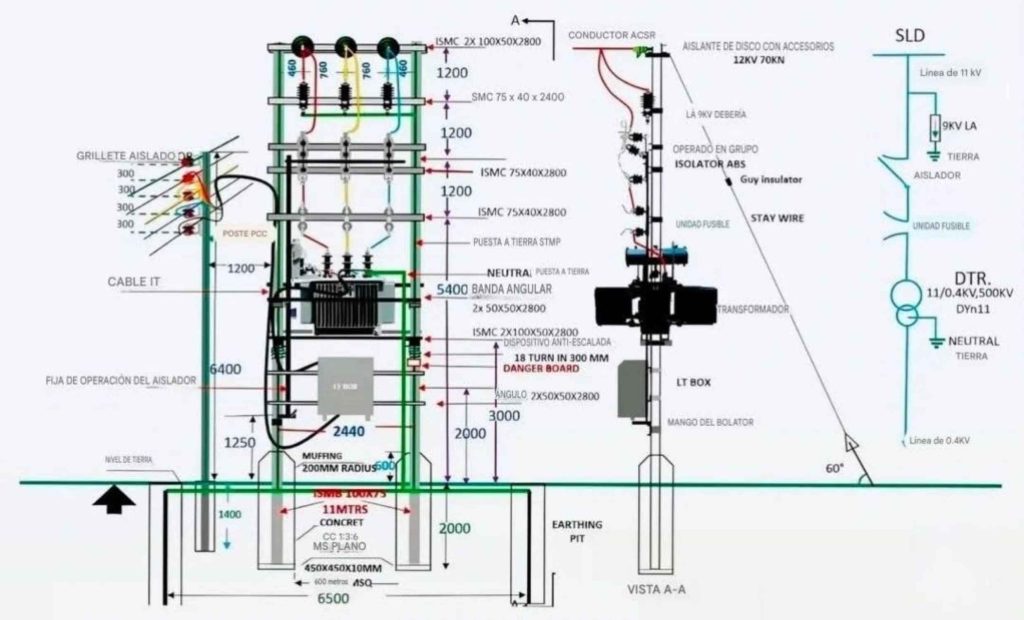
Physical & Structural Types of Substations:
Substations are designed differently based on voltage, space, and environment:
- Air-Insulated Substation (AIS):
- Description: All live components (busbars, breakers, isolators) are separated by air gaps and mounted on steel structures.
- Pros: Lower cost, easier maintenance, visible components.
- Cons: Requires a large land area, exposed to weather and pollution.
- Typical Use: Most outdoor transmission and distribution substations.
- Gas-Insulated Substation (GIS):
- All major live components are housed in sealed metal compartments filled with Sulfur Hexafluoride (SF₆), an excellent insulator.
- Pros: Extremely compact (can be 10% the size of an AIS), immune to weather and pollution, high reliability.
- Cons: Significantly higher cost, specialized maintenance required.
- Typical Use: Urban areas where land is scarce, inside buildings, or in harsh environments.
- Hybrid Substation: Combines AIS and GIS sections (e.g., GIS for the high-voltage bus, AIS for the transformers).
Summary: The Key Point Between Production and Consumption
Imagine the power grid as the human circulatory system:
- Power Plants are the heart.
- High-Voltage Transmission Lines are the arteries.
- Substations are the pressure-regulating valves and distribution hubs (like major arteries branching into capillaries).
- Distribution Lines and Consumers are the capillaries and cells.
The substation’s ultimate role is to ensure that electrical energy is delivered efficiently (via transformation), safely (via protection), and reliably (via control and switching) from the point of generation to every point of use. It is the indispensable and intelligent node that makes a modern, interconnected power grid possible.