The Cable Tray: The Most Ignored System in Every Plant
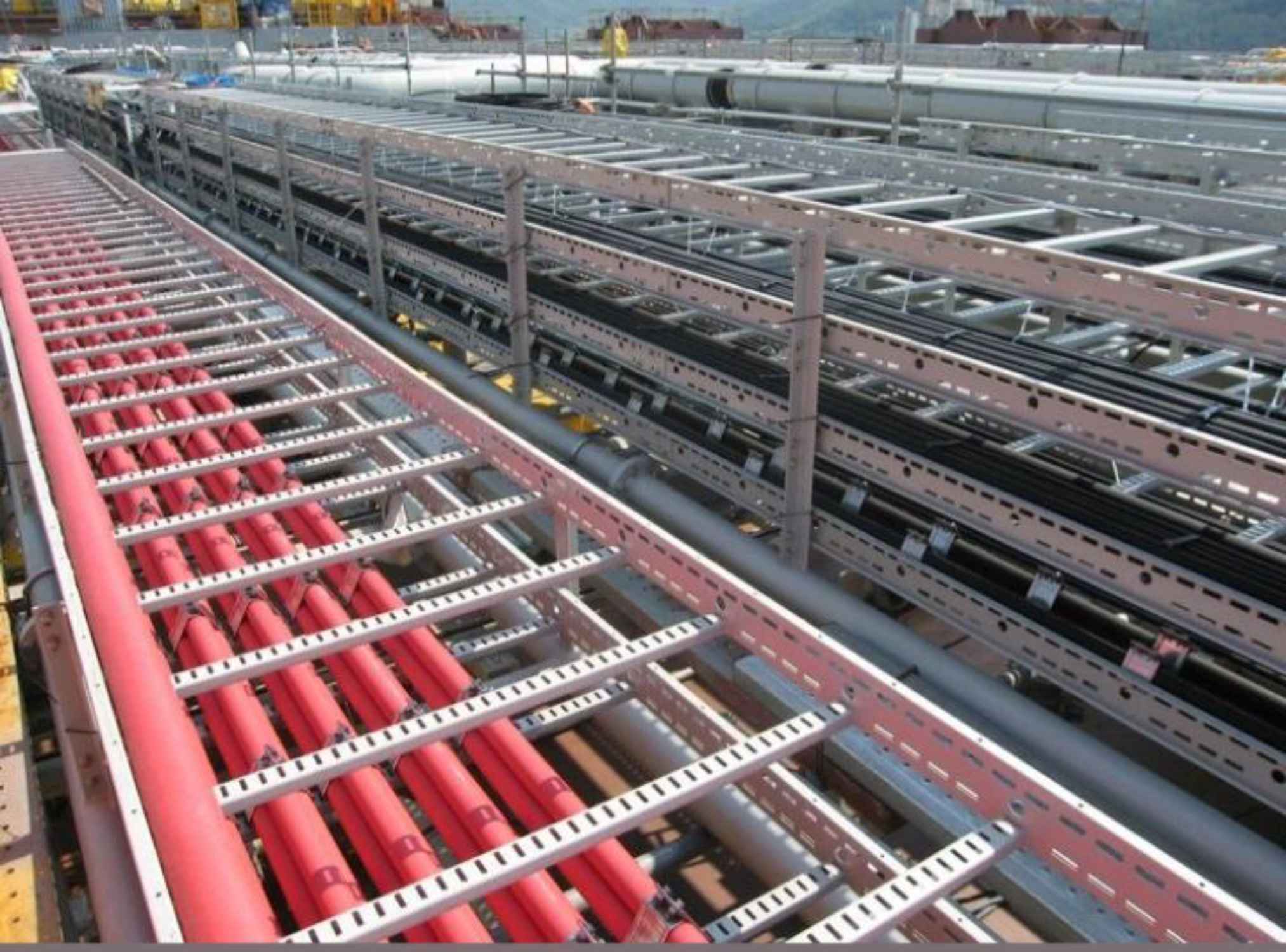
In the cathedral-like expanse of an industrial plant, attention flows to the giants: the roaring turbines, the humming transformers, the spinning centrifuges. We see steel, concrete, and the immediate pulse of production. But woven through this landscape of power is a silent, static network that holds the entire operational story together—and it is almost universally overlooked. This is the realm of the cable tray.
Cable trays don’t move. They don’t trip alarms. They don’t announce failure with fanfare. Their neglect is precisely why they are so pivotal. They remain invisible until something critical goes dark, and troubleshooters instinctively bypass them, looking elsewhere first. Yet, in most facilities, the narrative of long-term reliability was authored not during a crisis, but decades earlier, in the routing decisions, separation discipline, and the fundamental respect afforded to these trays on Day One.
Experience, often earned through costly downtime, eventually teaches a series of brutal truths about this ignored infrastructure.
The Illusion of Passivity
Cable trays are not passive shelves. They are active systems that influence heat dissipation, signal integrity, mechanical stress, and future maintenance access. Every day, their configuration quietly dictates performance. A tray crammed beyond capacity doesn’t just look messy; it chokes airflow, elevates ambient temperature, and steadily shortens the lifespan of every cable within it. This is congestion as a slow failure—a deferred cost that accrues silently, without a single alarm.
The Tyranny of Proximity
On engineering drawings, power and control circuits can coexist in neat, parallel lines. In reality, physics prevails. Electrical noise doesn’t respect design intentions. When high-voltage and sensitive signal cables share a tray or run in proximity, inductive coupling is inevitable. The result is erratic data, phantom trips, and degraded control—problems often chased for months in the electronics, when the root cause lies in the static geometry of the tray.
Mistakes Hiding in Plain Sight
Perhaps the most insidious lesson involves grounding. A poorly bonded tray or one missing continuity jumpers may function flawlessly for years. It becomes, however, a hidden time bomb—the path of least resistance during a lightning strike or voltage surge. What was ignored as “just support steel” suddenly becomes a destructive fault path, damaging sensitive equipment connected to it.
The Decay of Installation Quality
The gap between the drawing room and the field is often widest here. Sharp tray edges that abrade cable sheathing, inadequate supports that allow sag and stress, poorly made joints—these are not oversights. They are future faults installed with confidence. The tray system immortalizes the quality, or lack thereof, of the initial installation.
The unifying theme is this: Most cable problems are born, not sudden. Insulation degradation, shield breakdown, and signal drift are crescendos in a story that the trays have been telling for years. They are the cumulative record of thermal cycling, vibration, and environmental stress.
Yet, cable trays rarely get the blame. They are the silent connectors of every disciplinary decision—electrical, mechanical, process. They are the physical manifestation of a plant’s systemic thinking.
The hallmark of the most reliable plants, then, is not how they react to cable failure, but how they proactively respect the system that carries everything else. They audit tray fill ratios. They enforce separation standards. They inspect bonding and support integrity. They treat the cable tray not as incidental ironwork, but as critical infrastructure—the central nervous system’s backbone.
In the end, to see only steel is to know the present. To see the cable tray is to see history, foresight, and the unspoken commitment to a plant’s future. It is the most ignored system —and, paradoxically, the one that most faithfully records our engineering priorities—and awaits the day it is finally asked to speak.