آلات الجر والمحركات والفرامل والمصاعد الهيدروليكية — الدرس 3 من دورة أنظمة المصاعد
دورة أنظمة المصاعد — الدرس 3 من 8. فهرس الدورة. اقرأ بالترتيب وحل التمرين على الورق قبل مراجعة الإجابة.
هدف الدرس
ستفرق بين آلة جر بعلبة تروس وأخرى مباشرة، وبين القدرة والعزم والفرملة، وتفهم دور وحدة القدرة الهيدروليكية. المقارنة هنا وظيفية؛ لا نقدم اختيار فرملة أو ضغط تشغيل أو طريقة تحريرها.
آلة الجر
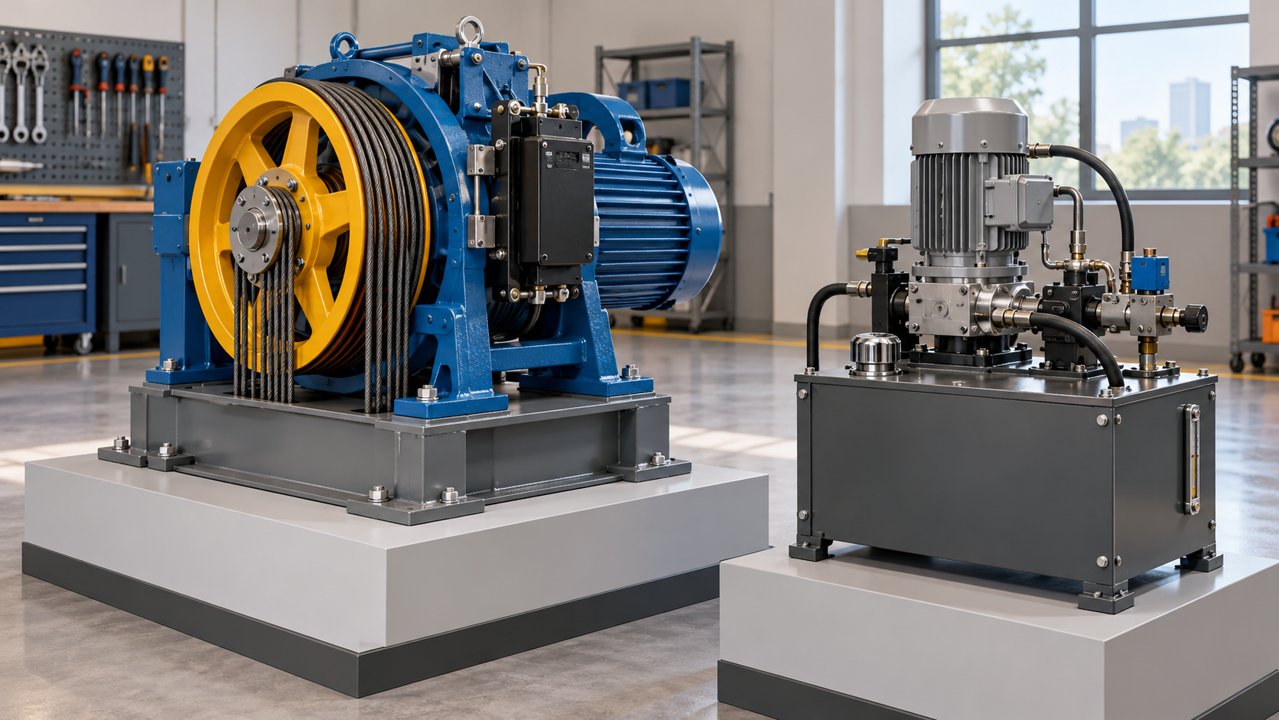
قد تربط علبة تروس بين المحرك وبكرة الجر، بينما ترتبط بكرة الجر بالمحرك مباشرة في ترتيب Gearless. تتغير متطلبات السرعة والعزم والصيانة والكفاءة بحسب المنتج. لا يعني غياب علبة تروس غياب محامل أو فرامل أو أعمال صيانة.
الفرملة وظيفة مستقلة
توجد منظومات فرملة ميكانيكية وكهربائية أو تحكم في الحركة وفق التصميم. فرملة التشغيل وآليات السلامة الأخرى ليست أسماء مترادفة لوظيفة واحدة. بيانات عزم محرك أو قدرة تجديدية لا تثبت تحمل الفرملة الميكانيكية ولا صلاحيتها للاحتفاظ بالحمل.
المصعد الهيدروليكي
تضم البنية الهيدروليكية منظومة قدرة ومكبسًا ومكونات تحكم وحماية وفق المنتج، ويتطلب اختيارها مراجعة الحرارة والضغط والتسرب والصيانة ومتطلبات المبنى. لا تحوّل معادلة ضغط أساسية إلى تعليمات ضبط صمام أو إنزال عربة؛ الدرس حساب ورقي لفهم العلاقة فقط.
مثال عزم وسرعة
افترض قدرة ميكانيكية 6 كيلوواط عند 600 دورة/دقيقة. العزم نحو 9550×6/600 = 95.5 نيوتن متر. ولو نقلت علبة تروس افتراضية مثالية بنسبة تخفيض 4:1، يصبح خرجها 150 دورة/دقيقة وعزمها 382 نيوتن متر قبل احتساب الفواقد. هذا نموذج عام لا يحدد آلة مصعد.
مثال هيدروليكي مبسط
لقوة افتراضية 10,000 نيوتن ومساحة مكبس 0.01 م²، يكون الضغط النظري مليون باسكال، أي 10 بار، دون احتكاك أو فروق ضغط أو هوامش أو اشتراطات. لا تستخدم الرقم لاختيار وحدة أو تعديل ضغط؛ دوره إثبات أن تغيير المساحة يغير الضغط المطلوب.
تمرين وإجابة
إذا تضاعفت مساحة المكبس وبقيت القوة نفسها، ينخفض الضغط النظري إلى النصف، أي 5 بار في المثال. وإذا زادت السرعة المطلوبة مع ثبات القوة، تزيد القدرة الميكانيكية. هل انخفاض الضغط يعني انخفاض الطاقة لكل رحلة دائمًا؟ لا؛ تدخل الإزاحة والتدفق والكفاءة وبقية ظروف الخدمة.
مخرج الدرس
قارن عرض جر وهيدروليك باستخدام متطلبات المبنى والصيانة والبيانات المقاسة وحدود الخدمة. لا تعتمد تعميمًا تسويقيًا عن الكفاءة؛ اطلب أساس القياس ونطاقه. احتفظ بأسئلة الحرارة والصيانة ضمن ملف المقارنة.
المراجع الفنية
مكونات آلة الجر والفرملة — Otis؛ اختلاف بنى الحركة — KONE. صيغ الشرح والأمثلة والتمارين خصيصًا لهذا المسار؛ لا تُنسخ مخططات المصنع.
الصورة الرئيسية رسم تعليمي أصلي مولّد بالذكاء الاصطناعي خاص بهذا الدرس، وليست صورة فوتوغرافية أو مخطط توصيل أو تصميمًا معتمدًا.
تابع التعلم
الدرس السابق | فهرس الدورة | الدرس التالي