The Role of Synchronous Generators in Modern Power Systems: Enhancing Stability and Protection
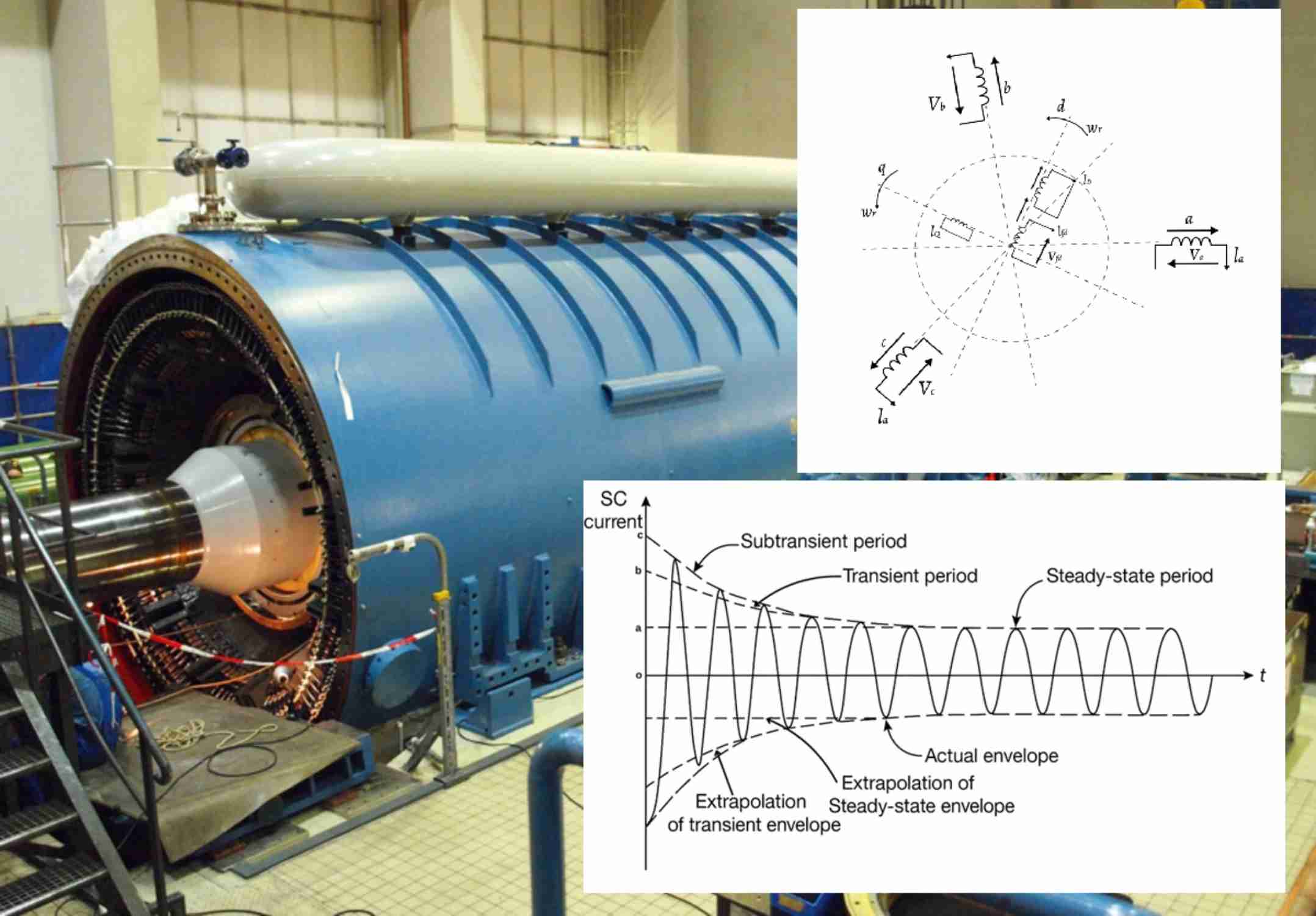
Synchronous generators remain the backbone of modern power systems, supplying reliable electricity to homes, industries, and cities worldwide. Whether installed in thermal plants, hydro stations, or industrial facilities, these machines are central to maintaining grid stability and ensuring uninterrupted power delivery. A synchronous generator operates by applying DC current to the rotor winding. The rotor is driven by a prime mover (such as a turbine), creating a rotating magnetic field. This magnetic field induces a three-phase voltage in the stator windings. The rotor spins at a constant speed synchronized with the frequency of the AC power system—hence the name synchronous generator.
Why Synchronous Generators Are Essential in Modern Power Systems
1. Providing Stable Baseload Power
Imagine a steady stream of water flowing from a faucet—that’s baseload power. It keeps essential services running 24/7, including hospitals, factories, and residential infrastructure. Synchronous generators are designed to operate continuously at a constant speed and frequency, delivering stable power even during peak demand. Their ability to maintain steady output makes them ideal for meeting fundamental grid requirements.
2. Maintaining Grid Stability
Synchronous generators behave like massive spinning flywheels. Due to their mechanical inertia, they resist sudden changes in rotational speed. This inertia helps stabilize system frequency during disturbances such as:
- Sudden load changes
- Short circuits
- Generator outages
By absorbing and damping oscillations, they prevent cascading failures and reduce the risk of widespread blackouts.
3. Reactive Power and Voltage Control
Synchronous generators also regulate reactive power and system voltage. Think of them as traffic controllers for the grid. By adjusting excitation, they can:
- Maintain voltage within safe limits
- Improve power quality
- Support efficient operation of connected equipment
This capability is critical for overall grid reliability.
Parallel Operation: Enhancing Reliability
Operating generators in parallel improves system stability by:
- Providing redundancy
- Increasing flexibility
- Allowing easier maintenance
- Improving load sharing
Parallel operation ensures that if one generator trips, others continue supplying power without major disruption.
Key Parameters That Influence Power System Stability
To fully understand a synchronous generator’s behavior under normal and fault conditions, we must examine the parameters that shape its performance.
Alternator Reactance
An alternator’s response to load changes is governed by different types of reactance:
1. Sub-Transient Reactance (X″d)
Sub-transient reactance dominates during the first few cycles after a fault. It determines the magnitude of the initial short-circuit current.
- Typical range: 9%–18%
- Lower X″d → Higher fault current
- Influenced by rotor geometry, air gap, winding design, and damper windings
Damper windings play a key role in limiting the initial surge of fault current.
2. Transient Reactance (X′d)
After the sub-transient period, transient reactance governs the current decay. The short-circuit current gradually decreases depending on:
- X″d value
- Machine time constants
3. Synchronous Reactance (Xd)
Under steady-state fault conditions, synchronous reactance determines long-term current levels. Modern generators can sustain 2–4 times rated current during steady-state three-phase faults, making Xd essential for evaluating generator capability.
Inertia Constant (H)
The inertia constant represents the rotor’s kinetic energy.
- Higher H → Better frequency stability
- Lower H → Greater risk of frequency collapse
High inertia helps the generator ride through disturbances without large frequency deviations.
Damping Coefficient (D)
Damping reduces oscillations following disturbances. Research shows that damping can be even more critical than inertia for small-signal stability. Higher damping means faster settling and fewer oscillations.
Field Time Constant (Tf)
This determines how quickly the excitation system responds to changes. A long field time constant may worsen hunting (oscillations), since the corrective torque is delayed. Slow response can increase the risk of losing synchronism.
Armature Resistance (Ra)
Although small compared to reactance, armature resistance affects:
- Voltage drop
- Power losses
- Efficiency
- Voltage regulation
Accurate modeling of Ra is essential for reliable power flow and stability studies.
Short Circuit Current Analysis
When faults occur, generators contribute to the fault current. Understanding this contribution is critical for:
- Protective device sizing
- Breaker rating selection
- Stability assessment
The primary parameter used is sub-transient reactance (X″d).
Case 1: When Rated Current (FLA) Is Known
Isc = FLA / X″d
Where:
- FLA = Full Load Amps
- X″d = Sub-transient reactance (per unit)
Case 2: When Only kVA Rating Is Known
FLA=kVA / (v3 × Rated Voltage)
Then apply:
Isc = FLA / X″d
Case 3: When Only Real Power (kW) and Power Factor Are Known
First, calculate apparent power:
kVA= kW / Power Factor
Then follow Case 2 and Case 1.
Always confirm the exact X″d value with the manufacturer before performing calculations.
Protection Schemes for Synchronous Generators
Reliable protection systems are essential for safeguarding generators against electrical and mechanical faults. Fault severity is typically classified as:
- Class A – Severe faults (immediate isolation required)
- Class B – Mechanical faults
- Class C – Grid-side faults (generator may continue supplying local load)
Stator Protection
Includes:
- Differential protection
- High impedance earth fault protection
- Zero sequence voltage/current detection
- Inter-turn fault protection
Rotor Protection
Includes:
- Field circuit protection
- Over-flux protection
Relay Coordination and Trip Logic
Coordinated relaying ensures only faulty sections are isolated while healthy equipment remains operational. Fault trip logic determines the correct tripping response based on fault severity and type.
Challenges in Maintaining Stability
One of the biggest challenges in modern grids is maintaining synchronization—ensuring generators operate at the same frequency and phase angle. Key stability concerns include:
- Steady-state stability under increasing load
- Transient stability during faults
- Frequency stability during disturbances
Engineers address these challenges using:
- Robust mechanical design
- Advanced excitation systems
- Automatic Voltage Regulators (AVR)
- Proper relay coordination
- Parallel generator operation
Conclusion
Synchronous generators remain fundamental to modern power systems. Beyond simply generating electricity, they provide:
- Frequency stability
- Reactive power support
- Fault current contribution
- Grid reliability
Understanding generator parameters, short-circuit behavior, and protection schemes is essential for designing resilient and stable power systems. As grids evolve with renewable integration and increasing demand, the role of synchronous generators in maintaining stability and protection remains more critical than ever.