كتاب كابلات القوى الكهربية – للدكتور أسر علي زكي والدكتور محمد خليل
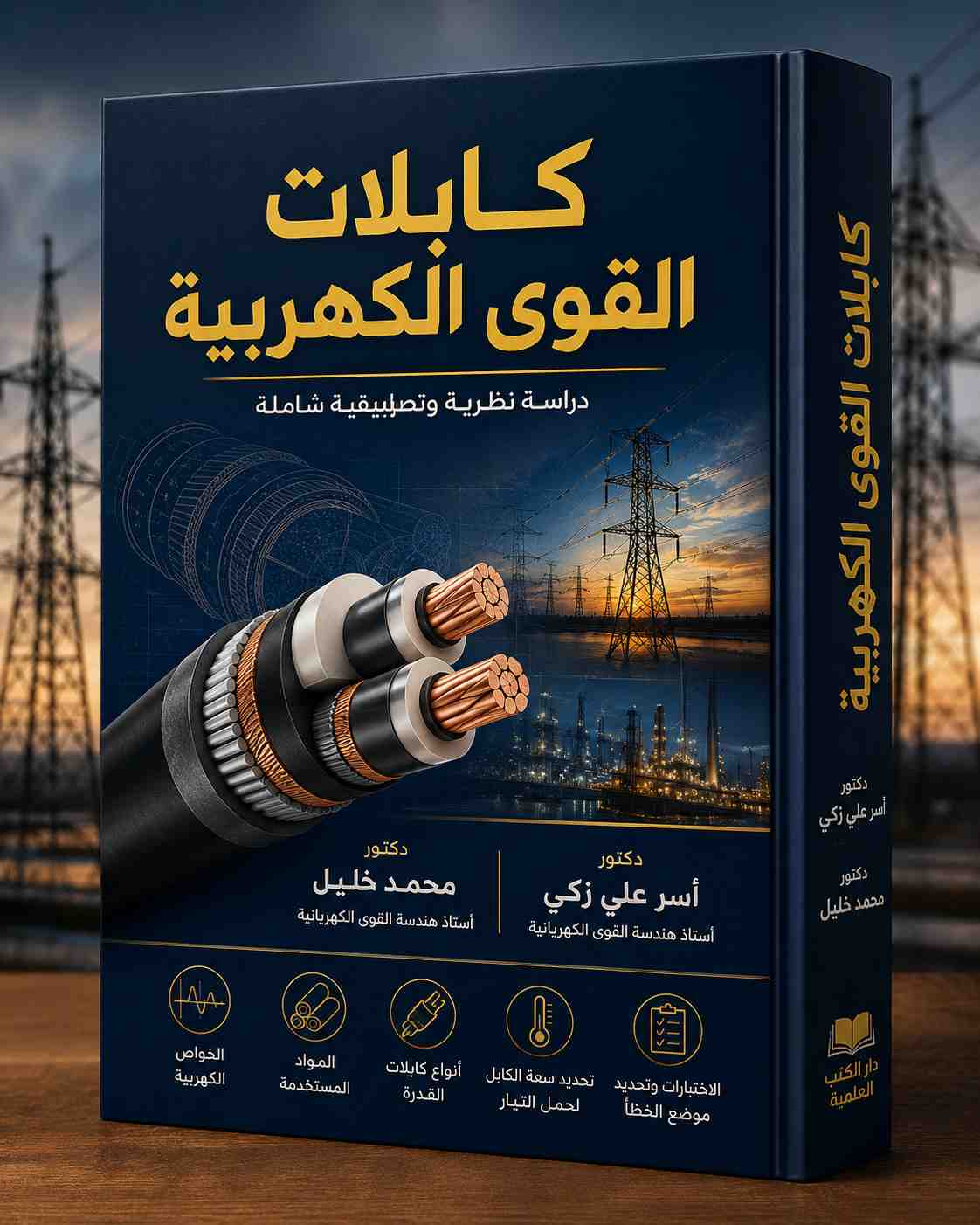
يُعد كتاب «كابلات القوى الكهربية» للدكتور أسر علي زكي والدكتور محمد خليل من أهم المراجع العربية المتخصصة في مجال هندسة القوى الكهربائية، حيث يقدم معالجة علمية وعملية شاملة لكل ما يتعلق بكابلات القدرة الكهربائية، بدءًا من الأسس النظرية وحتى التطبيقات الصناعية واختبارات التشغيل والصيانة.
لماذا يُعتبر هذا الكتاب مرجعًا مهمًا؟
يتميز الكتاب بأنه لا يقتصر على الجانب الأكاديمي فقط، بل يربط بين المفاهيم النظرية والتطبيقات العملية المستخدمة في شبكات النقل والتوزيع ومحطات القوى والمشروعات الصناعية الكبرى. كما أنه مكتوب باللغة العربية بأسلوب علمي واضح، مما يجعله مرجعًا مناسبًا للطلاب والمهندسين والفنيين العاملين في مجال الكهرباء.
الباب الأول: الخواص الكهربية للكابلات
يبدأ الكتاب بشرح الخواص الكهربية الأساسية للكابلات، وهو من أهم الأبواب لفهم سلوك الكابلات أثناء التشغيل.
ويتناول الباب موضوعات مهمة مثل:
- المكونات الأساسية لكابلات القوى
- مقاومة الموصلات في التيار المستمر والمتردد
- التأثير السطحي وتأثير التقارب
- المحاثة والسعة الكهربائية للكابلات
- توزيع المجال الكهربائي داخل الكابل
- خصائص عوازل الكابلات
- انهيار العزل والمتانة الكهربية
- الجهد المقنن للكابلات
هذا الباب يمنح القارئ فهمًا عميقًا لكيفية انتقال الطاقة داخل الكابل والعوامل التي تؤثر على كفاءته الحرارية والكهربائية. كما يشرح أسباب الفقد الكهربائي والحراري وكيفية تقليلها لتحقيق أفضل أداء للشبكات الكهربائية.
الباب الثاني: المواد المستخدمة في صناعة الكابلات
يُركز هذا الباب على المواد الداخلة في تصنيع الموصلات والعوازل، ويشرح الخصائص الفيزيائية والكيميائية المطلوبة لضمان كفاءة الكابل وعمره التشغيلي الطويل.
ومن أبرز الموضوعات التي يناقشها:
- مواد صناعة الموصلات
- العوازل الورقية المشربة
- العوازل الاصطناعية
- البولي إيثيلين والبولي إيثيلين المشبك XLPE
- مطاط الإيثيلين بروبيلين
- كلوريد البولي فينيل PVC
- عيوب العوازل البلمرية
- ظاهرة التشجير الكهربائي
- الغازات المضغوطة المستخدمة في العزل
تكمن أهمية هذا الباب في تعريف المهندس بكيفية اختيار المادة المناسبة تبعًا لظروف التشغيل ودرجة الحرارة والجهد ونوع البيئة المحيطة بالكابل. كما يوضح تطور تكنولوجيا العوازل الحديثة المستخدمة في شبكات الجهد المتوسط والعالي.
الباب الثالث: أنواع كابلات القدرة
يشرح هذا الباب الأنواع المختلفة لكابلات القدرة وتصنيفاتها واستخداماتها العملية في أنظمة القوى الكهربائية.
ويتناول:
- كابلات الجهد المنخفض والمتوسط
- الكابلات المحزمة
- الكابلات ثلاثية القلب
- كابلات الجهد العالي والفائق
- كابلات الزيت المضغوط
- الكابلات المضغوطة بالغاز
- كابلات التيار المستمر
- الكابلات المقاومة للحريق
ويُعتبر هذا الباب مهمًا جدًا للمهندسين العاملين في التصميم والتنفيذ؛ لأنه يساعدهم على اختيار نوع الكابل المناسب تبعًا لمتطلبات المشروع وطبيعة الأحمال وظروف التشغيل. كما يناقش مميزات وعيوب منظومات التيار المستمر عالي الجهد HVDC المستخدمة في نقل الطاقة لمسافات طويلة.
الباب الرابع: تحديد سعة الكابل لحمل التيار
من أهم أبواب الكتاب لأنه يربط بين التصميم النظري والواقع العملي أثناء تشغيل الشبكات الكهربائية.
ويتناول موضوعات مثل:
- التدفق الحراري داخل الكابل
- المقاومة الحرارية للكابلات
- ظروف التركيب المختلفة
- عوامل التقنين
- تأثير التجميع
- تأثير تيار القصر
- الإجهاد الحراري والكهروميكانيكي
- حساب هبوط الجهد
أهمية هذا الباب تكمن في أنه يساعد على اختيار مساحة مقطع الكابل المناسبة بشكل اقتصادي وآمن، مع ضمان عدم ارتفاع درجة حرارة الكابل بصورة تؤدي إلى تلف العزل أو تقليل العمر الافتراضي للكابل. كما يشرح كيفية التعامل مع تيارات القصر وتأثيرها على الكابلات أثناء الأعطال الكهربائية.
الباب الخامس: اختبارات الكابلات وتحديد الأعطال
يختتم الكتاب بشرح طرق اختبار الكابلات بعد التصنيع والتركيب، إضافة إلى أساليب تحديد أماكن الأعطال.
ومن أهم الموضوعات:
- الاختبارات الروتينية
- الاختبارات الخاصة والنوعية
- اختبارات ما بعد التركيب
- طرق تحديد الأعطال باستخدام الدوائر القنطرية
- تقنية الصدى النبضي
وهذا الباب بالغ الأهمية لمهندسي الصيانة والتشغيل؛ لأنه يساعدهم على اكتشاف الأعطال بسرعة وتقليل زمن الانقطاع وتحسين موثوقية الشبكات الكهربائية. كما يعرض الكتاب الطرق الحديثة المستخدمة في تحديد أماكن الأعطال بدقة عالية.
الملاحق والمراجع
يحتوي الكتاب أيضًا على ملاحق عملية مهمة تشمل:
- جداول سعات حمل التيار للكابلات حتى 30 ك.ف.
- أهم المواصفات القياسية IEC الخاصة بكابلات القوى
- قائمة مراجع علمية متخصصة
وهذه الملاحق تجعل الكتاب مرجعًا عمليًا يمكن الاعتماد عليه أثناء التصميم والتنفيذ واختيار الكابلات المناسبة للمشروعات الكهربائية المختلفة.
خلاصة
يُعد كتاب «كابلات القوى الكهربية» من أفضل الكتب العربية المتخصصة في مجال كابلات القدرة، لما يحتويه من شرح علمي متكامل يجمع بين النظرية والتطبيق. ويتميز بتغطيته الواسعة لموضوعات تصميم الكابلات والعوازل وحسابات التحمل الحراري واختبارات الجودة والصيانة وتحديد الأعطال.
لذلك يُنصح به لكل:
- طلاب هندسة القوى الكهربائية
- مهندسي التصميم والتنفيذ
- مهندسي الصيانة والتشغيل
- العاملين في شركات الكهرباء والطاقة
فالكتاب لا يقدم معلومات أكاديمية فقط، بل يُعد دليلًا عمليًا مهمًا لفهم أنظمة الكابلات الحديثة المستخدمة في شبكات القوى الكهربائية