Lightning Arresters and Surge Protection: Principles of Voltage-Dependent Switching
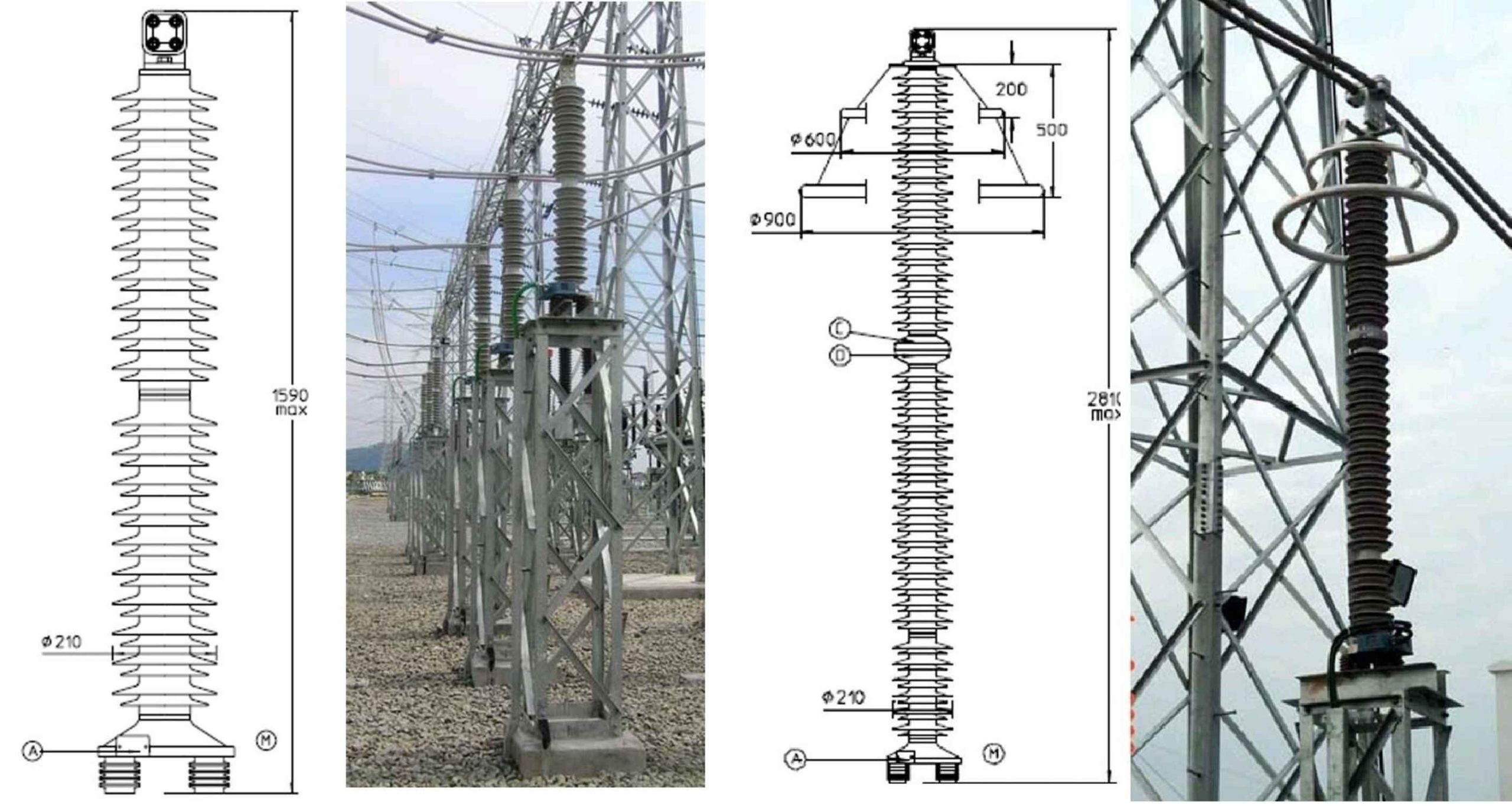
A Lightning Arrester (or surge arrester) is a critical protective device in electrical power systems, designed to safeguard equipment from the damaging effects of transient overvoltages. It functions by providing a controlled point for diverting surges or overvoltages, thereby protecting sensitive downstream equipment. This diversion is achieved through a highly non-linear electrical characteristic, allowing the device to act as a dynamic, voltage-dependent switch.
How a Surge Arrester Works: The Voltage-Dependent Switch
The modern surge arrester, particularly the gapless type, relies on Metal Oxide Varistors (MOVs), typically composed of zinc oxide (ZnO) blocks. These blocks are the core component, exhibiting resistance that is inversely proportional to the applied voltage. This unique property allows the arrester to operate as a voltage-dependent switch with a highly nonlinear characteristic, effectively managing current flow based on system voltage.
The operation of a surge arrester can be broken down into five distinct stages:
1. Normal Operating Conditions
Under normal system voltage, the surge arrester exhibits an extremely high impedance (resistance). In this state, it effectively acts as an open circuit, isolating the conductor from the ground. Only negligible leakage current flows through the MOV blocks, ensuring that the arrester does not interfere with the power system’s regular operation.
2. Overvoltage Event (Surge)
When a transient overvoltage (a voltage spike) occurs—such as one caused by a direct or induced lightning strike, or a switching operation—the voltage across the arrester rapidly exceeds its specific Reference Voltage. This Vref marks the threshold at which the MOV material begins to transition into its conductive state.
3. Conduction and Diversion
As the voltage exceeds Vref, the internal MOV components instantly switch to a very low impedance. This transition provides a safe, low-resistance path for the high surge current to be diverted away from the protected equipment. The surge energy is rapidly channeled through the arrester and into the earth (ground), preventing it from reaching and damaging the connected apparatus.
4. Voltage Limiting (Clamping)
During surge-current diversion, the arrester actively limits, or “clamps,” the voltage across the equipment to a safe and acceptable level. This limited voltage is known as the Residual Voltage Vref or discharge voltage. The Vref is the maximum voltage the protected equipment will “see” during the surge event, and it is a critical parameter for coordinating the arrester’s protection level with the equipment’s Basic Impulse Level (BIL).
5. Return to Normal
Once the surge current has dissipated and the system voltage returns to its normal operating level, the arrester instantaneously reverts to its high-impedance state. This immediate isolation is crucial as it prevents the normal system voltage from driving a continuous power-frequency current (known as “follow current”) through the arrester to the ground. By returning to its non-conductive state, the arrester allows the system to continue operating normally without interruption.
Summary of Arrester Operating States
The following table summarizes the key characteristics of the surge arrester under different operating conditions:
| Condition | Voltage Level | Impedance State | Function | Key Voltage Parameter |
| Normal | Vsystem < Vref | Extremely High | Isolation (Open Circuit) | Vsystem |
| Surge | Vsurge > Vref | Very Low | Diversion (Closed Circuit) | Vref (Residual Voltage) |
Lightning Arresters and Gaps
While modern arresters are predominantly gapless (relying solely on the MOV stack for switching), older designs and some high-voltage applications utilize gapped arresters.
•Gapless Arresters: Use a solid stack of MOV discs, providing continuous, non-linear resistance. Their protective level is directly proportional to the residual voltage Vref.
•Gapped Arresters: Incorporate a physical spark gap in series with the MOV material. Conduction only begins after the voltage exceeds the gap’s sparkover voltage. The protective level of a gapped arrester is the higher of the sparkover voltage and the residual voltage. Additional testing is required to ensure the long-term stability of the gap structure.
In conclusion, the surge arrester is an indispensable component of power system reliability. Its ability to instantaneously and repeatedly switch from an insulator to a conductor in response to voltage transients ensures that critical electrical infrastructure is protected from the immense energy of lightning and other system overvoltages.